
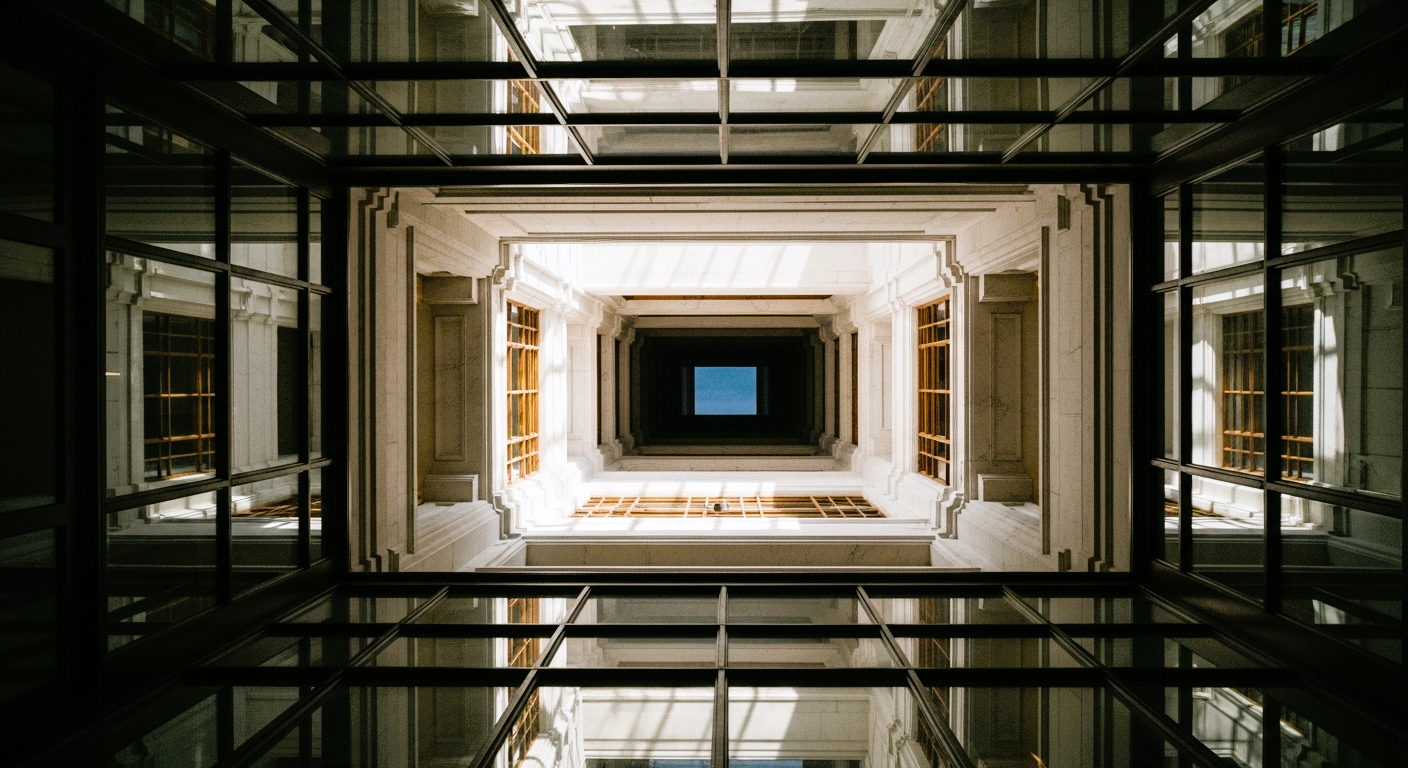
Chicago does not merely exist; it performs an eternal, silent symphony of structural ambition and reflective poise. It is a city born of fire and tempered by a relentless wind, where the grid serves as a canvas for the heavy shadows of limestone and the ephemeral shimmer of glass. To observe Chicago is to witness the evolution of the modern soul, a place where the weight of history is balanced by the lightness of the horizon. We approach this urban expanse not as tourists, but as quiet witnesses to an architectural lineage that redefined the relationship between the earth and the sky. Here, the street level is a gallery of human intention, and the skyscrapers are monuments to the audacity of the vertical line.
The structural rhythm of the Chicago School and the transition from masonry to steel. The intimate dialogue between the city’s concrete edges and the fluid vastness of Lake Michigan. The hidden alcoves of the Loop where the echoes of Art Deco meet the silence of modernism. The curated geometry of the city’s public plazas and the choreography of light across their surfaces.
The structural rhythm of the Chicago School and the transition from masonry to steel
The transition from the ponderous weight of the Monadnock’s base to the soaring transparency of the Reliance Building marks a pivotal moment in the human story. In Chicago, the wall ceased to be a load-bearing burden and became a delicate curtain of light and air. This evolution is best witnessed in the quiet corners of the Loop, where the dark, protective embrace of deep-set masonry gives way to the rhythmic repetition of the Chicago window. These structures are not merely offices; they are the physical manifestation of a new logic, a structural honesty that discarded historical ornament for the purity of the grid. To observe these facades is to see the very skeleton of modernity emerging from the stone. The city’s architectural soul resides in this tension the heavy, tactile history of the earth pushing upward into the limitless, weightless potential of the steel frame.
The intimate dialogue between the city’s concrete edges and the fluid vastness of Lake Michigan
At the eastern threshold of the grid, the rigid geometry of the city meets the untamed horizon of Lake Michigan. This is where Chicago breathes. The lakefront is not a mere boundary but a curated transition, a series of limestone tiers and concrete promenades that invite a slower, more deliberate pace of observation. Here, the turquoise expanse of the water provides a silent, shifting backdrop to the stoic permanence of the skyline. The air carries a different weight, cooled by the water and flavored with the scent of distant storms. It is a space of profound contrast: the stillness of the water against the vibrating energy of the skyscrapers. In this dialogue, the city finds its equilibrium, reminding us that even the most ambitious structural achievements must eventually yield to the elemental power of the natural world.
The hidden alcoves of the Loop where the echoes of Art Deco meet the silence of modernism
The ritual of the threshold requires one to stand at the precise seam where the opulent Art Deco ornamentation of the Carbide and Carbon Building meets the stark, silent clarity of the surrounding glass towers. To observe this cultural layer is to practice a deliberate pause within the city’s shadowed canyons, noting how the gold leaf and deep green terra cotta absorb the midday sun while the nearby modernism reflects it with a cold, blue indifference. It is an exercise in tactile history, where the eye must learn to distinguish between the handcrafted intricacy of a bygone era and the industrial precision of the present. This method of unhurried witnessing reveals the city as a layered parchment, where every architectural movement is a sentence written over the ghost of the one before it.
The curated geometry of the city’s public plazas and the choreography of light across their surfaces
Engaging with the curated geometry of Chicago’s public plazas demands a surrender to the choreography of light as it moves across vast, granite surfaces. One must adopt the perspective of the still point, perhaps resting on a low stone plinth in Federal Plaza to watch the arcing shadow of Alexander Calder’s Flamingo lengthen across the dark pavement. This is the city as a grand solar clock, where the interplay of void and mass becomes a meditative study in rhythmic movement. By remaining stationary, the observer notices the subtle shifts in texture the way the afternoon light softens the harshness of the black steel and reveals the hidden warmth in the urban stone. It is a slow, rhythmic dialogue between the permanent and the ephemeral, turning a transit space into a sanctuary of form.
The Living Grid: Chicago’s Enduring Architectural Resonance
Chicago is more than a collection of structures; it is a profound repository of human intention and a testament to the power of deliberate form. In its shadows and reflections, we find the quiet confidence of a city that knows its worth lies not in rapid change, but in sustained conversation between the past and the imminent. The true value of this urban masterpiece lies in its capacity to force a pause, allowing the careful observer to witness the eternal dance between gravity and grace, between the heavy limitation of masonry and the soaring ambition of glass. It is a gallery that requires our patience, rewarding the unhurried traveler with a deeper understanding of what it means to build, to dwell, and to ultimately belong to a place where the grid is both a constraint and a liberation. As you step away from these rigid yet graceful geometries, allow this philosophy of observation to guide your next cultural encounter, carrying this curatorial gaze to seek the underlying artistry woven into the fabric of every destination.
Leave a Reply