
Edinburgh operates on a tidal schedule driven by its Northern latitude. Breakfast is a sturdy affair, often centered on the roll and square sausage or a full fry up before the damp morning air settles. Lunch is functional, yet the afternoon belongs to tea and tablet. The primary mistake visitors make is ignoring the booking culture. Even neighborhood bistros in Leith or Stockbridge fill weeks in advance, and the city’s kitchens often shutter early compared to continental Europe, with last orders frequently called by nine. Expect a second wave of activity during festival seasons when the rhythm fractures into late night street food. Relying on walk ins for dinner in the New Town is a gamble that usually ends in disappointment or a fast food compromise.
Cullen Skink – The Smoked Soul of the Coast
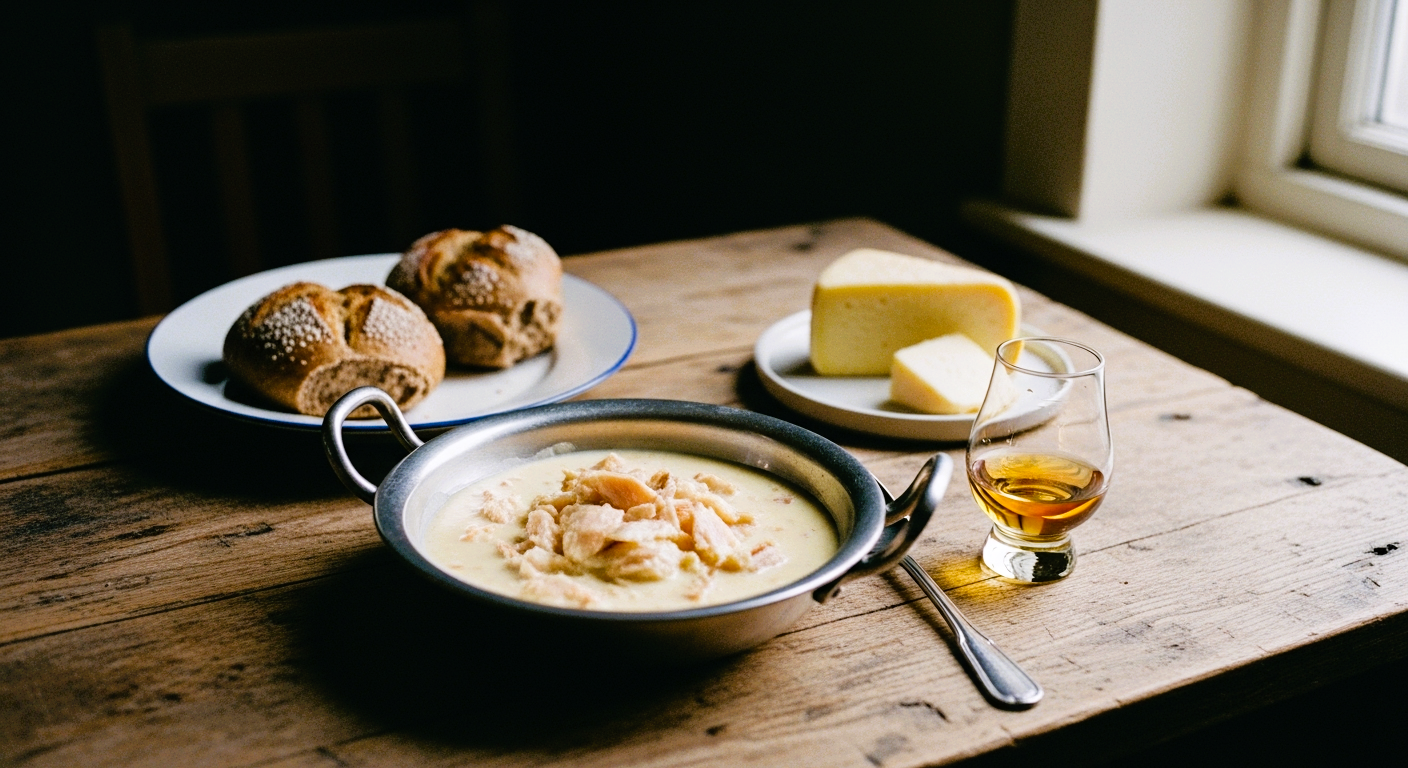
This thick Scottish soup carries the brine and smoke of the North Sea directly to the palate. It is a robust chowder, undiluted by cream, relying instead on the starchy breakdown of potatoes and the oily richness of smoked haddock to achieve its comforting density. Served in a tavern near the Water of Leith, where the air already smells of salt and wet stone, it anchors you against the damp climate. The smoke is pervasive, clinging to the roof of your mouth long after the last spoonful of milky broth and flakey fish is gone. For the most authentic experience, seek out pubs that serve it with “well fired” rolls bread baked until the crust is nearly black, offering a bitter charcoal counterpoint to the rich soup; avoid places that garnish it excessively with parsley or cream swirls.
Haggis, Neeps, and Tatties – An Earthy Highland Offering
Haggis is often misunderstood, yet its flavor is a sophisticated balance of savory depth and spice. It is a crumbly sausage pudding, rich with iron from the offal, grounded by oatmeal, and intensely seasoned with black pepper and coriander. When served in the stone vaults beneath the Royal Mile, the setting amplifies the ancient feeling of the dish. The accompanying mash of swede (neeps) adds sweetness, while the potatoes (tatties) provide a neutral base, all usually bound together by a whisky spiked cream sauce. Forget the tourist traps playing bagpipes at the door; find a cellar bar where the focus is on the peppery kick of the meat rather than the ceremony. A dram of peaty whisky is the only suitable beverage to cut through the rich fat.
The Tattie Scone – A Griddled Morning Essential
This humble potato cake is the backbone of a Scottish breakfast, utilizing leftover mashed potatoes bound with flour and butter. It is not fluffy like a pancake but dense and savory, cooked on a flat griddle until speckled brown. The texture is soft in the middle with a necessary exterior chew. Found at weekend markets in Stockbridge or Grassmarket, it is best eaten hot amidst the bustle of vendors and wet pavement. The taste is pure, buttery potato comfort, acting as a sponge for bacon fat or egg yolk. The key practical approach is simplicity; buy it plain from a baker’s stall and eat it immediately while the edges are still crisp, rather than ordering it as a soggy component of a pre plated hotel breakfast buffet.
Scottish Tablet and Peated Whisky – The Sweet and Smoky Finish
Tablet is often mistaken for fudge, but the texture is entirely distinct. It is a crystalline confection of sugar, condensed milk, and butter, boiled to a precise point where it becomes brittle and grainy. The sweetness is ferocious, an immediate sugar shock that coats the teeth. It demands a counterpoint of equal intensity, found in a dram of heavily peated Highland or Islay whisky. The smoke and medicinal iodine notes of the spirit slice through the buttery sugar, cleansing the palate and creating a complex, lingering finish of fire and caramel. Buy a small bag from a traditional sweet shop rather than a souvenir tin; look for pieces that are pale golden and slightly granular, indicating it was handmade and beaten correctly before setting.
From Market Heights to the Leith Waterfront
Begin the morning in Stockbridge to secure a warm, griddled tattie scone while the market air is still sharp and damp. This starch heavy start provides the necessary insulation for the climb toward the Old Town. By midday, retreat into the stone walled vaults of the Royal Mile for the peppery, spiced depth of haggis, neeps, and tatties. This sequence respects the transition from casual street eating to the dense, historical comfort of the city center. As the North Sea mist rolls in during the late afternoon, descend toward the Leith docks. The salt forward Cullen skink acts as a restorative maritime anchor against the cooling temperatures. Conclude the circuit in a New Town snuggery, where the crystalline sweetness of tablet and the medicinal fire of peated whisky provide a sharp, clean break from the savory weight of the day. This route follows the city’s natural descent from the volcanic crags to the water’s edge.
The Unspoken Etiquette of the Snug and the Sauce
In Edinburgh, local identity is often expressed through the specific request for salt and sauce at a traditional chippy. This is a cultural marker rather than a mere preference. The sauce is a thin, tangy, brown condiment a hybrid of malt vinegar and spiced fruit sauce that defines the East Coast palate. To exist in this space like a local, you must accept this sharp, acidic addition without hesitation. When inside a traditional pub, observe the unspoken rule of the snug. These are small, partitioned spaces for low voiced conversation and the slow nursing of a spirit. Do not perform your appreciation for the history; instead, occupy your seat with a muted, stoic presence that mirrors the gray stone of the buildings outside. Respect the physical boundaries of these tight interiors by keeping your belongings tucked away and your presence contained, allowing the atmosphere of wood smoke to remain undisturbed.
A Landscape Defined by the Hearth and the Haar
Edinburgh’s culinary identity is built on a foundation of structural resilience and harsh geography. It is a city that favors the hearth over the showcase, prioritizing caloric density, intense smoke, and ancient preservation methods to combat its northern climate. The food here is unapologetically heavy, rooted in the land and the surrounding cold waters rather than the whims of global trends. Mastery of this landscape requires an appreciation for the subtle textures of oats and potatoes and the bold, medicinal qualities of its spirits. It is a cuisine of survival refined into a sophisticated craft of comfort. To dine here successfully is to understand that the best flavors are often hidden behind heavy oak doors or down steep, slippery wynds, away from the glare of modern artifice. The city does not change for the diner; the diner must adapt to the city.
Leave a Reply