
Most travelers treat Strasbourg as a checklist, rushing between the cathedral and the Petite France canal photo ops before disappearing into a crowded winstub. This high speed approach misses the city’s unique Franco German duality and architectural progression. The primary mistake is failing to account for the physical bottlenecks of the Grande Île, resulting in a fractured, stressful experience. This guide prioritizes a logical flow that balances iconic landmarks with the wider urban landscape. By focusing on the best things to do in Strasbourg through an unhurried lens, you can navigate the historical transitions—from Middle Age timber frames to Prussian Imperialism—without the fatigue of the typical tourist circuit.
Cathédrale Notre Dame de Strasbourg – Gothic Architecture and Astronomical Precision
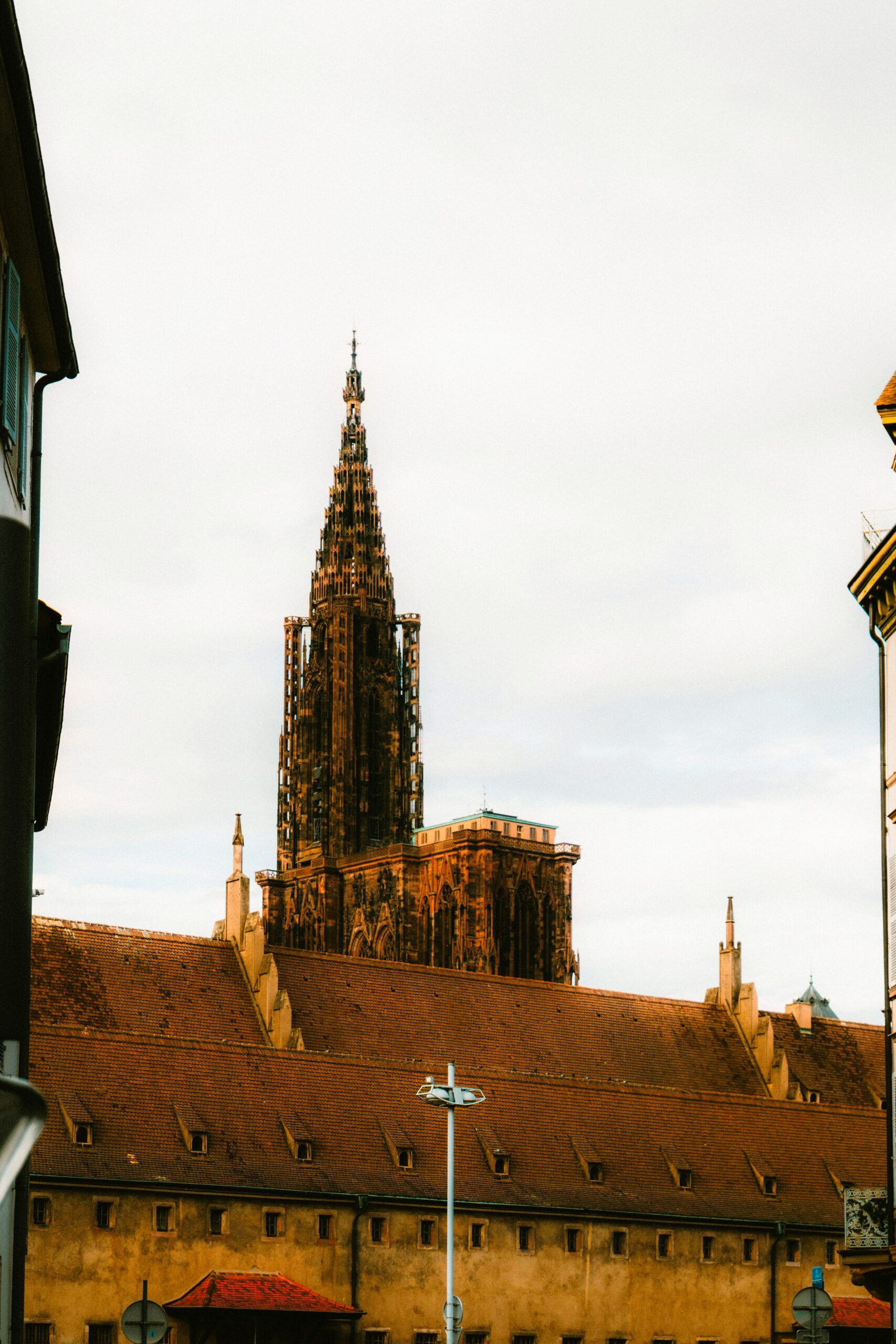
The cathedral stands as a singular transition point between the High Middle Ages and the Renaissance, defined by its asymmetric silhouette and Vosges sandstone hue. For the thoughtful traveler, this structure is more than a religious site; it is an engineering marvel that held the title of the world’s tallest building for over two centuries. The interior houses the 16th century astronomical clock, a masterpiece of mathematical complexity that still performs its daily procession. To truly appreciate the scale without the claustrophobia of the midday crowds, arrive exactly at 8:30 AM when the doors first open to witness the morning light filtering through the 14th century stained glass in near silence. This early entry allows you to observe the intricate facade carvings at eye level from the Place de la Cathédrale before the tour groups occupy the square, ensuring a focused study of the spire’s verticality.
La Petite France – Historical Preservation and Urban Hydrology
This district serves as the architectural soul of the city, where timber framed houses from the 16th and 17th centuries line a network of four narrow canals. Originally the quarters of tanners, millers, and fishermen, the area offers a direct look at how medieval urban planning integrated with the natural flow of the Ill River. The preservation here is meticulous, reflecting the unique Alsatian identity that survived centuries of border shifts. While the main thoroughfares can feel congested, you can find a more authentic perspective by walking the narrow Rue des Moulins toward the revolving bridge, where you can watch the lock system in operation. A strategic way to experience the area is to visit during the blue hour just after sunset when the reflection of the illuminated facades on the still water provides a clearer view of the structural details often missed during the busy afternoon hours.
Barrage Vauban – Strategic Defense and Panoramic Perspectives
Built in the late 17th century by the engineer Vauban, this fortified bridge and weir was designed to flood the southern approach to the city during an attack. It represents the clinical, defensive mindset of the Louis XIV era, contrasting sharply with the organic growth of the neighboring Petite France. The structure functions as a physical timeline of military history, housing weathered sculptures from the cathedral within its internal corridor. For the traveler seeking a logical layout of the city, the grassy rooftop terrace is essential. Access the terrace via the internal staircase to see the Ponts Couverts and the cathedral spire aligned in a single frame. This vantage point is best utilized in the late afternoon when the sun is behind you, providing the clearest visibility of the medieval fortifications without the glare that typically obscures the horizon during the midday peak.
Palais Rohan – Enlightenment Sophistication and Artistic Continuity
The Palais Rohan serves as a grand physical boundary between the medieval density of the cathedral square and the flowing energy of the Ill River. This 18th century episcopal palace is the pinnacle of French Baroque architecture in the city, offering a sophisticated contrast to the surrounding timber frames. For the strategic traveler, the palace represents the intellectual shift of the Enlightenment, housing three distinct museums within its walls that trace the evolution of Alsatian fine arts, archaeology, and decorative history. The experience is best defined by the rhythmic symmetry of its courtyard and the opulence of the syncretic French German interior designs. To avoid the primary museum queues, enter through the river facing terrace instead of the main courtyard to access the Archaeological Museum first, which provides a chronological foundation for the city’s Roman origins before you ascend to the more decorative royal apartments on the upper floors.
The Neustadt District – Imperial Scale and Prussian Urbanism
The Neustadt, or New Town, is a monumental testament to the German Imperial period following 1871, characterized by wide boulevards and heavy, prestige driven architecture. This district offers a stark departure from the cramped quarters of the Grande Île, showcasing a deliberate urban expansion that prioritized hygiene, light, and administrative power. Walking through Place de la République allows you to observe the intersection of Neo Renaissance and Art Nouveau styles, a visual representation of the city’s complex political identity. It is a necessary stop for understanding Strasbourg’s dual heritage beyond the typical postcard imagery. A practical way to navigate this expansive area is to use the tram lines B or C from the city center to the République stop, then walking toward the National and University Library to find the quiet, landscaped gardens tucked behind the main circular plaza for a peaceful vantage point.
The European Quarter – Modern Diplomacy and Contemporary Glasswork
Located at the northern edge of the city, the European Quarter is the modern heartbeat of the continent’s administrative identity, home to the European Parliament and the Council of Europe. This area offers a clinical yet fascinating look at contemporary glass and steel architecture, symbolizing transparency and post war reconciliation. While the historic center feels fixed in time, this district is constantly evolving, reflecting Strasbourg’s role as a de facto capital of Europe. The circular design of the Louise Weiss building is particularly striking when viewed from the water, illustrating the scale of modern democratic institutions. For a more intimate perspective, follow the promenade along the Marne Rhine Canal where you can observe the reflection of the Parliament’s flag lined facade in the water. This path is often overlooked by those taking the shuttle, providing a much quieter walking route that connects the Orangerie Park directly to the heart of the diplomatic zone.
A 3 Day Strategic Itinerary
A logical exploration of Strasbourg requires a geographical division that respects the walking rhythm of the city. Day one should focus exclusively on the Grande Île, beginning at the Cathédrale Notre Dame de Strasbourg and transitioning into the refined rooms of the Palais Rohan. This minimizes transit and allows for a deep immersion in the medieval core. On the second day, move westward toward the Petite France district to observe the interlocking canals and timber framed aesthetics before walking the short distance to the Barrage Vauban for an elevated perspective of the historical fortifications. Reserve the third day for the broader urban expansions beyond the river. Start with the Prussian grandeur of the Neustadt district and conclude with a tram ride to the European Quarter. This sequence ensures a steady progression from the city’s ancient origins to its modern diplomatic identity while avoiding the exhaustion of repetitive backtracking through the crowded central squares.
The Unhurried Mindset
The unspoken rule of Strasbourg is to respect the transition between the frantic pace of the morning markets and the slow, deliberate ritual of the evening winstub. To enjoy this city properly, you must accept that its beauty is found in the stillness of the side streets rather than the spectacle of the main plazas. The soulful way to experience Alsace is to sit by the Ill River at dusk, away from the designated photo spots, and watch the light change on the sandstone. True travel here is found in the pauses—the moment you stop looking at the map and start noticing the subtle shift from French elegance to Germanic structure.
Expand Your Journey
Strasbourg serves as the primary gateway to the wider Alsatian wine route and the rugged beauty of the Vosges Mountains. Beyond the city limits, the region offers a dense network of fortified villages and high altitude castles that demand a similar level of strategic planning. Whether you are moving south toward Colmar or crossing the Rhine into the Black Forest, the same principles of deliberate, unhurried observation apply.
The most profound discoveries in Alsace are rarely the loudest; they are the ones found when you choose the quieter path.