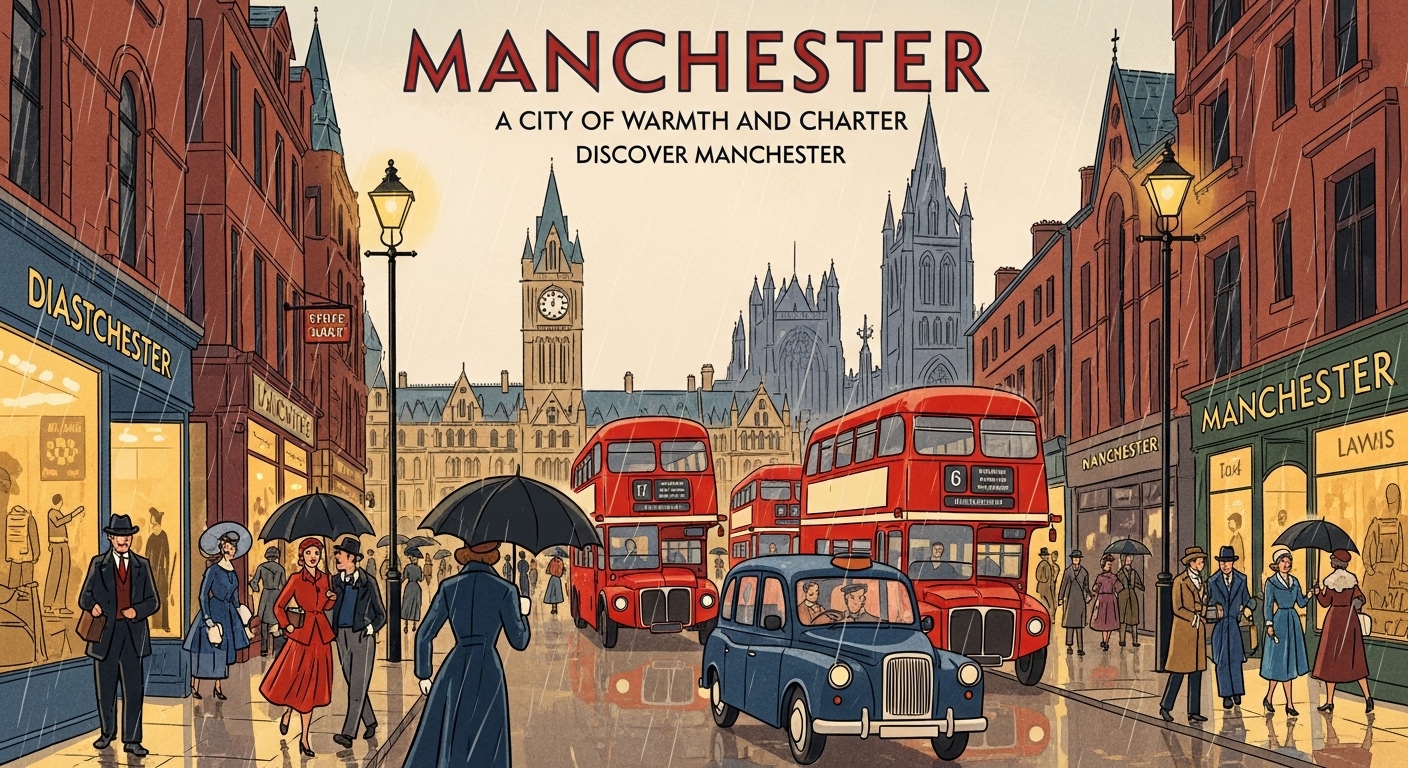
Manchester is a city that rewards the patient observer. Beyond its reputation for industrious bustle and iconic music, there is a rhythmic, quiet soul found in the reflection of a canal or the steam rising in a Northern Quarter cafe. This collection is designed for the “unhurried traveler” those who seek to carry a piece of Manchester’s understated elegance wherever they go.
The Slow Pour
Watch the world drift by through a steam-fogged window in this quiet tribute to the city’s coffee culture. Let this Manchester Wallpaper bring a sense of morning stillness to your digital space.
Guardian of the Square
There is a timeless gravity in the stone spires that have watched over the city’s heart for generations. This Manchester Wallpaper captures the grand, unhurried pace of history.
The Secret Corridor
Wander away from the main thoroughfare to find the quiet rhythm of the historic brickwork. This Manchester Wallpaper celebrates the beauty found in the city’s hidden architectural corners.
A Sky of Cotton and Steel
As the day fades, the city transforms into a gentle tapestry of light and shadow. Carry the calm of the evening horizon with you through this Manchester Wallpaper.
The Rhythmic Metrolink
Journey across the city at a pace that allows you to notice every detail. This Manchester Wallpaper honors the steady, rhythmic pulse of the city’s iconic yellow tram.
Still Waters of the Basin
Find a moment of absolute serenity where the canal water meets the industrial soul of the city. This Manchester Wallpaper serves as a digital sanctuary for the weary traveler.
Edinburgh often suffers from its own success, where the sheer volume of visitors can turn its medieval streets into a crowded obstacle course. Most travelers make the mistake of treating the Royal Mile as a sprint, ticking off landmarks while missing the subtle architectural layers and quiet closes that define the city’s character. This guide prioritizes a deliberate, unhurried approach to the best things to do in Edinburgh, shifting focus from frantic sight hopping to high utility experiences. By timing your visits to bypass peak bottlenecks and selecting sites that offer deep historical immersion over surface level novelty, you can navigate the Scottish capital with more clarity and less friction. Here is how to see Edinburgh without the exhaustion.
Edinburgh Castle – The Strategic Historical Apex
Edinburgh Castle serves as the definitive anchor of the city’s skyline, a fortress built upon the plug of an extinct volcano that has witnessed centuries of royal transitions and military sieges. For the thoughtful traveler, the value lies not just in the panoramic views of the Firth of Forth but in the layered architectural evolution from the 12th century St. Margaret’s Chapel to the Renaissance era Great Hall. Navigating this site requires a tactical approach to avoid the mid morning surges that often congest the Crown Square and the Honours of Scotland exhibit. A more rewarding experience is found by arriving exactly at the gates for the opening slot, allowing you to appreciate the stark silence of the Scottish National War Memorial before the one o’clock gun draws the inevitable crowds. This early entry ensures a coherent understanding of the castle’s role as both a defensive stronghold and a seat of power.
The Real Mary King’s Close – A Masterclass in Subterranean Social History
The Real Mary King’s Close offers a rare, vertical slice of 17th century urban life, preserved beneath the modern foundations of the Royal Mile. This network of buried streets and tenement houses provides a visceral connection to a period when the city’s density forced inhabitants into increasingly cramped, subterranean conditions. Rather than a mere ghost tour, the experience functions as a rigorous social history lesson, illustrating the stark class divides and the devastating impact of the plague on the local population. To maximize the utility of your visit, consider booking the final tour of the evening, which often benefits from a more somber, reflective atmosphere and smaller group sizes than the frantic afternoon sessions. This timing allows for a deeper engagement with the guide’s historical narrative, ensuring that the architectural remnants of the Old Town are understood as lived environments rather than static museum displays.
National Museum of Scotland – The Curated Synthesis of Scottish Identity
The National Museum of Scotland is an essential stop for those seeking to synthesize the disparate threads of the nation’s scientific, industrial, and artistic heritage within a single structure. The juxtaposition of the soaring, light filled Victorian Grand Gallery with the modern, sandstone clad Scotland galleries creates a spatial narrative that reflects the country’s own transition into modernity. For the strategic traveler, the museum offers a comprehensive overview of everything from the Lewis Chessmen to the technological innovations of the Scottish Enlightenment. While most visitors congregate around the popular biological displays on the lower levels, a more tranquil and observant path leads to the Level 7 roof terrace. This often overlooked vantage point provides a clear, 360 degree perspective of the city’s topography, offering a moment of quiet synthesis away from the bustling main halls and school groups. It remains the most efficient way to contextualize Scotland’s global impact.
Calton Hill – The Neoclassical Panorama of the Scottish Enlightenment
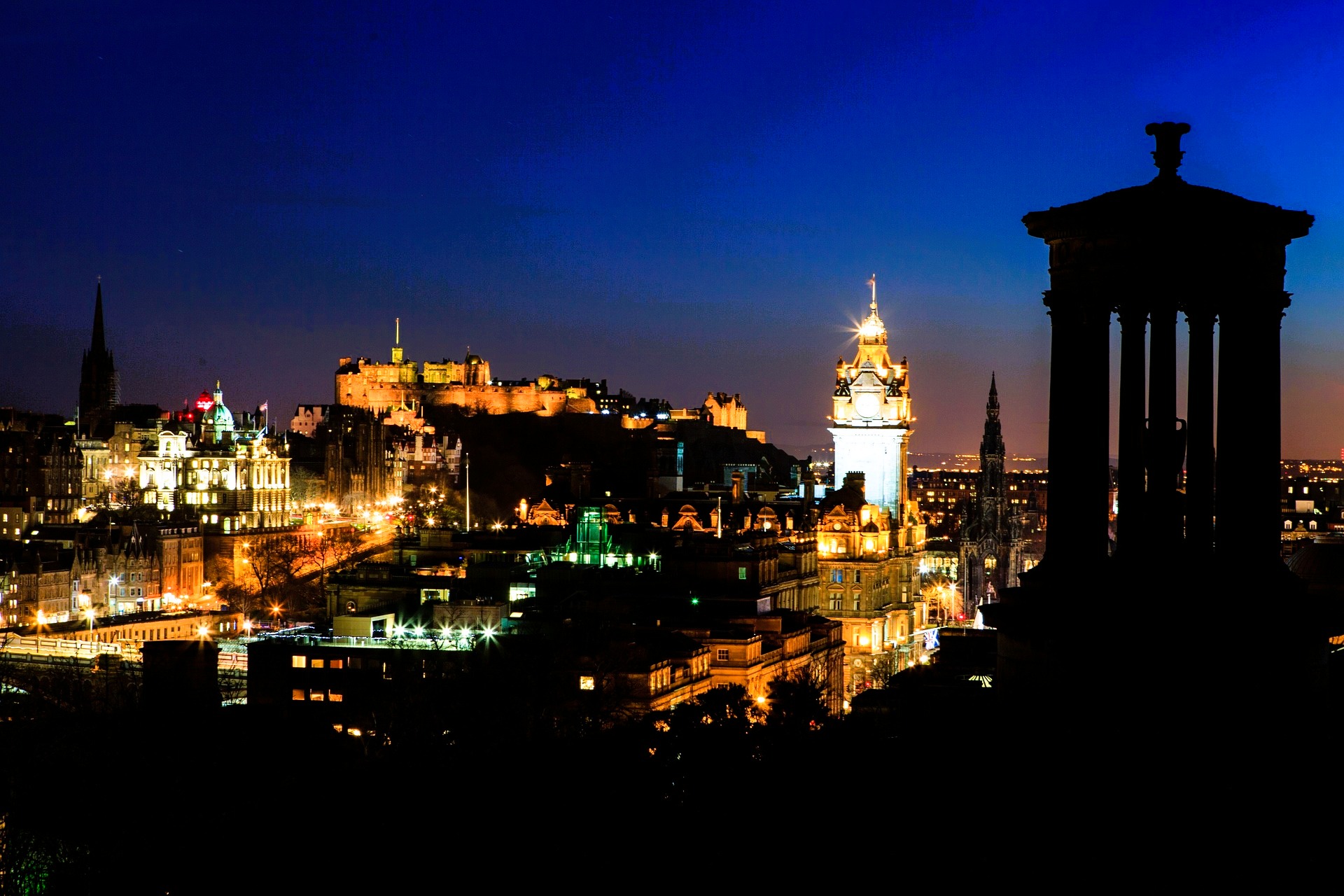
Calton Hill serves as the architectural manifestation of Edinburgh’s claim as the Athens of the North, offering an intellectual and visual survey of the city’s neoclassical ambitions. The site is home to the stark, unfinished National Monument and the Dugald Stewart Monument, both of which provide a framed perspective of the skyline that is unmatched for its clarity. For the thoughtful traveler, the value lies in the intersection of civic pride and urban planning, where the rigid geometry of the New Town meets the jagged silhouette of the Old Town. To avoid the standard tourist congestion that gathers at the foot of the hill near the main stairs, a more efficient and tranquil approach is to take the winding path from the back of the hill near the Royal Terrace. This alternative route offers a gradual reveal of the Firth of Forth and the Leith docks, allowing for a more observant and unhurried ascent.
Palace of Holyroodhouse – The Royal Narrative of Sovereign Continuity
Situated at the eastern terminus of the Royal Mile, the Palace of Holyroodhouse functions as the official residence of the British monarch in Scotland and a repository of the nation’s royal lineage. The experience transitions from the somber, wood paneled chambers of Mary, Queen of Scots, to the grand Baroque State Apartments, reflecting a shift from medieval intrigue to modern diplomatic utility. This site is essential for those who wish to understand the physical setting of centuries of political power without the frantic energy of the nearby castle. A rewarding way to deepen this visit is to spend time in the ruins of the 12th century Holyrood Abbey, located directly adjacent to the palace, where the roofless arches provide a quiet space for reflection on the passage of time. Most visitors rush through the garden, but looking for the small, discreet Queen Elizabeth II Rose Garden offers a serene moment away from the main tour path.
Dean Village – The Post Industrial Tranquility of the Water of Leith
Dean Village offers a stark, refreshing contrast to the stone heavy density of the city center, functioning as a quiet enclave that preserves its heritage as a 19th century grain milling hub. The timber framed buildings and the gentle flow of the Water of Leith provide a sensory reset for the thoughtful traveler, emphasizing the city’s ability to hide its most picturesque corners in plain sight. This area is less about specific landmarks and more about the atmospheric quality of the yellow sandstone architecture and the lush greenery that lines the riverbanks. For a logical and efficient exit back toward the West End, follow the riverside walkway toward the Stockbridge neighborhood instead of retracing your steps up the steep cobbles of Bell’s Brae. This path allows you to encounter the St. Bernard’s Well, a beautiful classical rotunda that remains one of the city’s most overlooked architectural gems, perfectly capping an unhurried morning.
A 3 Day Strategic Itinerary
A logical exploration of Edinburgh requires a transition from the dense history of the Old Town to the airy elevations of the New Town. Day one focuses on the Royal Mile, beginning with an early entry at Edinburgh Castle before descending through the historic closes to The Real Mary King’s Close. This avoids the peak midday foot traffic in the city’s oldest corridor. Day two shifts toward the eastern edge of the city center, pairing the Palace of Holyroodhouse with the nearby ascent of Calton Hill. This geographical pairing allows for a study of royal history followed by a neoclassical sunset. Day three prioritizes the museum district and the Water of Leith, starting with the National Museum of Scotland in the Southside before a scenic walk toward the post industrial quiet of Dean Village. This rhythm minimizes backtracking and utilizes the city’s natural topography for a low friction experience.
Exploring the Scottish Frontier
The strategic depth found in the capital serves as a foundational layer for understanding the broader Scottish landscape. As you move beyond the city limits, the architectural precision of the Enlightenment gives way to the raw, untamed geography of the Highlands and the coastal heritage of the East Neuk. Each region offers a distinct narrative of resilience and beauty that complements the urban history of the capital.
Manchester’s eating rhythm is built around hearty midday sustenance and late evening gatherings. Locals lean into pub culture, where food is paired with ale and conversation, while tourists often misstep by chasing breakfast trends or expecting fine dining at every turn. The city thrives on honest portions and communal tables, and visitors who skip the pubs or arrive too early for dinner miss the pulse of how Mancunians actually eat.
Lancashire Hotpot – The warmth of working class tables
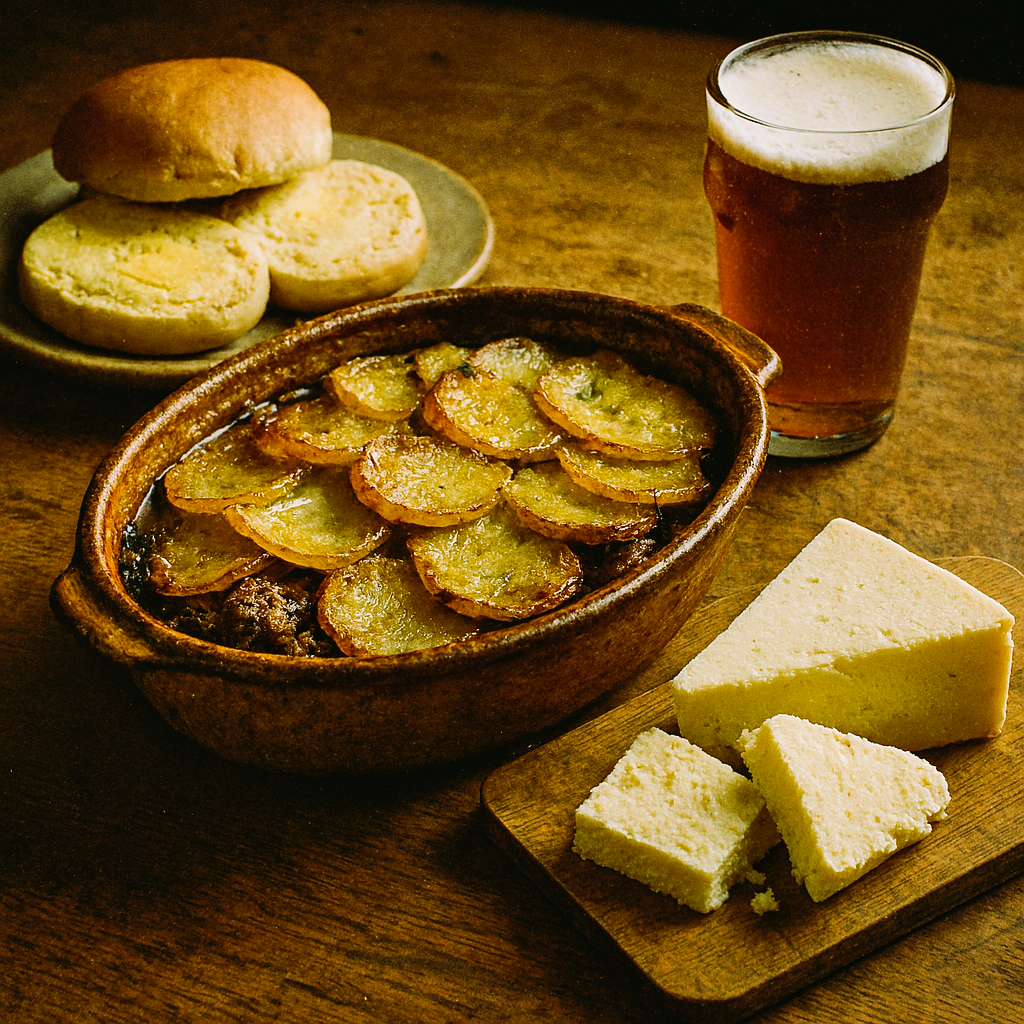
The hotpot is Manchester’s anchor dish, a slow baked stew of lamb, onions, and sliced potatoes layered in a heavy ceramic pot. Its flavor is earthy and sustaining, the kind of meal that once carried mill workers through long shifts. The texture shifts between tender meat and crisp potato tops, with a broth that clings to bread when dipped. Eating it in a pub setting feels natural, where the dish is less about presentation and more about comfort. Tourists often rush past it in search of novelty, but the hotpot is the city’s most honest plate. Practical tip: order it early in the evening, as pubs often run out once the regulars have had their share.
Barm Cakes – Everyday bread with a local accent
The barm cake is Manchester’s humble bread roll, soft and slightly flour dusted, often split and filled with butter or a slice of bacon. Its taste is plain but comforting, a neutral canvas that locals rely on for quick meals. The cultural weight lies in its ubiquity: every bakery and corner shop has them, and they carry the rhythm of daily life more than any elaborate dish. Eating one is less about indulgence and more about belonging, a reminder that food can be simple and still matter. Practical tip: ask for them fresh in the morning, when the rolls are still warm from the oven and the texture is pillowy rather than dry.
Joseph Holt Bitter – A pint that speaks the city’s dialect
This amber ale is Manchester’s liquid tradition, brewed with a balance of malt sweetness and a dry, slightly bitter finish. The taste is straightforward, not flashy, with a body that pairs naturally with pub food. Its cultural significance lies in its accessibility: Holt’s pubs are scattered across neighborhoods, serving as gathering points where conversation flows as easily as the beer. Drinking it is less about chasing craft trends and more about continuity, a pint that has been poured for generations. Practical tip: order it in a Holt’s pub rather than elsewhere, as the freshness and pour technique make a noticeable difference.
Lancashire Cheese – Crumbly heritage on the market stalls
Lancashire cheese is pale, crumbly, and slightly tangy, with a texture that breaks apart easily but melts smoothly when cooked. Its flavor is clean and sharp, a contrast to heavier dishes, and it carries the history of rural dairies that supplied the city. On market stalls, wedges are cut thick and wrapped in paper, a tactile reminder of food before packaging. Eating it plain with bread or fruit shows its character best, though locals often fold it into pies. Practical tip: buy from market vendors rather than supermarkets, as the freshness and variety of regional styles are far greater.
A route shaped by hearth and pint
The sequence begins with a buttered barm cake in the morning, a soft roll that sets the tone with simplicity. From there, Lancashire cheese at the market provides a mid day lift, its crumbly tang sharpening the palate before heavier fare. The evening pivots to Lancashire hotpot, a dish that anchors the city’s working class heritage, best enjoyed in a pub where the ceramic pot arrives steaming. The route closes with a pint of Joseph Holt bitter, amber and steady, tying the day together in the rhythm of Manchester’s pubs. This flow mirrors the geography of the city: bakeries and markets in the center, pubs tucked into neighborhoods, each stop building naturally into the next.
Sit, don’t rush – the unspoken rule
Eating in Manchester is as much about pace as it is about flavor. Locals linger, whether over bread rolls in the morning or a pint late at night, and the rhythm is communal rather than hurried. Tourists often misstep by treating pubs like quick service stops, but the etiquette is to sit, settle, and let the food and drink carry conversation. Practical awareness means ordering at the bar, then holding your space without fuss. The city rewards patience, and the meal feels incomplete if rushed.
Manchester’s plate speaks with clarity
The city’s food identity is not built on extravagance but on honest sustenance. Bread, cheese, stew, and ale form a framework that is both practical and deeply cultural, reflecting the industrial past and the communal present. Each dish carries weight beyond taste, anchoring visitors to the rhythm of the city. To understand Manchester through food is to accept its straightforwardness: hearty, sustaining, and rooted in tradition. This guide cements that identity, showing that the city’s culinary soul lies in its balance of simplicity and heritage.
The first thing I notice is the rhythm of footsteps on old stone steady, unhurried, echoing beneath the drizzle. London doesn’t rush me; it waits, with its fog curling around bridges and its markets breathing out the scent of roasted chestnuts and damp paper. I move slowly, letting the city unfold in textures: the worn iron railings cool beneath my hand, the golden light catching on the Thames at dusk, the quiet hum of buses rolling past. Here, time feels layered every street corner holding centuries, every pause revealing something I might have missed if I hurried. My philosophy is simple: London is not a checklist, it is a conversation. To linger in its parks, to trace the curve of its river, to stand still long enough for the bells to carry across the air this is how the city speaks. I give it my time, and in return, it gives me depth.
Tower of London
The Tower of London feels heavy with centuries, its stone walls carrying the weight of whispered stories. As I walk through its courtyards, the air is cool and slightly metallic, like iron gates touched by rain. The sound of footsteps echoes against the cobblestones, mingling with the distant caw of ravens that seem to guard the silence. Inside, the dim light filters through narrow windows, casting long shadows that stretch across worn floors. The faint smell of damp stone and aged wood lingers, reminding me that this place has endured storms, fires, and countless lives passing through. History here is not abstract it presses close, in the thickness of the walls and the hush of the chambers.
Unhurried Tip: Visit early in the morning when the air is still cool and the crowds have not yet arrived.
St. Paul’s Cathedral
Inside St. Paul’s, sound rises like incense. A single note from the organ swells into the dome, reverberating until it feels like the air itself is vibrating. The marble beneath my feet is cool, polished by centuries of footsteps, and the faint scent of candle wax lingers near the chapels. Light pours through high windows, shifting with the hour sometimes golden, sometimes pale, always softened by the vastness of the space. The dome itself feels alive, a canopy of painted detail that draws my gaze upward until I lose track of time. Outside, the bells mark the hours with a resonance that carries across the city, reminding me that London breathes in rhythm with this cathedral.
Unhurried Tip: Arrive late afternoon when the sun angles through the dome, creating a warm glow across the nave.
Westminster Abbey
Westminster Abbey is a place where silence feels textured. The air carries the faint scent of old books and polished wood, mingled with the coolness of stone. As I walk through the nave, the light shifts across memorials carved with names that have shaped history. The sound of footsteps is softened by centuries of prayer, and the hush is punctuated only by the distant murmur of visitors. In the cloisters, ivy climbs the walls, and the garden breathes with a stillness that contrasts the city outside. The Abbey’s atmosphere is layered solemn yet tender, monumental yet human. Every detail, from the worn carvings to the flicker of candles, feels like a reminder that time here is not linear but circular, looping back through generations.
Unhurried Tip: Step into the cloisters during midday when sunlight filters gently, and the crowds thin.
Buckingham Palace
Buckingham Palace stands with a kind of restrained elegance. The façade gleams pale against the sky, its symmetry softened by the play of light across windows and stone. The air outside carries the scent of fresh-cut grass from the surrounding gardens, mingled with the faint aroma of street vendors nearby. The soundscape shifts depending on the hour sometimes the rhythmic clatter of hooves during the Changing of the Guard, sometimes the quiet hum of traffic beyond the gates. Standing before the palace, I feel the weight of ceremony, yet also the simplicity of a building that has watched seasons change endlessly. The golden railings catch the morning sun, and the atmosphere feels both formal and strangely intimate, as if the palace itself is part of London’s daily rhythm.
Unhurried Tip: Arrive just after sunrise when the gates glow softly and the crowds have not yet gathered.
Houses of Parliament & Big Ben
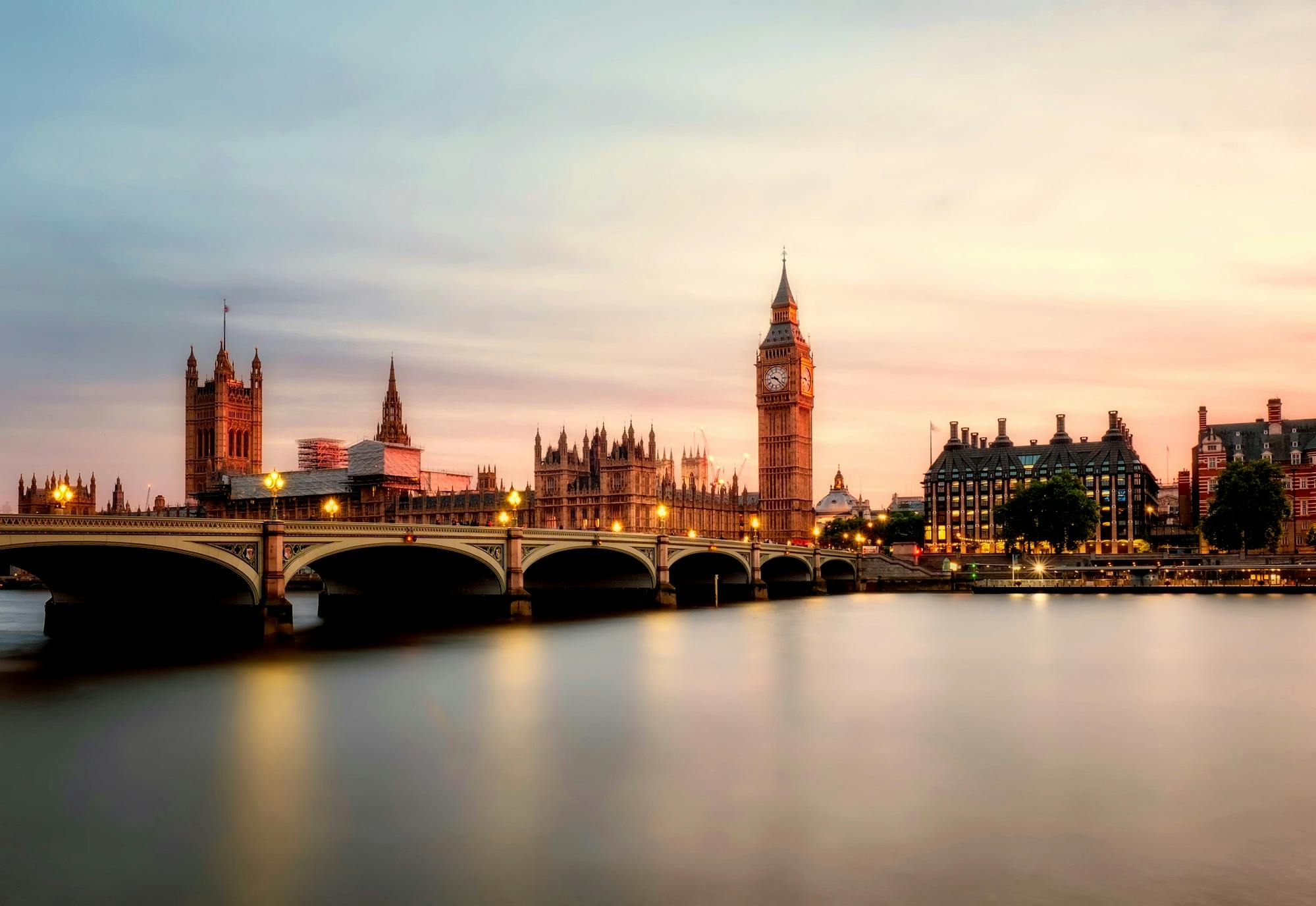
The Houses of Parliament rise like a carved silhouette against the river, their Gothic details etched in stone and shadow. Big Ben’s clock face glows warmly, its chimes rolling across the city with a resonance that feels both ceremonial and personal. The air here smells faintly of the river mud, water, and the metallic tang of bridges nearby. As twilight falls, the lamps along Westminster Bridge flicker on, casting golden halos that shimmer on the Thames. The soundscape is layered: the rush of buses, the murmur of pedestrians, and then the deep, measured toll of the clock that seems to slow everything around it. Standing here, I feel the city’s heartbeat align with the rhythm of time itself.
Unhurried Tip: Stand on Westminster Bridge at twilight when the lights glow and the river reflects the city’s rhythm.
Tower Bridge
Tower Bridge is more than steel and stone it is movement, rhythm, and light. As I walk across, the wooden planks beneath my feet carry the faint vibration of traffic, while the river below breathes with the tide. The smell of the Thames drifts upward brackish, metallic, softened by the cool evening air. The towers rise like guardians, their Gothic details etched against the sky, and when the bridge lifts, the sound of gears grinding is both mechanical and ceremonial. At night, the lamps glow amber, casting reflections that ripple across the water. Standing here, I feel London’s duality: ancient and industrial, ceremonial and everyday.
Unhurried Tip: Pause at dusk when the bridge glows and the river mirrors the city’s heartbeat.
The British Museum
The British Museum feels like a cathedral of memory. The Great Court’s glass roof bends light into soft patterns, illuminating marble that hums with footsteps. The air carries a faint scent of polished stone and paper, mingled with the quiet murmur of voices in dozens of languages. Each gallery feels like a pause in time Egyptian statues standing silent, Greek marbles glowing under pale light, manuscripts breathing faintly of ink and age. The atmosphere is hushed yet alive, as if history itself is whispering. I find myself slowing, tracing details with my eyes, letting silence settle between each discovery.
Unhurried Tip: Arrive early morning when the Great Court is quiet and the light is soft.
Trafalgar Square
Trafalgar Square is a stage where the city breathes openly. The fountains spray fine mist into the air, catching sunlight that turns droplets into fleeting jewels. The soundscape is layered pigeons fluttering, bus engines humming, voices rising in laughter or protest. The stone beneath my feet is warm from the day’s sun, and the air smells faintly of exhaust mingled with roasted chestnuts from nearby vendors. Nelson’s Column rises above it all, steady and solemn, while the lions crouch in bronze silence. The square feels both monumental and human, a place where history and daily life meet without ceremony.
Unhurried Tip: Visit in late afternoon when the fountains glow and the square softens into golden light.
The National Gallery
The National Gallery is a sanctuary of light and silence. As I step inside, the air cools, carrying the faint scent of varnish and aged canvas. The wooden floors creak softly underfoot, and the hush is punctuated only by the shuffle of visitors. Paintings glow under carefully angled light Turner’s skies alive with color, Vermeer’s interiors breathing with quiet detail. The atmosphere is contemplative, inviting me to linger before each canvas, to let my eyes adjust to the subtleties of brushstroke and shadow. Time slows here; each painting feels like a conversation, patient and unhurried.
Unhurried Tip: Visit mid-morning when the galleries are quiet and the light is gentle.
Hyde Park
Hyde Park is London’s breath of green. The grass carries dew that dampens my shoes, and the air smells of earth and wet leaves. Birds call across the Serpentine, their voices echoing against the still water. Joggers pass quietly, their rhythm blending with the rustle of trees. The light shifts gently morning mist softening outlines, afternoon sun warming benches, twilight casting long shadows across the paths. The park feels timeless, a place where the city exhales. Sitting beneath an oak, I hear the distant hum of traffic fade into silence, replaced by the sound of wind threading through branches.
Unhurried Tip: Arrive at sunrise when mist rises from the lake and the park feels untouched.
Conclusion: Slowing Down in London
I believe every journey begins not with a ticket, but with a decision to move slowly. London, with its layers of history and quiet corners, invites me to take that decision seriously. If you let yourself pause on a bridge, in a cloister, beside a fountain you will find that the city speaks softly, and its voice lingers long after you leave. Start your thoughtful journey, and let London unfold at its own pace.
Manage Consent
To provide the best experiences, we use technologies like cookies to store and/or access device information. Consenting to these technologies will allow us to process data such as browsing behavior or unique IDs on this site. Not consenting or withdrawing consent, may adversely affect certain features and functions.
Functional
Always active
The technical storage or access is strictly necessary for the legitimate purpose of enabling the use of a specific service explicitly requested by the subscriber or user, or for the sole purpose of carrying out the transmission of a communication over an electronic communications network.
Preferences
The technical storage or access is necessary for the legitimate purpose of storing preferences that are not requested by the subscriber or user.
Statistics
The technical storage or access that is used exclusively for statistical purposes.The technical storage or access that is used exclusively for anonymous statistical purposes. Without a subpoena, voluntary compliance on the part of your Internet Service Provider, or additional records from a third party, information stored or retrieved for this purpose alone cannot usually be used to identify you.
Marketing
The technical storage or access is required to create user profiles to send advertising, or to track the user on a website or across several websites for similar marketing purposes.