
Hamburg eats according to the tides and the North Sea wind. The morning belongs to the fish markets where the early catch dictates the menu. Locals skip the heavy hotel breakfasts for a quick pastry grabbed at a corner bakery. Lunch is often a functional, hot meal in the Kontorhaus district, while dinner slows down in the neighborhood taverns of St. Pauli or Ottensen. A common mistake is seeking a quiet dinner late on a Sunday when many traditional kitchens close early. Visitors also tend to overlook the specific etiquette of the fish roll; it is a standing snack, not a sit down meal. Respecting the harbor’s pace means eating when the work is done, usually accompanied by a sharp, cold pilsner.
The essential journey through the city’s flavor includes a pickled herring Fischbrötchen at the harbor, a hearty plate of salted beef Labskaus, a buttery cinnamon sugar Franzbrötchen, and a bowl of Finkenwerder Scholle pan fried with speck.
Fischbrötchen – The Harbor’s Essential Handshake
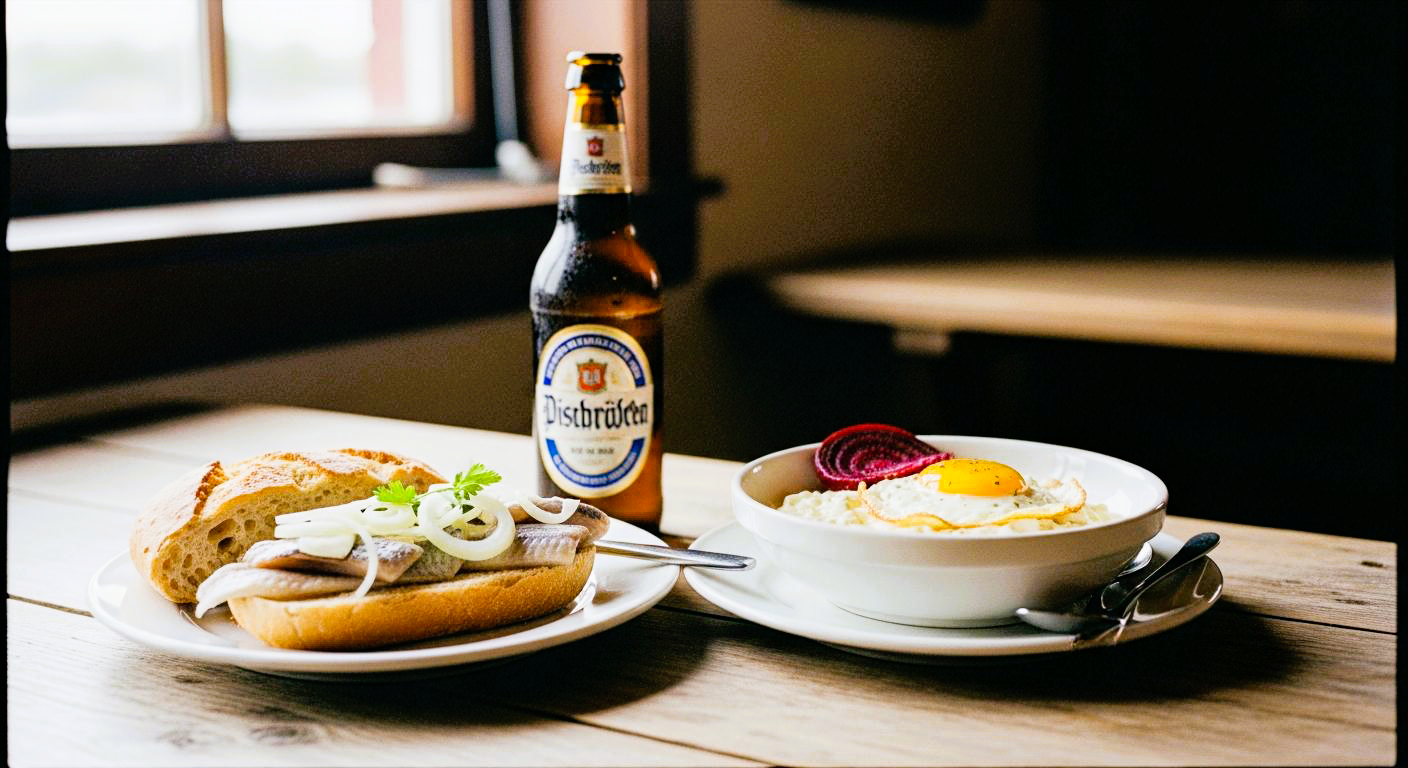
Standing on the Landungsbrücken pontoons, where the air smells of diesel and brine, the Fischbrötchen is the immediate culinary answer. It is not complicated; a crunchy white roll holds cold, firm Bismarck herring, crisp raw onions, and sometimes a mild remoulade. The contrast is sharp the biting acidity of the pickle against the soft interior of the bread and the oily richness of the fish. You eat it standing up, facing the Elbe, watching container ships maneuver. It is a working snack for a working port, eaten quickly between tasks. For the best texture, avoid pre made ones sitting under heat lamps and always ask for one made fresh; the bread must crackle against the cold fish. The experience is quick, elemental, and entirely defined by the proximity to the cold North Sea water.
Labskaus – History on a Plate of Red
Labskaus is a challenging dish visually, a bright magenta mash born from long sea voyages where fresh food was scarce. It is a rough mixture of salted beef, potatoes, and beetroot, ground together into a thick paste. The taste is deeply savory, earthy from the beets, and intensely salty. Traditionally, it arrives topped with a fried egg and accompanied by a rolled sour herring and a gherkin on the side. These acidic elements are necessary to cut through the dense richness of the mash. You will find it in traditional Gaststätten with dark wood paneling and maritime memorabilia. While it looks intimidating, the flavor is comforting and robust. It is a heavy meal, so plan for a long walk along the Alster afterward rather than a productive afternoon.
Franzbrötchen – The Morning Sweet Specific to Hamburg
This flattened pastry is Hamburg’s answer to the croissant, but denser and heavily spiced. A Franzbrötchen is made from laminated dough, similar to Danish pastry, filled with butter and cinnamon sugar, then pressed flat before baking. The result is a caramelized, sticky exterior that gives way to soft, buttery layers inside. The cinnamon flavor is dominant, bordering on aggressive, and the sweetness is substantial. Locals grab them from neighborhood bakeries in the morning to pair with strong black coffee. The texture varies significantly depending on the bakery; some are flaky, while others are doughy and almost wet with butter. Look for the darkest ones in the display case, as the nearly burnt edges carry the best caramelized flavor. It is a messy, satisfying start to a gray Hamburg day.
Finkenwerder Scholle – The North Sea Fried in Bacon Fat
Named after a former fishing village across the Elbe, this dish is the definitive way Hamburg prepares plaice. The flatfish is whole, delicate, and mild, but its preparation is robust. It is pan fried, traditionally in lard or butter, and generously covered with cubes of fatty speck (bacon) and North Sea shrimp. The skin crisps up, absorbing the smoky rendered fat from the bacon, while the white flesh underneath remains moist. It is usually served with potatoes piled high on the plate. The flavor profile is salt on salt, fat on fat, balanced only by the sweetness of the fresh fish. Because plaice is best eaten fresh, order this only when it is in season during the warmer months for the sweetest flesh. It requires patience to navigate the bones, a necessary ritual of the meal.
Following the Current from Dawn to Dusk
The route begins at the water’s edge in the early morning light where the Fischbrötchen provides a sharp, salty awakening. Moving from the Landungsbrücken towards the city center, a stop at a neighborhood bakery for a Franzbrötchen offers a necessary sugar transition before the day’s heavier commitments. Midday requires the grounding presence of Labskaus in a traditional Altstadt tavern, providing a dense, savory anchor that reflects the city’s maritime history. The journey concludes back toward the harbor or the Finkenwerder district for a dinner of Finkenwerder Scholle. This sequence respects the city’s geographic flow from the working docks to the merchant houses and back to the fishing heritage. It balances the bracing acidity of the morning with the rich, fatty textures of the evening, mirroring the transition from a brisk harbor breeze to the warmth of a wood paneled dining room.
The Silence of the Standing Table
In Hamburg, the most authentic interactions happen at the Stehtisch or standing table. This is the city’s true social equalizer found at harbor stalls and corner delis. Local etiquette favors a brisk, functional approach to eating rather than a long, performative sit down. When you approach a crowded standing table, a brief nod to those already there is the only required introduction. Do not linger once the meal is finished; the space is meant for the next person coming in from the cold. Efficiency and a lack of fuss are the primary markers of a local. Engaging in loud, intrusive conversation is considered a breach of the unspoken harbor code. Respect the brisk pace of the port by eating with focus and moving on when the task is done, leaving the space as clean as you found it.
A City Defined by Salt and Steel
Hamburg does not negotiate with its culinary identity. It remains a city rooted in the practicalities of the North Sea, where preservation, salt, and animal fat are the historical pillars of the kitchen. The food here is a reflection of endurance and trade, favoring the honest weight of a potato mash or the precise crispness of a fried fish skin over modern culinary trends. This is a landscape for the diner who appreciates consistency and the rugged charm of a cuisine that has changed little since the height of the Hanseatic League. To eat in Hamburg is to participate in a ritual of northern resilience, where every dish is a direct response to the cold wind and the gray water of the Elbe. It is a heavy, unapologetic, and deeply satisfying culinary heritage that rewards those who value substance over style.