
Tag: Edinburgh

  • The Granite Heart and the Smoked Hearth: Edinburgh 4 Essential Culinary Experiences

    The Granite Heart and the Smoked Hearth: Edinburgh 4 Essential Culinary Experiences

    Edinburgh operates on a tidal schedule driven by its Northern latitude. Breakfast is a sturdy affair, often centered on the roll and square sausage or a full fry up before the damp morning air settles. Lunch is functional, yet the afternoon belongs to tea and tablet. The primary mistake visitors make is ignoring the booking culture. Even neighborhood bistros in Leith or Stockbridge fill weeks in advance, and the city’s kitchens often shutter early compared to continental Europe, with last orders frequently called by nine. Expect a second wave of activity during festival seasons when the rhythm fractures into late night street food. Relying on walk ins for dinner in the New Town is a gamble that usually ends in disappointment or a fast food compromise.

    Cullen Skink – The Smoked Soul of the Coast

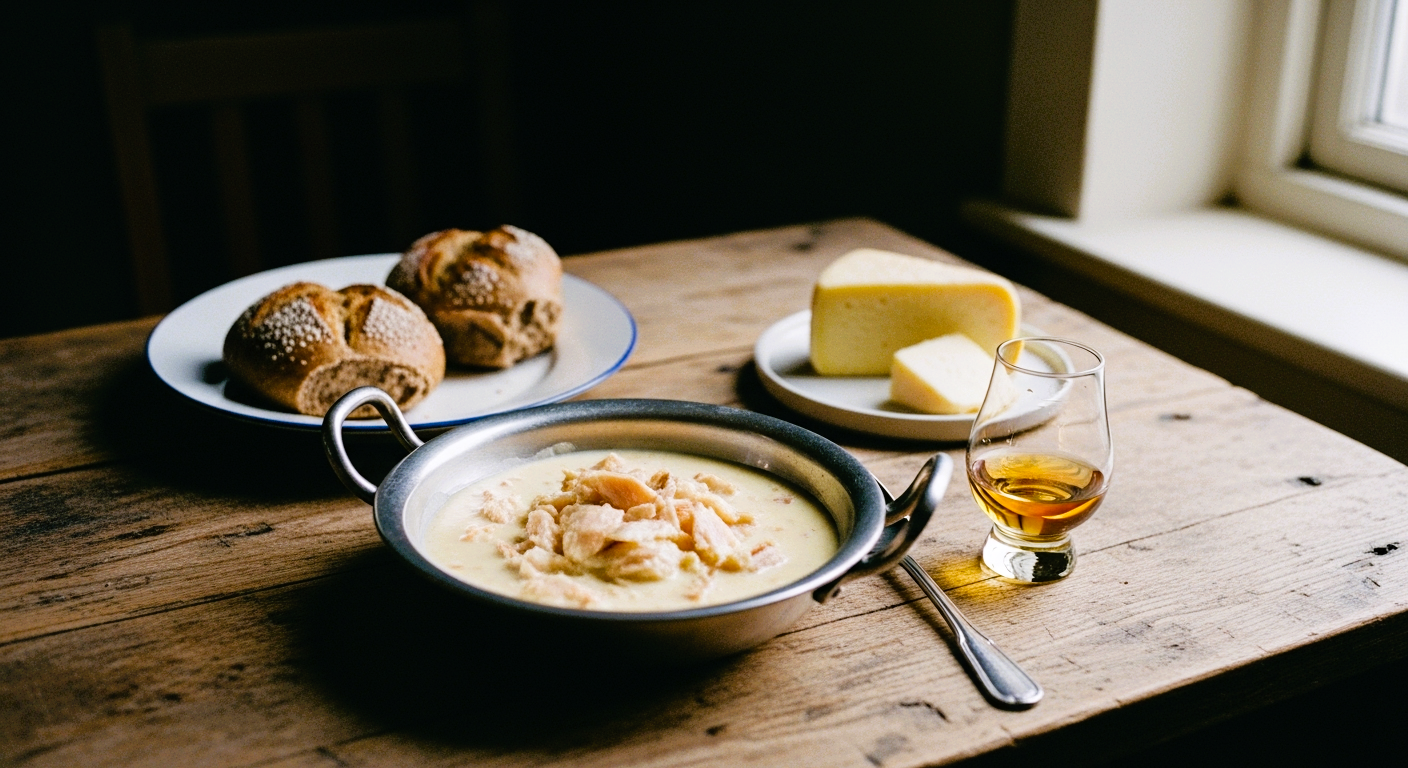
    This thick Scottish soup carries the brine and smoke of the North Sea directly to the palate. It is a robust chowder, undiluted by cream, relying instead on the starchy breakdown of potatoes and the oily richness of smoked haddock to achieve its comforting density. Served in a tavern near the Water of Leith, where the air already smells of salt and wet stone, it anchors you against the damp climate. The smoke is pervasive, clinging to the roof of your mouth long after the last spoonful of milky broth and flakey fish is gone. For the most authentic experience, seek out pubs that serve it with “well fired” rolls bread baked until the crust is nearly black, offering a bitter charcoal counterpoint to the rich soup; avoid places that garnish it excessively with parsley or cream swirls.

    Haggis, Neeps, and Tatties – An Earthy Highland Offering

    Haggis is often misunderstood, yet its flavor is a sophisticated balance of savory depth and spice. It is a crumbly sausage pudding, rich with iron from the offal, grounded by oatmeal, and intensely seasoned with black pepper and coriander. When served in the stone vaults beneath the Royal Mile, the setting amplifies the ancient feeling of the dish. The accompanying mash of swede (neeps) adds sweetness, while the potatoes (tatties) provide a neutral base, all usually bound together by a whisky spiked cream sauce. Forget the tourist traps playing bagpipes at the door; find a cellar bar where the focus is on the peppery kick of the meat rather than the ceremony. A dram of peaty whisky is the only suitable beverage to cut through the rich fat.

    The Tattie Scone – A Griddled Morning Essential

    This humble potato cake is the backbone of a Scottish breakfast, utilizing leftover mashed potatoes bound with flour and butter. It is not fluffy like a pancake but dense and savory, cooked on a flat griddle until speckled brown. The texture is soft in the middle with a necessary exterior chew. Found at weekend markets in Stockbridge or Grassmarket, it is best eaten hot amidst the bustle of vendors and wet pavement. The taste is pure, buttery potato comfort, acting as a sponge for bacon fat or egg yolk. The key practical approach is simplicity; buy it plain from a baker’s stall and eat it immediately while the edges are still crisp, rather than ordering it as a soggy component of a pre plated hotel breakfast buffet.

    Scottish Tablet and Peated Whisky – The Sweet and Smoky Finish

    Tablet is often mistaken for fudge, but the texture is entirely distinct. It is a crystalline confection of sugar, condensed milk, and butter, boiled to a precise point where it becomes brittle and grainy. The sweetness is ferocious, an immediate sugar shock that coats the teeth. It demands a counterpoint of equal intensity, found in a dram of heavily peated Highland or Islay whisky. The smoke and medicinal iodine notes of the spirit slice through the buttery sugar, cleansing the palate and creating a complex, lingering finish of fire and caramel. Buy a small bag from a traditional sweet shop rather than a souvenir tin; look for pieces that are pale golden and slightly granular, indicating it was handmade and beaten correctly before setting.

    From Market Heights to the Leith Waterfront

    Begin the morning in Stockbridge to secure a warm, griddled tattie scone while the market air is still sharp and damp. This starch heavy start provides the necessary insulation for the climb toward the Old Town. By midday, retreat into the stone walled vaults of the Royal Mile for the peppery, spiced depth of haggis, neeps, and tatties. This sequence respects the transition from casual street eating to the dense, historical comfort of the city center. As the North Sea mist rolls in during the late afternoon, descend toward the Leith docks. The salt forward Cullen skink acts as a restorative maritime anchor against the cooling temperatures. Conclude the circuit in a New Town snuggery, where the crystalline sweetness of tablet and the medicinal fire of peated whisky provide a sharp, clean break from the savory weight of the day. This route follows the city’s natural descent from the volcanic crags to the water’s edge.

    The Unspoken Etiquette of the Snug and the Sauce

    In Edinburgh, local identity is often expressed through the specific request for salt and sauce at a traditional chippy. This is a cultural marker rather than a mere preference. The sauce is a thin, tangy, brown condiment a hybrid of malt vinegar and spiced fruit sauce that defines the East Coast palate. To exist in this space like a local, you must accept this sharp, acidic addition without hesitation. When inside a traditional pub, observe the unspoken rule of the snug. These are small, partitioned spaces for low voiced conversation and the slow nursing of a spirit. Do not perform your appreciation for the history; instead, occupy your seat with a muted, stoic presence that mirrors the gray stone of the buildings outside. Respect the physical boundaries of these tight interiors by keeping your belongings tucked away and your presence contained, allowing the atmosphere of wood smoke to remain undisturbed.

    A Landscape Defined by the Hearth and the Haar

    Edinburgh’s culinary identity is built on a foundation of structural resilience and harsh geography. It is a city that favors the hearth over the showcase, prioritizing caloric density, intense smoke, and ancient preservation methods to combat its northern climate. The food here is unapologetically heavy, rooted in the land and the surrounding cold waters rather than the whims of global trends. Mastery of this landscape requires an appreciation for the subtle textures of oats and potatoes and the bold, medicinal qualities of its spirits. It is a cuisine of survival refined into a sophisticated craft of comfort. To dine here successfully is to understand that the best flavors are often hidden behind heavy oak doors or down steep, slippery wynds, away from the glare of modern artifice. The city does not change for the diner; the diner must adapt to the city.
  • Best Things to Do in Edinburgh: A Strategic Guide for the Thoughtful Traveler

    Best Things to Do in Edinburgh: A Strategic Guide for the Thoughtful Traveler

    Edinburgh often suffers from its own success, where the sheer volume of visitors can turn its medieval streets into a crowded obstacle course. Most travelers make the mistake of treating the Royal Mile as a sprint, ticking off landmarks while missing the subtle architectural layers and quiet closes that define the city’s character. This guide prioritizes a deliberate, unhurried approach to the best things to do in Edinburgh, shifting focus from frantic sight hopping to high utility experiences. By timing your visits to bypass peak bottlenecks and selecting sites that offer deep historical immersion over surface level novelty, you can navigate the Scottish capital with more clarity and less friction. Here is how to see Edinburgh without the exhaustion.

    Edinburgh Castle – The Strategic Historical Apex

    Edinburgh Castle serves as the definitive anchor of the city’s skyline, a fortress built upon the plug of an extinct volcano that has witnessed centuries of royal transitions and military sieges. For the thoughtful traveler, the value lies not just in the panoramic views of the Firth of Forth but in the layered architectural evolution from the 12th century St. Margaret’s Chapel to the Renaissance era Great Hall. Navigating this site requires a tactical approach to avoid the mid morning surges that often congest the Crown Square and the Honours of Scotland exhibit. A more rewarding experience is found by arriving exactly at the gates for the opening slot, allowing you to appreciate the stark silence of the Scottish National War Memorial before the one o’clock gun draws the inevitable crowds. This early entry ensures a coherent understanding of the castle’s role as both a defensive stronghold and a seat of power.

    The Real Mary King’s Close – A Masterclass in Subterranean Social History

    The Real Mary King’s Close offers a rare, vertical slice of 17th century urban life, preserved beneath the modern foundations of the Royal Mile. This network of buried streets and tenement houses provides a visceral connection to a period when the city’s density forced inhabitants into increasingly cramped, subterranean conditions. Rather than a mere ghost tour, the experience functions as a rigorous social history lesson, illustrating the stark class divides and the devastating impact of the plague on the local population. To maximize the utility of your visit, consider booking the final tour of the evening, which often benefits from a more somber, reflective atmosphere and smaller group sizes than the frantic afternoon sessions. This timing allows for a deeper engagement with the guide’s historical narrative, ensuring that the architectural remnants of the Old Town are understood as lived environments rather than static museum displays.

    National Museum of Scotland – The Curated Synthesis of Scottish Identity

    The National Museum of Scotland is an essential stop for those seeking to synthesize the disparate threads of the nation’s scientific, industrial, and artistic heritage within a single structure. The juxtaposition of the soaring, light filled Victorian Grand Gallery with the modern, sandstone clad Scotland galleries creates a spatial narrative that reflects the country’s own transition into modernity. For the strategic traveler, the museum offers a comprehensive overview of everything from the Lewis Chessmen to the technological innovations of the Scottish Enlightenment. While most visitors congregate around the popular biological displays on the lower levels, a more tranquil and observant path leads to the Level 7 roof terrace. This often overlooked vantage point provides a clear, 360 degree perspective of the city’s topography, offering a moment of quiet synthesis away from the bustling main halls and school groups. It remains the most efficient way to contextualize Scotland’s global impact.

    Calton Hill – The Neoclassical Panorama of the Scottish Enlightenment

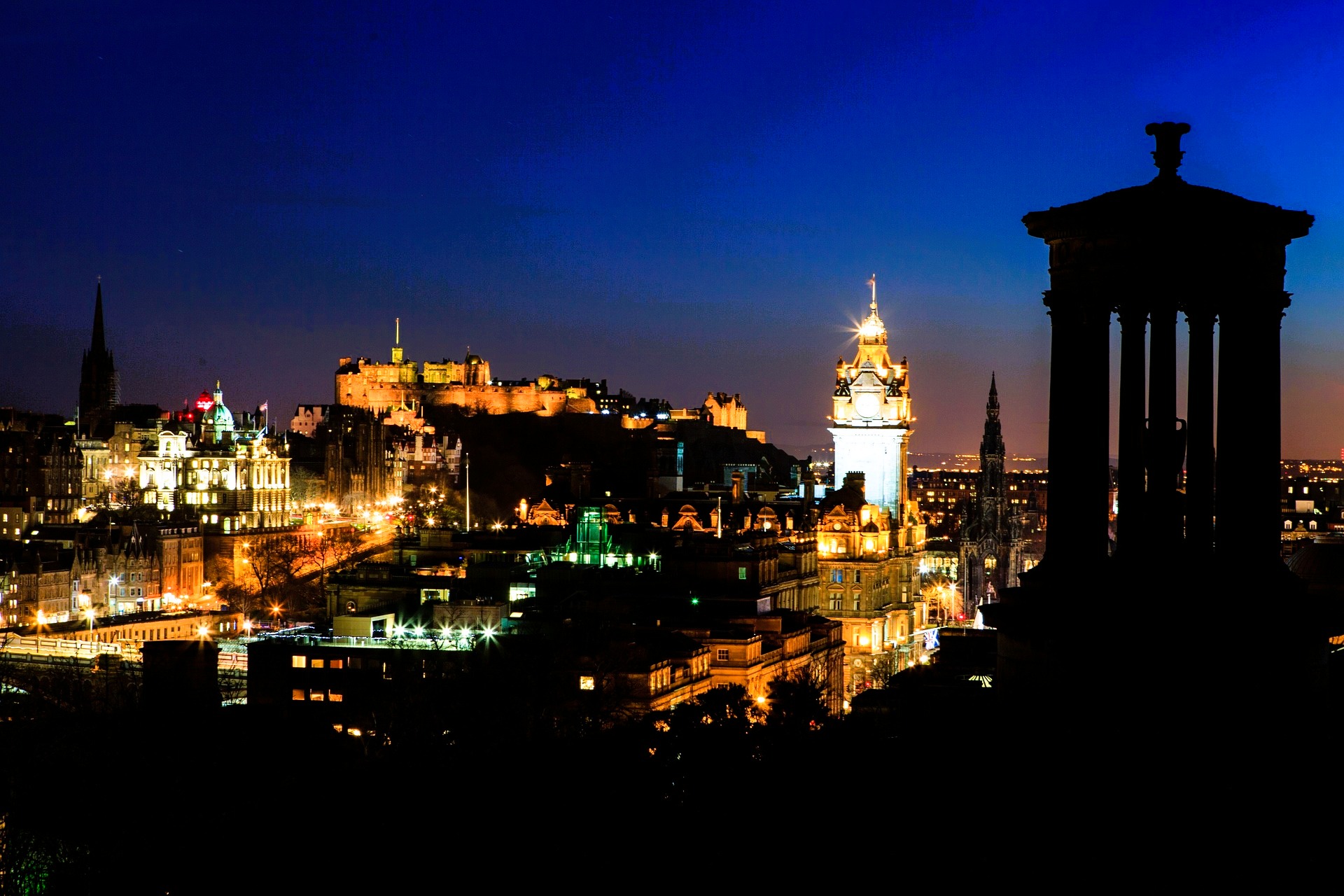
    Calton Hill serves as the architectural manifestation of Edinburgh’s claim as the Athens of the North, offering an intellectual and visual survey of the city’s neoclassical ambitions. The site is home to the stark, unfinished National Monument and the Dugald Stewart Monument, both of which provide a framed perspective of the skyline that is unmatched for its clarity. For the thoughtful traveler, the value lies in the intersection of civic pride and urban planning, where the rigid geometry of the New Town meets the jagged silhouette of the Old Town. To avoid the standard tourist congestion that gathers at the foot of the hill near the main stairs, a more efficient and tranquil approach is to take the winding path from the back of the hill near the Royal Terrace. This alternative route offers a gradual reveal of the Firth of Forth and the Leith docks, allowing for a more observant and unhurried ascent.

    Palace of Holyroodhouse – The Royal Narrative of Sovereign Continuity

    Situated at the eastern terminus of the Royal Mile, the Palace of Holyroodhouse functions as the official residence of the British monarch in Scotland and a repository of the nation’s royal lineage. The experience transitions from the somber, wood paneled chambers of Mary, Queen of Scots, to the grand Baroque State Apartments, reflecting a shift from medieval intrigue to modern diplomatic utility. This site is essential for those who wish to understand the physical setting of centuries of political power without the frantic energy of the nearby castle. A rewarding way to deepen this visit is to spend time in the ruins of the 12th century Holyrood Abbey, located directly adjacent to the palace, where the roofless arches provide a quiet space for reflection on the passage of time. Most visitors rush through the garden, but looking for the small, discreet Queen Elizabeth II Rose Garden offers a serene moment away from the main tour path.

    Dean Village – The Post Industrial Tranquility of the Water of Leith

    Dean Village offers a stark, refreshing contrast to the stone heavy density of the city center, functioning as a quiet enclave that preserves its heritage as a 19th century grain milling hub. The timber framed buildings and the gentle flow of the Water of Leith provide a sensory reset for the thoughtful traveler, emphasizing the city’s ability to hide its most picturesque corners in plain sight. This area is less about specific landmarks and more about the atmospheric quality of the yellow sandstone architecture and the lush greenery that lines the riverbanks. For a logical and efficient exit back toward the West End, follow the riverside walkway toward the Stockbridge neighborhood instead of retracing your steps up the steep cobbles of Bell’s Brae. This path allows you to encounter the St. Bernard’s Well, a beautiful classical rotunda that remains one of the city’s most overlooked architectural gems, perfectly capping an unhurried morning.

    A 3 Day Strategic Itinerary

    A logical exploration of Edinburgh requires a transition from the dense history of the Old Town to the airy elevations of the New Town. Day one focuses on the Royal Mile, beginning with an early entry at Edinburgh Castle before descending through the historic closes to The Real Mary King’s Close. This avoids the peak midday foot traffic in the city’s oldest corridor. Day two shifts toward the eastern edge of the city center, pairing the Palace of Holyroodhouse with the nearby ascent of Calton Hill. This geographical pairing allows for a study of royal history followed by a neoclassical sunset. Day three prioritizes the museum district and the Water of Leith, starting with the National Museum of Scotland in the Southside before a scenic walk toward the post industrial quiet of Dean Village. This rhythm minimizes backtracking and utilizes the city’s natural topography for a low friction experience.

    Exploring the Scottish Frontier

    The strategic depth found in the capital serves as a foundational layer for understanding the broader Scottish landscape. As you move beyond the city limits, the architectural precision of the Enlightenment gives way to the raw, untamed geography of the Highlands and the coastal heritage of the East Neuk. Each region offers a distinct narrative of resilience and beauty that complements the urban history of the capital.