Tag: drink

  • Chicago 4 Essential Culinary Experiences

    Chicago 4 Essential Culinary Experiences

    Chicago runs on a staggered rhythm. Breakfast is quick and functional, often skipped or reduced to coffee. Lunch is heavy and fast, driven by workers grabbing sandwiches or hot dogs. Dinner stretches later than expected, with lines peaking after 7 pm, especially for deep dish which takes time to bake. The common mistake is treating deep dish like fast food or trying to fit too many heavy meals into one day. Portions are dense, and pacing matters. Locals space things out, mix lighter meals between iconic dishes, and avoid peak hour waits by eating slightly earlier or later than the crowd.

    Lou Malnati’s Deep Dish Pizza – The city’s slow built signature

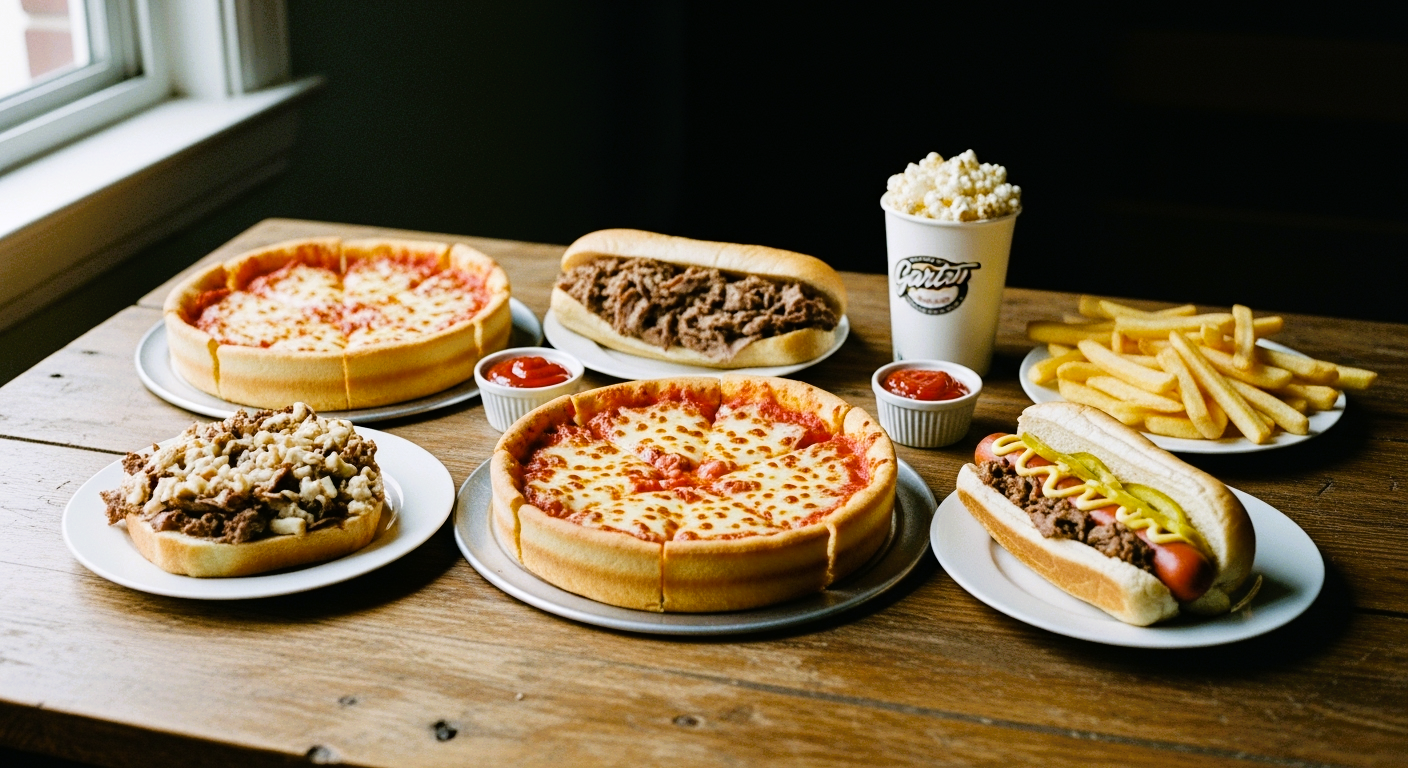
    The first cut reveals structure before flavor. A high, buttered crust holds layers of mozzarella, sausage, and crushed tomatoes that sit on top instead of sinking in. The texture moves from crisp edge to dense center, with a steady, almost pie like weight. Inside the restaurant, the pace is deliberate. Orders take time because the pizza is assembled and baked fresh, not reheated. This dish reflects Chicago’s preference for substance over speed, where a single pan can define a meal. The taste leans rich but balanced, with acidity from the tomatoes cutting through the cheese. A practical tip: place your order as soon as you sit down or call ahead, otherwise you wait nearly half an hour before the first bite lands.

    Al’s Beef Italian Beef Sandwich – The working class classic in motion

    The sandwich arrives already soaked. Thin slices of seasoned beef are stacked inside a long roll, then dipped into hot jus until the bread absorbs the liquid without collapsing. Each bite carries salt, spice, and a wet, dripping texture that demands focus. You eat it standing or leaning forward, because it will spill. This is not accidental; it reflects a fast, practical food culture built for workers who needed something filling and immediate. The flavor is direct, driven by beef and broth rather than complexity. Hot giardiniera adds heat and crunch, cutting through the softness. A practical tip: order it “dipped” if you want the full experience, but be ready to eat it immediately before the bread loses structure.

    Portillo’s Chicago Style Hot Dog – Precision without excess

    Nothing on this hot dog is random. The snap of the sausage, the soft poppy seed bun, the sharp bite of mustard, neon relish, onions, tomato slices, pickles, sport peppers, and a dusting of celery salt all sit in strict balance. There is no ketchup, and that absence defines the style as much as the ingredients themselves. The flavor moves quickly from tangy to salty to fresh, never settling into one note. Portillo’s serves it fast, but the composition is exact every time. This reflects a city approach to food where speed does not cancel structure. A practical tip: eat it as served without modifications first, otherwise you miss the intended balance that makes it distinct.

    Garrett Mix Popcorn – Sweet and salt in equal pull

    The mix looks simple but works on contrast. Cheese coated kernels bring a dry, sharp saltiness, while caramel pieces add a sticky, burnt sugar depth. When combined, the textures shift between crisp and slightly tacky, creating a rhythm that keeps you reaching back into the bag. This is a snack designed for movement, carried through streets or packed for travel, not tied to a table. The flavor pairing reflects Chicago’s habit of combining opposites without overcomplicating them. It is direct and repeatable. A practical tip: ask for a fresh batch or check turnover times, because the balance depends on texture, and stale popcorn loses that edge immediately.

    From Street Level Salt to Oven Deep Weight

    Start with the Chicago style hot dog at Portillo’s. It is quick, structured, and light enough to open the palate without slowing you down. Move next to Al’s Beef while you are still in motion. The sandwich is messy and immediate, best handled before fatigue sets in. Shift into Garrett Mix popcorn as a reset. The sweet salt contrast clears the mouth and gives you a break without stopping the flow. End with Lou Malnati’s deep dish pizza, placed last because it anchors the day. Its density and baking time demand patience, and by this point you are ready to sit. This sequence follows both geography and weight, building from fast street food to a slower, heavier finish without overwhelming the palate too early.

    Eat Standing, Leave Space

    Chicago food is built around movement and density. You do not linger over every bite, and you do not rush everything either. There is a rhythm between standing and sitting, between quick stops and longer pauses. Eat your hot dog or Italian beef standing or slightly leaned in, focused on the food, not the setting. Save sitting for the deep dish, where time and weight require it. Locals do not over customize or slow the line. They order clearly, step aside, and eat without hesitation. The space is shared, and efficiency is part of the culture. When you match that pace, the experience feels natural instead of staged.

    A City Built on Substance Over Display

    Chicago’s food identity is grounded in function. Every dish serves a clear purpose, built to fill, to move, or to hold attention through weight and texture. There is no need for excess detail or presentation tricks. The strength comes from consistency and structure, whether it is the snap of a hot dog or the layered depth of a deep dish. The city does not ask you to interpret its food. It presents it directly, expecting you to meet it with the same clarity. When you follow its rhythm, you understand that Chicago is not about variety for its own sake. It is about doing a few things with precision and letting them stand.
  • Raw North Sea Grit: Amsterdam 4 Essential Culinary Experiences

    Raw North Sea Grit: Amsterdam 4 Essential Culinary Experiences

    Amsterdam follows a rigid daylight rhythm that catches the unprepared off guard. Locals treat lunch as a utilitarian bridge often a quick sandwich at a desk or a stand-up snack saving their social energy for the borrel. This late-afternoon transition involves bitterballen and beer, serving as the bridge to dinner, which starts early and ends by ten. The most common mistake is assuming the kitchen stays open late; many of the best neighborhood spots stop serving food while the night is still young. Another error is bypassing the haringhandel stands during the day, thinking herring is a mere novelty rather than the city’s foundational protein. To eat well here, you must embrace the early start and the deep-fried snack culture that fuels the gap between work and rest.

    The progression through the city begins with a raw salted herring from a canal-side stall, continues into the crunch of a deep-fried bitterbal at a brown cafe, moves to the layered spice of a Surinese pom sandwich, and concludes with the thick syrupy center of a fresh stroopwafel.

    Haring – The Foundational Silver of the North Sea

    Haring, or raw ‘new’ herring, is not merely a snack but the historically vital protein that built Amsterdam’s trade wealth. It is preserved simply salted and “soused” (fermented in a light brine). When eating, you will notice the texture is exceptionally silky and firm, not slimy, collapsing into a rich, buttery, mildly briny, and decidedly not fishy flavor. It is a clean taste. While the classic image involves tilting your head back to swallow the fillet whole, locals often prefer it chopped with raw white onions and a slice of sour pickle. This sharp, crunchy acidity cuts through the fatty richness perfectly. It is almost always consumed standing up at a street haringhandel (herring cart). Do not look for a chair. For the best experience, visit a stand between May and July when the ‘Hollandse Nieuwe’ catch the season’s first and fattiest arrives. It is essential to eat it within minutes of being cleaned and plated.

    Bitterballen – The Scalding Heart of the Amsterdam Borrel

    The bitterbal is the undisputed fuel of the borrel the ritualized late-afternoon drinks that bridge work and dinner. These deep-fried spheres are essentially thickened beef or veal ragout, coated in breadcrumbs and fried until structurally sound. The experience is defined by contrast: the exterior provides an intense crunch, which immediately gives way to a molten, savory center that is rich, gooey, and often scalding. They must always be served with a side of sharp, coarse brown mustard to provide necessary acidity. Bitterballen are social food, shared from a communal plate at a traditional ‘brown cafe’ where the dark wood and low light match the deep fried aesthetic. This is a crucial practical tip: never bite immediately upon arrival. The interior retains immense heat and will cause serious burns. Wait at least thirty seconds; the resting time allows the flavors to settle and your palate to survive.

    Broodje Pom – The Post-Colonial Heat in a Soft White Roll

    The broodje pom is a vivid example of how Surinamese cuisine has become essential to Amsterdam’s culinary identity. It is a sandwich built on a cheap, soft white bun, offering zero resistance, which allows the filling to dominate. Pom itself is a casserole made from tayer (a root vegetable), baked until creamy, sweet, and citrusy (traditionally using orange juice). In this sandwich, it is layered with seasoned, shredded chicken, creating a savory and comforting density. The flavor profile is simultaneously sweet, salty, earthy, and bright. When ordering, you will be asked if you want it spicy. If you say yes, a dollop of pepre (a fiery hot sauce made from Madame Jeanette peppers) is added. It is recommended to accept the spice; it cuts through the richness of the root vegetable perfectly. As a practical tip, always add the pickled cucumber; its sharp acidity and bright pink hue provide the necessary textural and flavor contrast.

    Stroopwafel – The Warming Syrup Bond of the Open Market

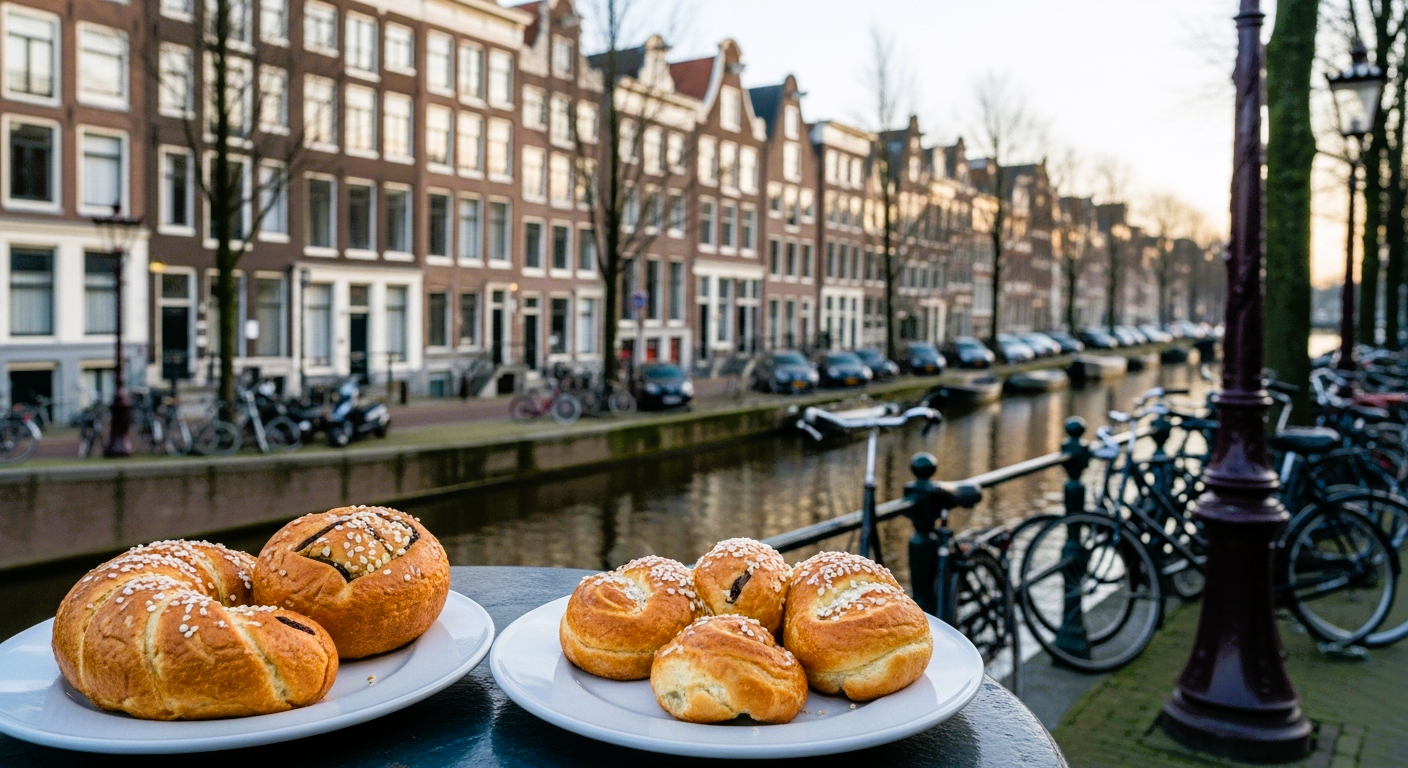
    The stroopwafel is perhaps the most famous Dutch sweet, but the version available globally in plastic packets is a pale imitation of the fresh experience. A real stroopwafel is created at an outdoor market stall (like Albert Cuyp) by pressing a ball of spiced, cinnamon-infused dough between a hot waffle iron. Once pressed thin and cooked, the round waffle is immediately split horizontally, smeared with a warm, dark caramel syrup (stroop), and pressed back together. The resulting wafer is warm, structurally pliable, and the center is molten. It smells intensely of toasted sugar and spice. When consuming, it is essential to hold the steaming wafel immediately and eat it while the center is still fluid. The practical tip here is simple: never buy a pre-packaged one when you can stand at a stall and watch the irons press a fresh one for you. The difference in texture and flavor profile is dramatic.

    The Salted Path from Morning Market to Brown Cafe

    The most logical route begins at the Albert Cuypmarkt in De Pijp. Start with a fresh, steaming stroopwafel while the market air is still crisp and the smell of toasted sugar dominates the stalls. This sugar hit provides the energy needed to navigate the crowds. From there, move toward a nearby haringhandel to reset the palate with the clean, briny snap of raw herring and sharp onions. This savory transition prepares you for the heavier afternoon. As the light begins to dim, head toward the city center or the Jordaan for a broodje pom at a Surinamese toko, where the heat of the peppers provides a mid-day lift. End the journey at a traditional brown cafe by a canal. Here, the bitterballen arrive as the sun dips, their salty, fried crunch pairing with a local beer. This sequence respects the city’s geography and the natural progression from street-side snacking to the seated comfort of a wood-paneled pub.

    The Unspoken Etiquette of the Standing Snack

    Eating in Amsterdam is often an act of standing still. To eat like a local, you must master the art of the pavement pause. Whether at a herring cart or a fry walk-up, do not walk while eating. It is common practice to stand directly at the counter or within a three-meter radius of the stall, finish the portion, and dispose of the paper tray immediately. This creates a brief, focused moment of consumption amidst the bicycle traffic. In the brown cafes, the etiquette is similarly grounded. You do not wave for service; you catch the eye of the bartender with a subtle nod. The space is communal but quiet. Respect the silence of the old wood. When the bitterballen arrive, they are shared from the center of the table, never hoarded. This stillness is how you separate yourself from the frantic pace of the tourist center and integrate into the city’s functional, steady pulse.

    The Durable Soul of a Waterborne Kitchen

    Amsterdam’s culinary identity is not found in white tablecloths or complex plating. It is a city defined by its ability to preserve, fry, and spice its way into comfort. From the medieval necessity of salted fish to the colonial influence that brought the heat of the tropics to a cold northern port, the food here is utilitarian, honest, and resilient. It is a kitchen built on the water, designed to be consumed quickly and provide immediate warmth. To understand this city is to accept that its best flavors are often served on paper plates or shared over scarred wooden tables. This is a grounded, textured food culture that prioritizes the bite over the spectacle. It is a city that feeds you well if you are willing to stand on a rainy corner or squeeze into a crowded, dimly lit bar at four in the afternoon.

  • The Veins of the Ville Lumière: 4 Essential Culinary Experiences

    The Veins of the Ville Lumière: 4 Essential Culinary Experiences

    Paris eats by the clock. Breakfast is a quick, standing affair of espresso and pastry at the zinc bar. Lunch is strictly between 12:00 and 14:00; arriving late means a closed kitchen. The afternoon lull is for coffee, not heavy meals. Dinner begins no earlier than 19:30, peaking at 20:30. A common mistake is expecting all day service or rushing the bill. In a bistro, the table is yours until you ask for l’addition. Do not wait for the waiter to bring it automatically; they view it as a gesture of hospitality to let you linger. Always start interactions with a direct Bonjour to unlock the best service and avoid the rude Parisian trope.

    Croissant – The morning’s buttery shatter

    The initial resistance of the caramelized shell breaks into a web of moist, elastic interior. There is the scent of cultured butter and slow fermented dough. It is a functional ritual, often consumed rapidly while standing at the counter or walking toward the metro. This is not a pastry for delicate eating; a good croissant should crackle, leaving a visible trail of flakes on your clothes. The texture defines the experience more than the simple ingredient profile. Avoid the shiny, perfectly uniform examples found near tourist hubs. Look for irregular shapes and deep golden brown saturation, indicating high heat baking and complex sugar development rather than simple browning. When selecting a bakery, ensure the window proudly displays “Artisan Boulanger” signs, confirming they laminate the dough in house daily rather than baking industrial frozen products, which lack this critical textural contrast.

    Steak Frites – The carnivorous pulse of the bistro

    A thin skirt steak, perhaps a bavette or faux filet, arrives seared hard on a metal platter. It is usually sliced crosswise, revealing a deep red interior and swimming in a savory, herbaceous compound butter or a dark pan reduction. Beside it, a mountain of hand cut fries, ideally cooked twice for a definitive crunch, holds a high temperature. This is utility food, the standard lunch order that fuels the working district. The flavor is primal: salt, fat, and high quality mineral rich beef. Do not ask for a prime cut here; this is bistro food, utilizing tougher, more flavorful muscles. Specify your cooking preference clearly; “saignant” (rare) is the standard and recommended way to eat these leaner cuts without them becoming tough. The sound of clinking silverware against the heavy ceramic plates is the constant soundtrack to this meal.

    Comté – Crystallized time on the rind

    This is a hard cow’s milk cheese from the Jura mountains. When aged over eighteen months, the texture is dense and firm, broken by crunchy bursts of tyrosine crystals—amino acid formations that signal maturity. The flavor profile leads with roasted hazelnuts, brown butter, and a complex umami tang that lingers long after the swallow. Visit an affineur like Laurent Dubois, where the smell of ammonia and damp earth hits you immediately. It is functional food, usually served simple, after the main course but before dessert, allowing the specific vintage to speak. Request a wedge cut from a large, labeled wheel, ensuring it shows a deep ochre hue rather than pale yellow, confirming a diet of summer grasses rich in beta carotene. Taste the progression of ages; the shift from milky to nutty to savory is a defining Parisian flavor experience.

    Onion Soup – The original late night restorative

    This is survival food, born in the now demolished Les Halles market. A dark, ceramic crock arrives, crowned by a rugged, molten dome of Gruyère and Comté cheese that has baked into a definitive crust. Below the cheese, a thick slice of country bread has soaked up the broth until it dissolves. The liquid itself is almost sweet, thick with onions caramelized for six to eight hours until they are a dark jam. There is a faint tang of white wine or sherry cut with deep, savory beef stock. Order this at a 24 hour brasserie after midnight, which is its traditional context for market workers and late night revelers, and always let it cool slightly or the blistering cheese will burn your palate instantly. The flavor is heavy, comforting, and designed to counteract a night of excess or the cold morning air.

    From the First Flake to the Last Broth

    Begin in the quiet of the morning with a croissant near the Canal Saint Martin, where the light hits the water and the bakers are finishing their first shifts. As the city accelerates, move toward the 11th arrondissement for a midday steak frites; the high density of traditional bistros here ensures competitive quality and rapid service. By late afternoon, cross the river to a Left Bank fromagerie to sample Comté when the shop is less crowded and the monger has time to explain the aging process. Conclude the circuit in the center of the city at a historic brasserie for onion soup. This geographic loop mirrors the natural progression of the Parisian palate, moving from light fats to heavy proteins, finishing with the restorative power of a deep, caramelized broth after dark.

    The Etiquette of the Crust

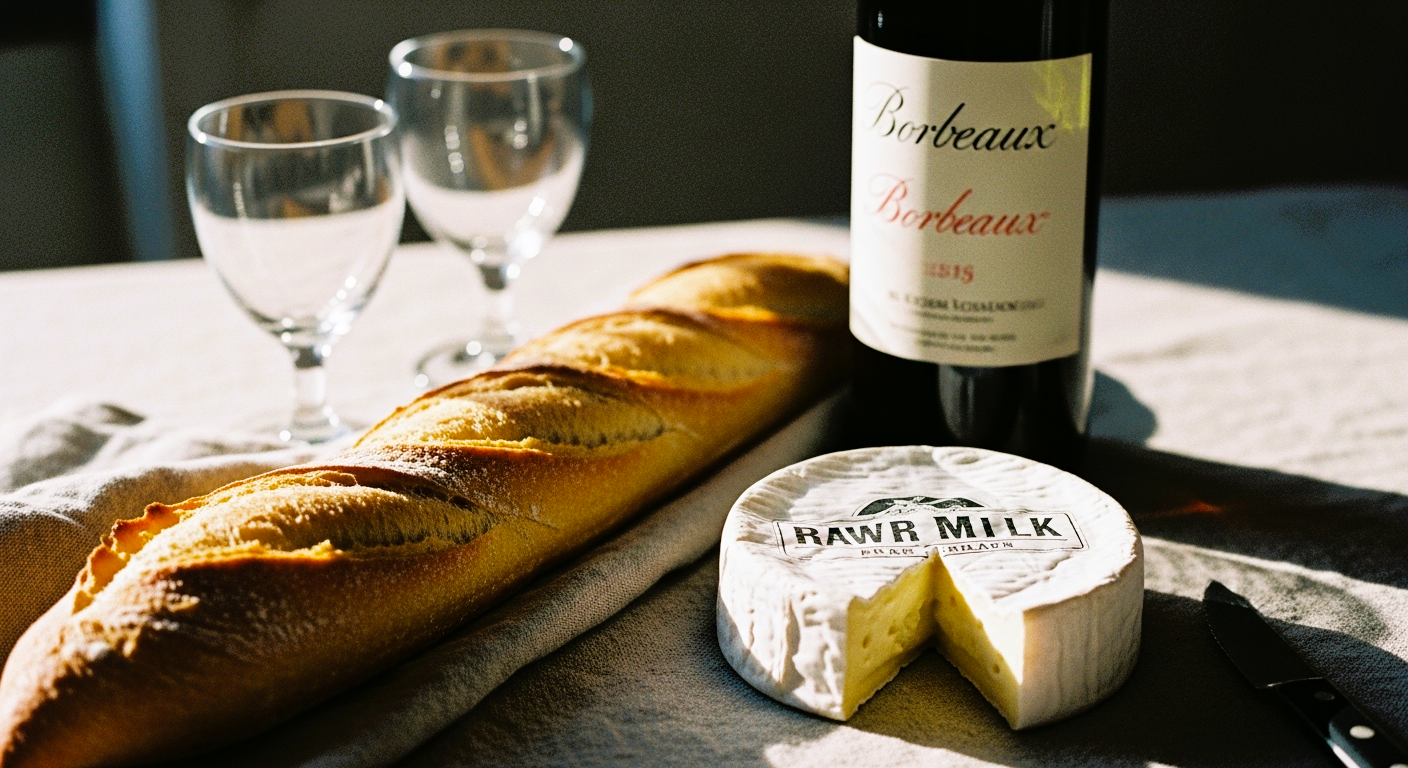
    Bread is never a preliminary snack in Paris; it is a permanent fixture of the landscape. Do not look for a bread plate. The baguette rests directly on the paper or cloth of the table throughout the meal. It functions as a secondary utensil, used to push vegetables onto a fork or to mop up the remaining glaze of a steak sauce. To finish a plate with a piece of bread is to signal total satisfaction, not a lack of manners. If the basket is empty, it is perfectly acceptable to ask for more, but never butter it unless you are eating breakfast. In the evening, the bread exists to support the complexity of the cheese and the integrity of the sauce, acting as a neutral anchor in a sea of rich fats.

    The Rigor of the Routine

    Paris remains the global benchmark not because of constant reinvention, but because of its obsession with the fundamental. The city identity is a fortress built on the precise lamination of dough, the exact timing of a sear, and the patient aging of milk. It is a place where a single ingredient, like a mountain cheese or a common onion, is elevated through technique rather than artifice. The dining experience is a shared cultural commitment to time and quality. Success in navigating this city comes from respecting these established rhythms and understanding that every meal is a dialogue between the producer and the patron. This is a city that demands attention to detail, rewarding the disciplined eater with the most consistent flavors on the continent.

  • The Concrete Appetite: New York City 4 Essential Culinary Experiences

    The Concrete Appetite: New York City 4 Essential Culinary Experiences

    New York operates on a relentless, tiered schedule that punishes the unprepared. Morning belongs to the frantic bodega rush where coffee and foil wrapped rolls are currency. Lunch is a utilitarian pause, often consumed standing or in transit. The evening transition is sharp, moving from the casual after work happy hour to high stakes dinner reservations that require weeks of planning. Tourists often stumble by attempting to dine at peak hours without a strategy or by ignoring the outer boroughs where the most authentic flavors reside. Real eating happens in the gaps between landmarks. Missing the late night utility of a corner slice or a 24 hour diner is a failure to understand the city’s endurance.

    Katz’s Delicatessen – The Anchor of Lower East Side History

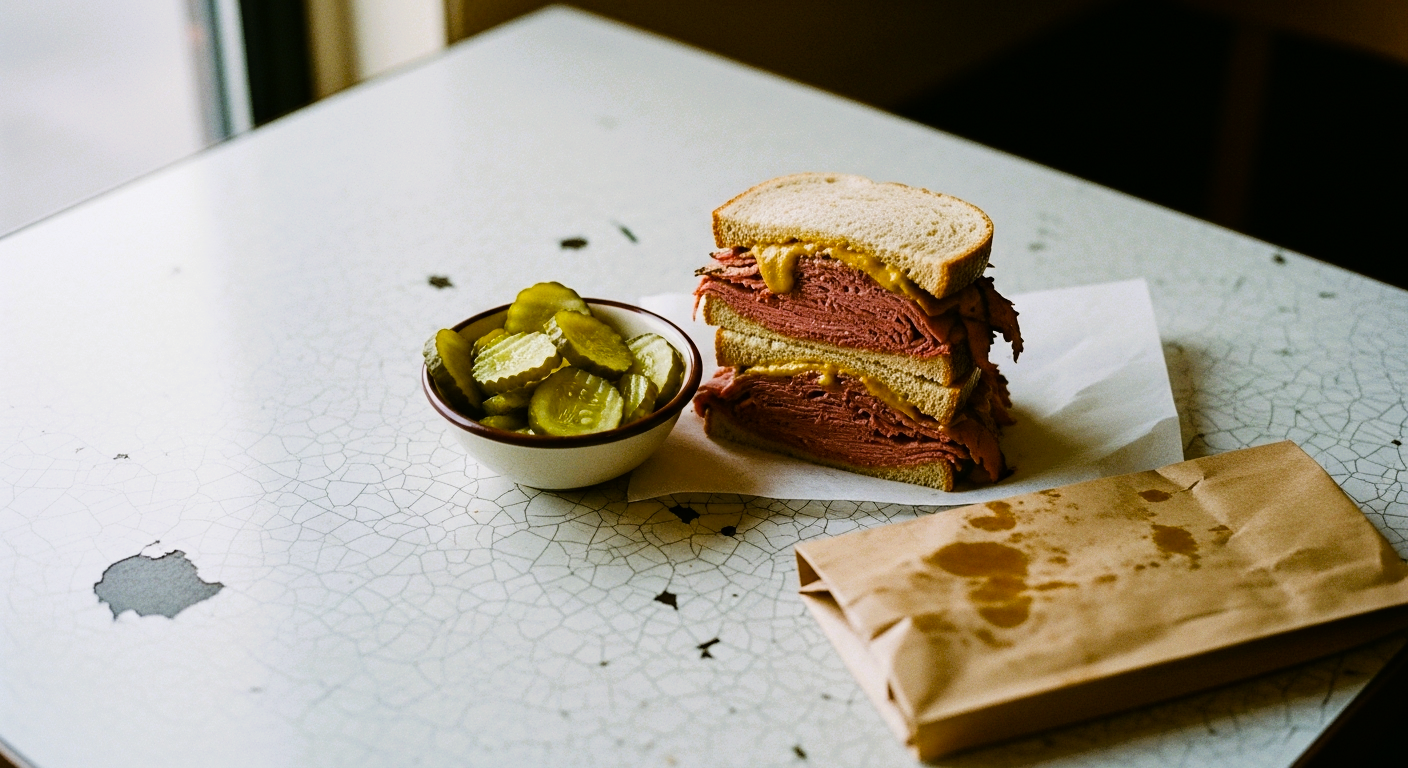
    Stepping into this hall is entering a preserved ecosystem of noise and aroma. The air is thick with salt, smoke, and the din of simultaneous conversations. The main event is the pastrami, cured slowly and smoked heavily before a long steam. A cutter slices it by hand, thicker than machine cut versions, resulting in warm, crimson slabs that fall apart under their own weight. The fat render is immediate, coating the palate with intense savory smoke, balanced only by the sharp sting of deli mustard and the earthy chew of rye bread. It’s a relic of the neighborhood’s immigrant roots, a functional meal meant to sustain hard labor. To navigate the chaos, take your ticket immediately upon entry and keep it secure, as exit is impossible without it.

    Louie & Ernie’s Pizza – The Bronx Baseline for Coal Fired Crust

    This Schuylerville storefront offers little in decor, focusing energy on the coal oven blazing in the back. This isn’t Neapolitan style with a wet center; it is the distinct New York hybrid built for folding. The crust is the defining feature, blistered and charred in spots from intense, dry heat, yielding a distinct smoky crunch that gives way to a chewy interior. The sauce is simple crushed tomatoes, and the fresh mozzarella is applied sparingly to avoid soddening the dough. It tastes of fire and fermented wheat. The setting is utilitarian, a place for quick transactions rather than lingering meals. Order a whole pie rather than slices to appreciate the structural integrity of the fresh bake; it’s worth the wait in the cramped standing area.

    Xi’an Famous Foods – The Heat of Western China in Queens

    Starting as a basement stall in Flushing, this operation standardized the flavors of Shaanxi province for the city. The draw here is the biang biang noodles, ripped by hand into wide, irregular ribbons that offer substantial chew and surface area. They are doused in hot oil that activates a heavy coating of chili flakes, Sichuan peppercorns, and cumin. The taste is aggressive; the numbing sensation of the peppercorns battles the dry heat of the chili, while chunks of stewed lamb add a gamy depth. It’s a fast, loud culinary experience, often eaten shoulder to shoulder in cramped quarters. The spice level is a central component of the dish, not a garnish. Before digging in, thoroughly mix the noodles from the bottom up to ensure every strand is coated in the seasoned oil and vinegar pooled beneath.

    Barney Greengrass – The Upper West Side Appetizing Tradition

    This venue is termed an “appetizing” store, a specific New York distinction for shops selling fish and dairy products, distinct from meat delis. The interior is preserved in a mid century stasis of Formica and fluorescent light. The essential order is Nova Scotia salmon on a bagel. The fish here is sliced paper thin, translucent and silky, carrying a mild smoke that doesn’t overpower the fatty richness of the salmon itself. It provides a necessary salt counterpoint to a thick schmear of plain cream cheese. The bagel should be dense and chewy, a mere vehicle for the fish. While many opt for toasted bagels, the purist move is to order the bagel untoasted to appreciate the textural contrast between the cool fish and the dense dough.

    From Upper West Side Salt to Lower East Side Smoke

    The route begins on the Upper West Side with the clean, cold salt of a lox bagel, providing a neutral, high protein foundation for the day. From there, a transit north to the Bronx for a coal fired pie introduces the first hit of heat and charred starch. This sequence is intentional; the dry, smoky crust of the pizza acts as a bridge between the morning’s dairy and the aggressive, numbing spice found later in the Flushing basement. After the intensity of the cumin lamb, the journey concludes on the Lower East Side. The heavy, fermented richness of hand sliced pastrami serves as the final, grounding weight to a day defined by high contrast flavors. This arc moves through four distinct neighborhoods and three boroughs, utilizing the subway as a connector between historical immigrant enclaves. It avoids palate fatigue by alternating between temperature extremes and varying levels of acidity and fat.

    The Economy of the Counter and the Curb

    Efficiency is the primary social contract in any established New York eatery. Indecision at the front of a line is viewed as a breach of etiquette that delays the collective rhythm. Realize that space is the city’s most expensive commodity; do not occupy a table longer than necessary once the last bite is gone. Eating is frequently a solitary act of maintenance performed in a crowded public sphere. Whether standing at a narrow stainless steel counter or perched on a stone stoop, the focus remains strictly on the utility of the meal. Respect the brevity of the staff, as their speed is a service to the queue behind you rather than a personal slight. Mastery of the city’s food culture requires moving with purpose and exiting with the same speed.

    A City Defined by its Functional Excellence

    New York City does not possess a singular culinary style but rather a demanding standard for functional excellence across disparate traditions. The city’s identity is cemented by the persistence of these four pillars, which have survived shifting demographics and economic volatility by remaining uncompromising in their core output. It is a landscape that consistently rewards the mobile and the observant, where the superior meal is rarely the most comfortable or manicured one. To eat here is to join a continuous, multi generational conversation centered on salt, smoke, and starch. The city remains the final arbiter of authenticity, stripping away aesthetic artifice until only the essential, high impact flavor remains.

  • The Granite Heart and the Smoked Hearth: Edinburgh 4 Essential Culinary Experiences

    The Granite Heart and the Smoked Hearth: Edinburgh 4 Essential Culinary Experiences

    Edinburgh operates on a tidal schedule driven by its Northern latitude. Breakfast is a sturdy affair, often centered on the roll and square sausage or a full fry up before the damp morning air settles. Lunch is functional, yet the afternoon belongs to tea and tablet. The primary mistake visitors make is ignoring the booking culture. Even neighborhood bistros in Leith or Stockbridge fill weeks in advance, and the city’s kitchens often shutter early compared to continental Europe, with last orders frequently called by nine. Expect a second wave of activity during festival seasons when the rhythm fractures into late night street food. Relying on walk ins for dinner in the New Town is a gamble that usually ends in disappointment or a fast food compromise.

    Cullen Skink – The Smoked Soul of the Coast

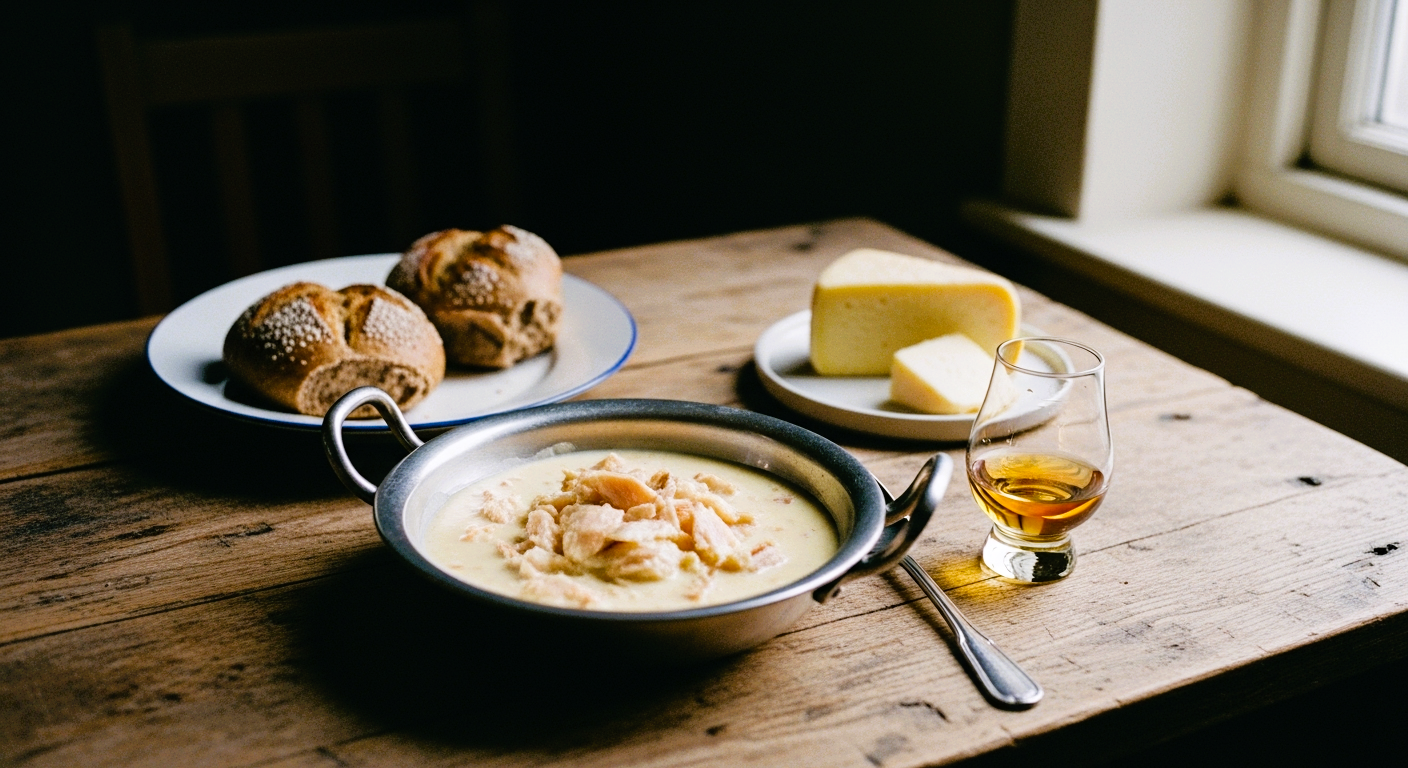
    This thick Scottish soup carries the brine and smoke of the North Sea directly to the palate. It is a robust chowder, undiluted by cream, relying instead on the starchy breakdown of potatoes and the oily richness of smoked haddock to achieve its comforting density. Served in a tavern near the Water of Leith, where the air already smells of salt and wet stone, it anchors you against the damp climate. The smoke is pervasive, clinging to the roof of your mouth long after the last spoonful of milky broth and flakey fish is gone. For the most authentic experience, seek out pubs that serve it with “well fired” rolls bread baked until the crust is nearly black, offering a bitter charcoal counterpoint to the rich soup; avoid places that garnish it excessively with parsley or cream swirls.

    Haggis, Neeps, and Tatties – An Earthy Highland Offering

    Haggis is often misunderstood, yet its flavor is a sophisticated balance of savory depth and spice. It is a crumbly sausage pudding, rich with iron from the offal, grounded by oatmeal, and intensely seasoned with black pepper and coriander. When served in the stone vaults beneath the Royal Mile, the setting amplifies the ancient feeling of the dish. The accompanying mash of swede (neeps) adds sweetness, while the potatoes (tatties) provide a neutral base, all usually bound together by a whisky spiked cream sauce. Forget the tourist traps playing bagpipes at the door; find a cellar bar where the focus is on the peppery kick of the meat rather than the ceremony. A dram of peaty whisky is the only suitable beverage to cut through the rich fat.

    The Tattie Scone – A Griddled Morning Essential

    This humble potato cake is the backbone of a Scottish breakfast, utilizing leftover mashed potatoes bound with flour and butter. It is not fluffy like a pancake but dense and savory, cooked on a flat griddle until speckled brown. The texture is soft in the middle with a necessary exterior chew. Found at weekend markets in Stockbridge or Grassmarket, it is best eaten hot amidst the bustle of vendors and wet pavement. The taste is pure, buttery potato comfort, acting as a sponge for bacon fat or egg yolk. The key practical approach is simplicity; buy it plain from a baker’s stall and eat it immediately while the edges are still crisp, rather than ordering it as a soggy component of a pre plated hotel breakfast buffet.

    Scottish Tablet and Peated Whisky – The Sweet and Smoky Finish

    Tablet is often mistaken for fudge, but the texture is entirely distinct. It is a crystalline confection of sugar, condensed milk, and butter, boiled to a precise point where it becomes brittle and grainy. The sweetness is ferocious, an immediate sugar shock that coats the teeth. It demands a counterpoint of equal intensity, found in a dram of heavily peated Highland or Islay whisky. The smoke and medicinal iodine notes of the spirit slice through the buttery sugar, cleansing the palate and creating a complex, lingering finish of fire and caramel. Buy a small bag from a traditional sweet shop rather than a souvenir tin; look for pieces that are pale golden and slightly granular, indicating it was handmade and beaten correctly before setting.

    From Market Heights to the Leith Waterfront

    Begin the morning in Stockbridge to secure a warm, griddled tattie scone while the market air is still sharp and damp. This starch heavy start provides the necessary insulation for the climb toward the Old Town. By midday, retreat into the stone walled vaults of the Royal Mile for the peppery, spiced depth of haggis, neeps, and tatties. This sequence respects the transition from casual street eating to the dense, historical comfort of the city center. As the North Sea mist rolls in during the late afternoon, descend toward the Leith docks. The salt forward Cullen skink acts as a restorative maritime anchor against the cooling temperatures. Conclude the circuit in a New Town snuggery, where the crystalline sweetness of tablet and the medicinal fire of peated whisky provide a sharp, clean break from the savory weight of the day. This route follows the city’s natural descent from the volcanic crags to the water’s edge.

    The Unspoken Etiquette of the Snug and the Sauce

    In Edinburgh, local identity is often expressed through the specific request for salt and sauce at a traditional chippy. This is a cultural marker rather than a mere preference. The sauce is a thin, tangy, brown condiment a hybrid of malt vinegar and spiced fruit sauce that defines the East Coast palate. To exist in this space like a local, you must accept this sharp, acidic addition without hesitation. When inside a traditional pub, observe the unspoken rule of the snug. These are small, partitioned spaces for low voiced conversation and the slow nursing of a spirit. Do not perform your appreciation for the history; instead, occupy your seat with a muted, stoic presence that mirrors the gray stone of the buildings outside. Respect the physical boundaries of these tight interiors by keeping your belongings tucked away and your presence contained, allowing the atmosphere of wood smoke to remain undisturbed.

    A Landscape Defined by the Hearth and the Haar

    Edinburgh’s culinary identity is built on a foundation of structural resilience and harsh geography. It is a city that favors the hearth over the showcase, prioritizing caloric density, intense smoke, and ancient preservation methods to combat its northern climate. The food here is unapologetically heavy, rooted in the land and the surrounding cold waters rather than the whims of global trends. Mastery of this landscape requires an appreciation for the subtle textures of oats and potatoes and the bold, medicinal qualities of its spirits. It is a cuisine of survival refined into a sophisticated craft of comfort. To dine here successfully is to understand that the best flavors are often hidden behind heavy oak doors or down steep, slippery wynds, away from the glare of modern artifice. The city does not change for the diner; the diner must adapt to the city.

  • The Spirit of the Elbe: 4 Essential Culinary Experiences

    The Spirit of the Elbe: 4 Essential Culinary Experiences

    Hamburg eats according to the tides and the North Sea wind. The morning belongs to the fish markets where the early catch dictates the menu. Locals skip the heavy hotel breakfasts for a quick pastry grabbed at a corner bakery. Lunch is often a functional, hot meal in the Kontorhaus district, while dinner slows down in the neighborhood taverns of St. Pauli or Ottensen. A common mistake is seeking a quiet dinner late on a Sunday when many traditional kitchens close early. Visitors also tend to overlook the specific etiquette of the fish roll; it is a standing snack, not a sit down meal. Respecting the harbor’s pace means eating when the work is done, usually accompanied by a sharp, cold pilsner.

    The essential journey through the city’s flavor includes a pickled herring Fischbrötchen at the harbor, a hearty plate of salted beef Labskaus, a buttery cinnamon sugar Franzbrötchen, and a bowl of Finkenwerder Scholle pan fried with speck.

    Fischbrötchen – The Harbor’s Essential Handshake

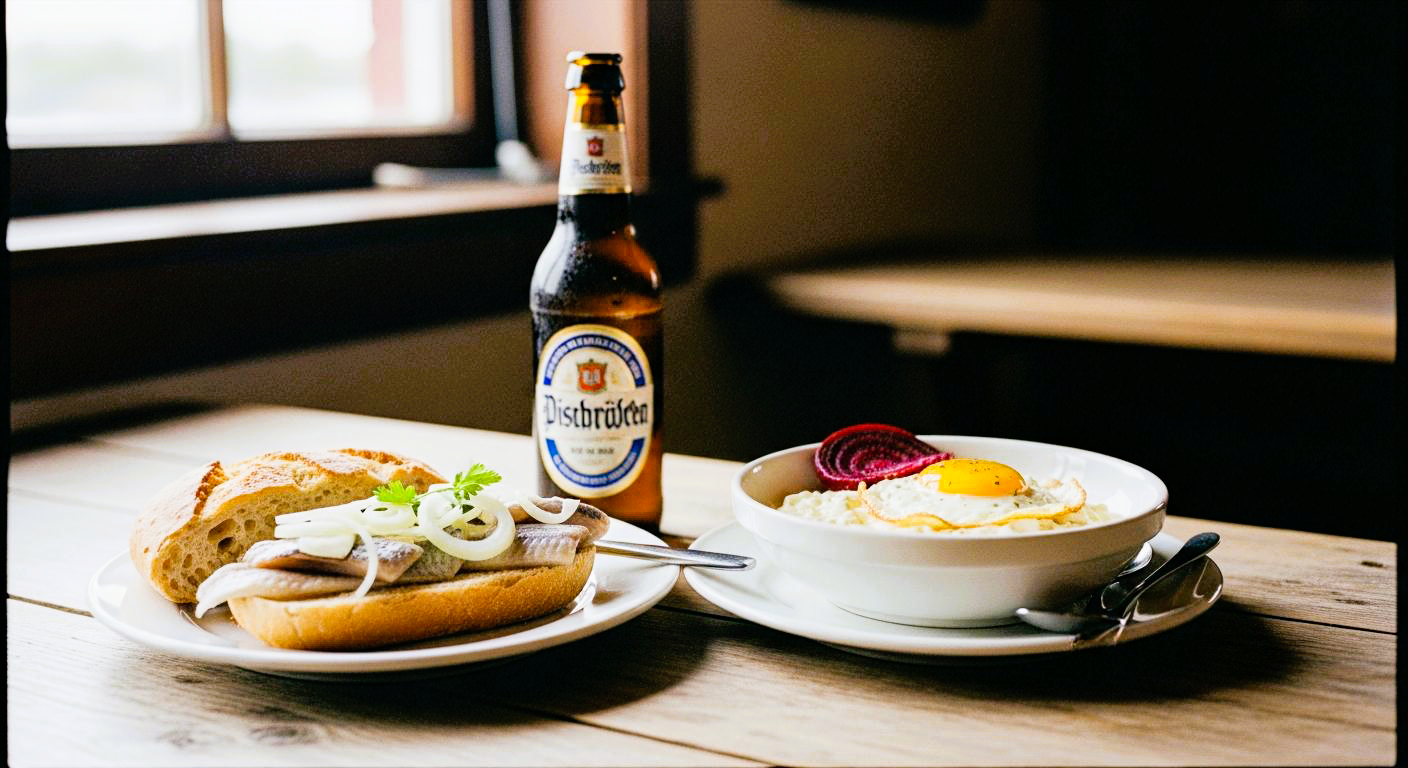
    Standing on the Landungsbrücken pontoons, where the air smells of diesel and brine, the Fischbrötchen is the immediate culinary answer. It is not complicated; a crunchy white roll holds cold, firm Bismarck herring, crisp raw onions, and sometimes a mild remoulade. The contrast is sharp the biting acidity of the pickle against the soft interior of the bread and the oily richness of the fish. You eat it standing up, facing the Elbe, watching container ships maneuver. It is a working snack for a working port, eaten quickly between tasks. For the best texture, avoid pre made ones sitting under heat lamps and always ask for one made fresh; the bread must crackle against the cold fish. The experience is quick, elemental, and entirely defined by the proximity to the cold North Sea water.

    Labskaus – History on a Plate of Red

    Labskaus is a challenging dish visually, a bright magenta mash born from long sea voyages where fresh food was scarce. It is a rough mixture of salted beef, potatoes, and beetroot, ground together into a thick paste. The taste is deeply savory, earthy from the beets, and intensely salty. Traditionally, it arrives topped with a fried egg and accompanied by a rolled sour herring and a gherkin on the side. These acidic elements are necessary to cut through the dense richness of the mash. You will find it in traditional Gaststätten with dark wood paneling and maritime memorabilia. While it looks intimidating, the flavor is comforting and robust. It is a heavy meal, so plan for a long walk along the Alster afterward rather than a productive afternoon.

    Franzbrötchen – The Morning Sweet Specific to Hamburg

    This flattened pastry is Hamburg’s answer to the croissant, but denser and heavily spiced. A Franzbrötchen is made from laminated dough, similar to Danish pastry, filled with butter and cinnamon sugar, then pressed flat before baking. The result is a caramelized, sticky exterior that gives way to soft, buttery layers inside. The cinnamon flavor is dominant, bordering on aggressive, and the sweetness is substantial. Locals grab them from neighborhood bakeries in the morning to pair with strong black coffee. The texture varies significantly depending on the bakery; some are flaky, while others are doughy and almost wet with butter. Look for the darkest ones in the display case, as the nearly burnt edges carry the best caramelized flavor. It is a messy, satisfying start to a gray Hamburg day.

    Finkenwerder Scholle – The North Sea Fried in Bacon Fat

    Named after a former fishing village across the Elbe, this dish is the definitive way Hamburg prepares plaice. The flatfish is whole, delicate, and mild, but its preparation is robust. It is pan fried, traditionally in lard or butter, and generously covered with cubes of fatty speck (bacon) and North Sea shrimp. The skin crisps up, absorbing the smoky rendered fat from the bacon, while the white flesh underneath remains moist. It is usually served with potatoes piled high on the plate. The flavor profile is salt on salt, fat on fat, balanced only by the sweetness of the fresh fish. Because plaice is best eaten fresh, order this only when it is in season during the warmer months for the sweetest flesh. It requires patience to navigate the bones, a necessary ritual of the meal.

    Following the Current from Dawn to Dusk

    The route begins at the water’s edge in the early morning light where the Fischbrötchen provides a sharp, salty awakening. Moving from the Landungsbrücken towards the city center, a stop at a neighborhood bakery for a Franzbrötchen offers a necessary sugar transition before the day’s heavier commitments. Midday requires the grounding presence of Labskaus in a traditional Altstadt tavern, providing a dense, savory anchor that reflects the city’s maritime history. The journey concludes back toward the harbor or the Finkenwerder district for a dinner of Finkenwerder Scholle. This sequence respects the city’s geographic flow from the working docks to the merchant houses and back to the fishing heritage. It balances the bracing acidity of the morning with the rich, fatty textures of the evening, mirroring the transition from a brisk harbor breeze to the warmth of a wood paneled dining room.

    The Silence of the Standing Table

    In Hamburg, the most authentic interactions happen at the Stehtisch or standing table. This is the city’s true social equalizer found at harbor stalls and corner delis. Local etiquette favors a brisk, functional approach to eating rather than a long, performative sit down. When you approach a crowded standing table, a brief nod to those already there is the only required introduction. Do not linger once the meal is finished; the space is meant for the next person coming in from the cold. Efficiency and a lack of fuss are the primary markers of a local. Engaging in loud, intrusive conversation is considered a breach of the unspoken harbor code. Respect the brisk pace of the port by eating with focus and moving on when the task is done, leaving the space as clean as you found it.

    A City Defined by Salt and Steel

    Hamburg does not negotiate with its culinary identity. It remains a city rooted in the practicalities of the North Sea, where preservation, salt, and animal fat are the historical pillars of the kitchen. The food here is a reflection of endurance and trade, favoring the honest weight of a potato mash or the precise crispness of a fried fish skin over modern culinary trends. This is a landscape for the diner who appreciates consistency and the rugged charm of a cuisine that has changed little since the height of the Hanseatic League. To eat in Hamburg is to participate in a ritual of northern resilience, where every dish is a direct response to the cold wind and the gray water of the Elbe. It is a heavy, unapologetic, and deeply satisfying culinary heritage that rewards those who value substance over style.