
Tag: Chicago

  • Chicago 4 Essential Culinary Experiences

    Chicago 4 Essential Culinary Experiences

    Chicago runs on a staggered rhythm. Breakfast is quick and functional, often skipped or reduced to coffee. Lunch is heavy and fast, driven by workers grabbing sandwiches or hot dogs. Dinner stretches later than expected, with lines peaking after 7 pm, especially for deep dish which takes time to bake. The common mistake is treating deep dish like fast food or trying to fit too many heavy meals into one day. Portions are dense, and pacing matters. Locals space things out, mix lighter meals between iconic dishes, and avoid peak hour waits by eating slightly earlier or later than the crowd.

    Lou Malnati’s Deep Dish Pizza – The city’s slow built signature

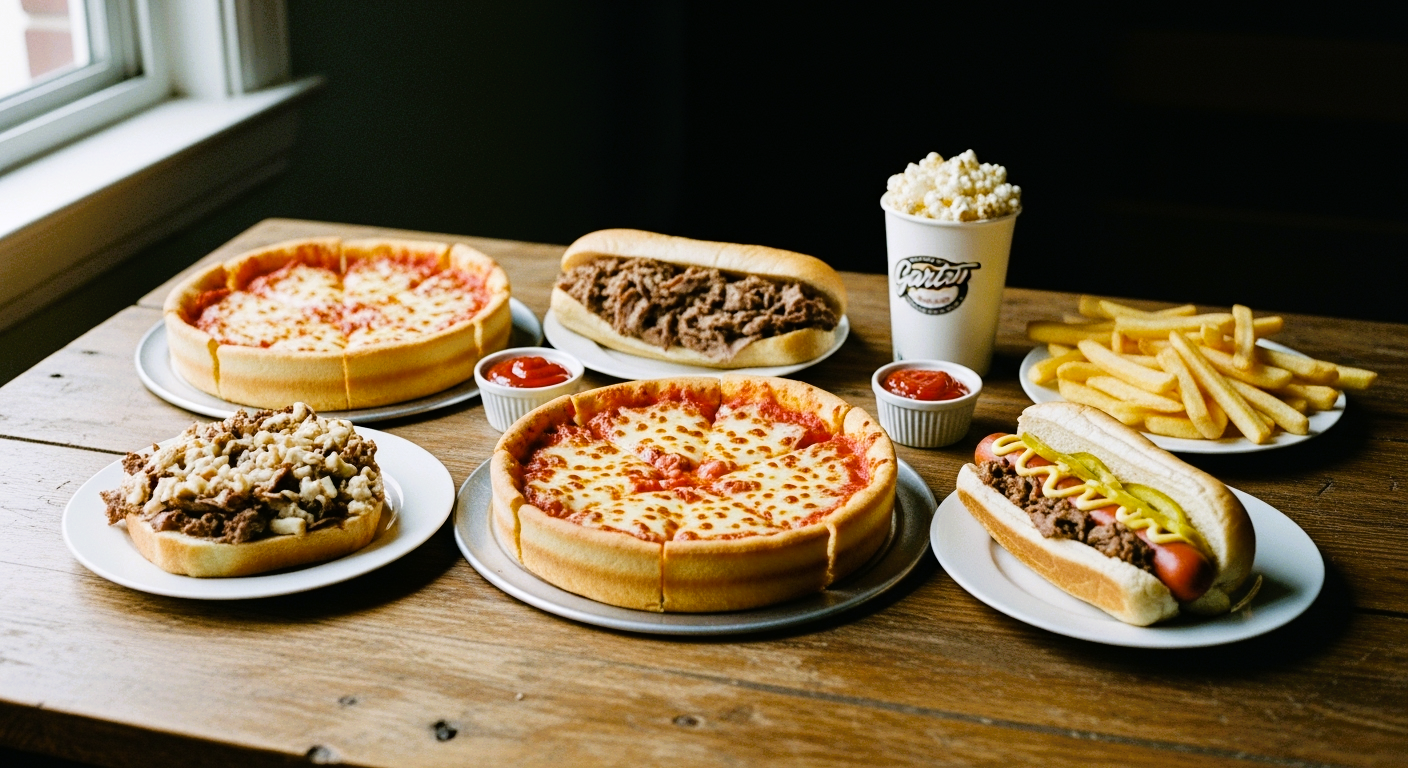
    The first cut reveals structure before flavor. A high, buttered crust holds layers of mozzarella, sausage, and crushed tomatoes that sit on top instead of sinking in. The texture moves from crisp edge to dense center, with a steady, almost pie like weight. Inside the restaurant, the pace is deliberate. Orders take time because the pizza is assembled and baked fresh, not reheated. This dish reflects Chicago’s preference for substance over speed, where a single pan can define a meal. The taste leans rich but balanced, with acidity from the tomatoes cutting through the cheese. A practical tip: place your order as soon as you sit down or call ahead, otherwise you wait nearly half an hour before the first bite lands.

    Al’s Beef Italian Beef Sandwich – The working class classic in motion

    The sandwich arrives already soaked. Thin slices of seasoned beef are stacked inside a long roll, then dipped into hot jus until the bread absorbs the liquid without collapsing. Each bite carries salt, spice, and a wet, dripping texture that demands focus. You eat it standing or leaning forward, because it will spill. This is not accidental; it reflects a fast, practical food culture built for workers who needed something filling and immediate. The flavor is direct, driven by beef and broth rather than complexity. Hot giardiniera adds heat and crunch, cutting through the softness. A practical tip: order it “dipped” if you want the full experience, but be ready to eat it immediately before the bread loses structure.

    Portillo’s Chicago Style Hot Dog – Precision without excess

    Nothing on this hot dog is random. The snap of the sausage, the soft poppy seed bun, the sharp bite of mustard, neon relish, onions, tomato slices, pickles, sport peppers, and a dusting of celery salt all sit in strict balance. There is no ketchup, and that absence defines the style as much as the ingredients themselves. The flavor moves quickly from tangy to salty to fresh, never settling into one note. Portillo’s serves it fast, but the composition is exact every time. This reflects a city approach to food where speed does not cancel structure. A practical tip: eat it as served without modifications first, otherwise you miss the intended balance that makes it distinct.

    Garrett Mix Popcorn – Sweet and salt in equal pull

    The mix looks simple but works on contrast. Cheese coated kernels bring a dry, sharp saltiness, while caramel pieces add a sticky, burnt sugar depth. When combined, the textures shift between crisp and slightly tacky, creating a rhythm that keeps you reaching back into the bag. This is a snack designed for movement, carried through streets or packed for travel, not tied to a table. The flavor pairing reflects Chicago’s habit of combining opposites without overcomplicating them. It is direct and repeatable. A practical tip: ask for a fresh batch or check turnover times, because the balance depends on texture, and stale popcorn loses that edge immediately.

    From Street Level Salt to Oven Deep Weight

    Start with the Chicago style hot dog at Portillo’s. It is quick, structured, and light enough to open the palate without slowing you down. Move next to Al’s Beef while you are still in motion. The sandwich is messy and immediate, best handled before fatigue sets in. Shift into Garrett Mix popcorn as a reset. The sweet salt contrast clears the mouth and gives you a break without stopping the flow. End with Lou Malnati’s deep dish pizza, placed last because it anchors the day. Its density and baking time demand patience, and by this point you are ready to sit. This sequence follows both geography and weight, building from fast street food to a slower, heavier finish without overwhelming the palate too early.

    Eat Standing, Leave Space

    Chicago food is built around movement and density. You do not linger over every bite, and you do not rush everything either. There is a rhythm between standing and sitting, between quick stops and longer pauses. Eat your hot dog or Italian beef standing or slightly leaned in, focused on the food, not the setting. Save sitting for the deep dish, where time and weight require it. Locals do not over customize or slow the line. They order clearly, step aside, and eat without hesitation. The space is shared, and efficiency is part of the culture. When you match that pace, the experience feels natural instead of staged.

    A City Built on Substance Over Display

    Chicago’s food identity is grounded in function. Every dish serves a clear purpose, built to fill, to move, or to hold attention through weight and texture. There is no need for excess detail or presentation tricks. The strength comes from consistency and structure, whether it is the snap of a hot dog or the layered depth of a deep dish. The city does not ask you to interpret its food. It presents it directly, expecting you to meet it with the same clarity. When you follow its rhythm, you understand that Chicago is not about variety for its own sake. It is about doing a few things with precision and letting them stand.

  • The Vertical Cathedral: A Study of Chicago’s Living Grid

    The Vertical Cathedral: A Study of Chicago’s Living Grid

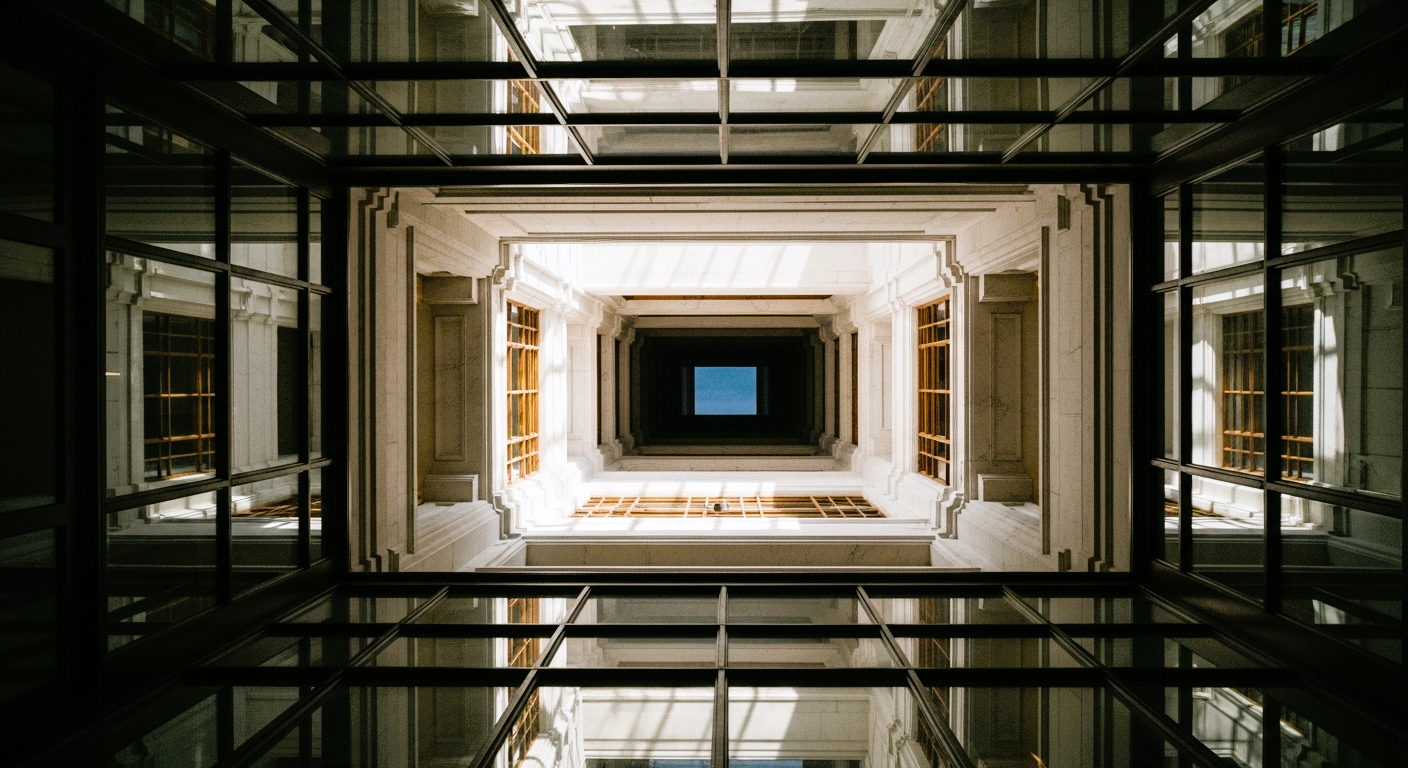
    Chicago does not merely exist; it performs an eternal, silent symphony of structural ambition and reflective poise. It is a city born of fire and tempered by a relentless wind, where the grid serves as a canvas for the heavy shadows of limestone and the ephemeral shimmer of glass. To observe Chicago is to witness the evolution of the modern soul, a place where the weight of history is balanced by the lightness of the horizon. We approach this urban expanse not as tourists, but as quiet witnesses to an architectural lineage that redefined the relationship between the earth and the sky. Here, the street level is a gallery of human intention, and the skyscrapers are monuments to the audacity of the vertical line.

    The structural rhythm of the Chicago School and the transition from masonry to steel. The intimate dialogue between the city’s concrete edges and the fluid vastness of Lake Michigan. The hidden alcoves of the Loop where the echoes of Art Deco meet the silence of modernism. The curated geometry of the city’s public plazas and the choreography of light across their surfaces.

    The structural rhythm of the Chicago School and the transition from masonry to steel

    The transition from the ponderous weight of the Monadnock’s base to the soaring transparency of the Reliance Building marks a pivotal moment in the human story. In Chicago, the wall ceased to be a load-bearing burden and became a delicate curtain of light and air. This evolution is best witnessed in the quiet corners of the Loop, where the dark, protective embrace of deep-set masonry gives way to the rhythmic repetition of the Chicago window. These structures are not merely offices; they are the physical manifestation of a new logic, a structural honesty that discarded historical ornament for the purity of the grid. To observe these facades is to see the very skeleton of modernity emerging from the stone. The city’s architectural soul resides in this tension the heavy, tactile history of the earth pushing upward into the limitless, weightless potential of the steel frame.

    The intimate dialogue between the city’s concrete edges and the fluid vastness of Lake Michigan

    At the eastern threshold of the grid, the rigid geometry of the city meets the untamed horizon of Lake Michigan. This is where Chicago breathes. The lakefront is not a mere boundary but a curated transition, a series of limestone tiers and concrete promenades that invite a slower, more deliberate pace of observation. Here, the turquoise expanse of the water provides a silent, shifting backdrop to the stoic permanence of the skyline. The air carries a different weight, cooled by the water and flavored with the scent of distant storms. It is a space of profound contrast: the stillness of the water against the vibrating energy of the skyscrapers. In this dialogue, the city finds its equilibrium, reminding us that even the most ambitious structural achievements must eventually yield to the elemental power of the natural world.

    The hidden alcoves of the Loop where the echoes of Art Deco meet the silence of modernism

    The ritual of the threshold requires one to stand at the precise seam where the opulent Art Deco ornamentation of the Carbide and Carbon Building meets the stark, silent clarity of the surrounding glass towers. To observe this cultural layer is to practice a deliberate pause within the city’s shadowed canyons, noting how the gold leaf and deep green terra cotta absorb the midday sun while the nearby modernism reflects it with a cold, blue indifference. It is an exercise in tactile history, where the eye must learn to distinguish between the handcrafted intricacy of a bygone era and the industrial precision of the present. This method of unhurried witnessing reveals the city as a layered parchment, where every architectural movement is a sentence written over the ghost of the one before it.

    The curated geometry of the city’s public plazas and the choreography of light across their surfaces

    Engaging with the curated geometry of Chicago’s public plazas demands a surrender to the choreography of light as it moves across vast, granite surfaces. One must adopt the perspective of the still point, perhaps resting on a low stone plinth in Federal Plaza to watch the arcing shadow of Alexander Calder’s Flamingo lengthen across the dark pavement. This is the city as a grand solar clock, where the interplay of void and mass becomes a meditative study in rhythmic movement. By remaining stationary, the observer notices the subtle shifts in texture the way the afternoon light softens the harshness of the black steel and reveals the hidden warmth in the urban stone. It is a slow, rhythmic dialogue between the permanent and the ephemeral, turning a transit space into a sanctuary of form.

    The Living Grid: Chicago’s Enduring Architectural Resonance

    Chicago is more than a collection of structures; it is a profound repository of human intention and a testament to the power of deliberate form. In its shadows and reflections, we find the quiet confidence of a city that knows its worth lies not in rapid change, but in sustained conversation between the past and the imminent. The true value of this urban masterpiece lies in its capacity to force a pause, allowing the careful observer to witness the eternal dance between gravity and grace, between the heavy limitation of masonry and the soaring ambition of glass. It is a gallery that requires our patience, rewarding the unhurried traveler with a deeper understanding of what it means to build, to dwell, and to ultimately belong to a place where the grid is both a constraint and a liberation. As you step away from these rigid yet graceful geometries, allow this philosophy of observation to guide your next cultural encounter, carrying this curatorial gaze to seek the underlying artistry woven into the fabric of every destination.

  • The Windy City’s Soft Whisper: Wallpapers to Lingering in Chicago’s Quietest Corners

    The Windy City’s Soft Whisper: Wallpapers to Lingering in Chicago’s Quietest Corners

    Steam and Stone

    Savor the slow rise of steam against a backdrop of historic brick and ivy. This Chicago Wallpaper captures the simple, unhurried joy of a neighborhood morning.

    Midnight at the Theatre

    Let the soft, nostalgic glow of State Street light up your screen. This Chicago Wallpaper honors the city’s dramatic soul without the noise of the crowds.

    Lincoln Park Shadows

    Wander through silent corridors of stone and shadow where time seems to stand still. Carry the elegance of the side streets with you through this Chicago Wallpaper.

    The Infinite Horizon

    Find your breath where the steel skyline meets the infinite blue of Lake Michigan. This Chicago Wallpaper is a window into the city’s most peaceful perspective.

    The Elevated Line

    The rhythmic rattle of the ‘L’ becomes a quiet lullaby in this stylized Chicago Wallpaper, celebrating the city’s industrial heartbeat.

    Prairie Sanctuary

    Retreat into a hidden oasis of stone and water designed for reflection. Let this Chicago Wallpaper be your digital sanctuary in a busy world.