
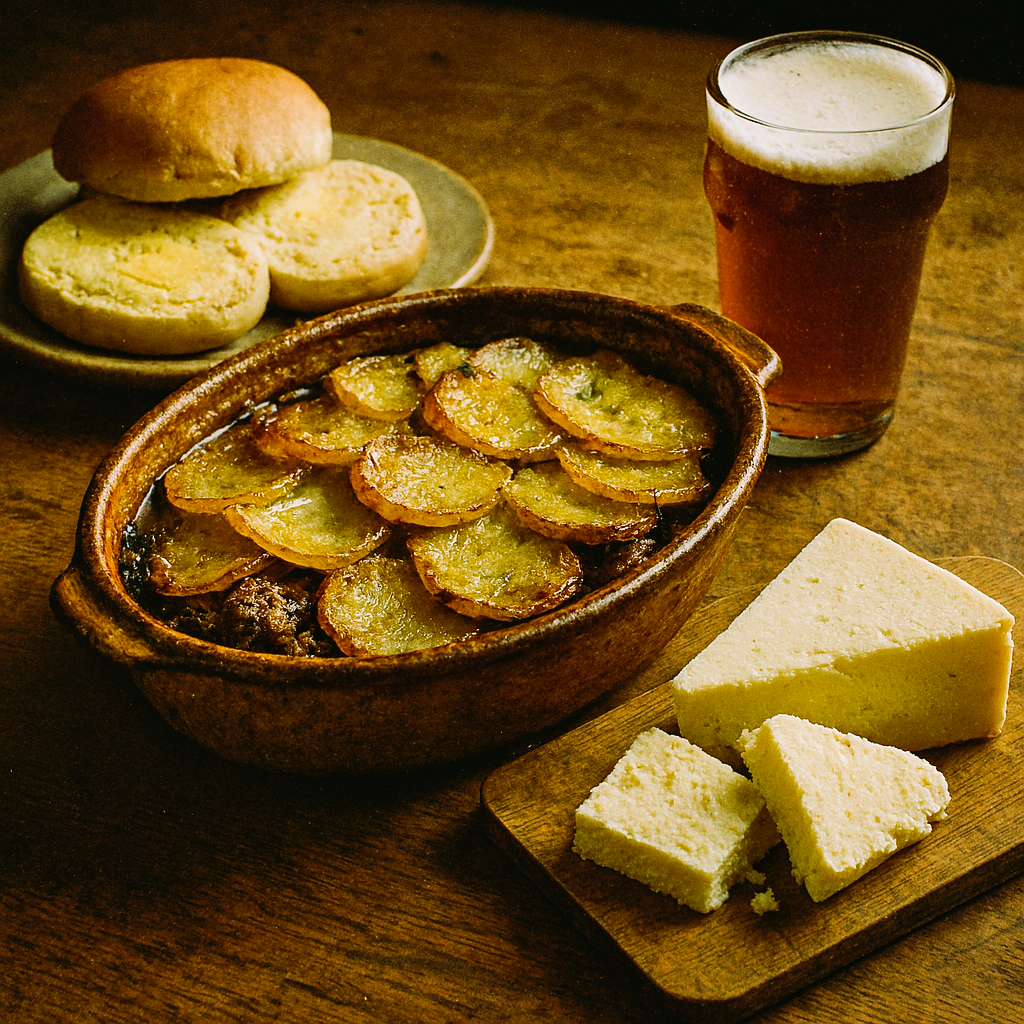
Manchester’s eating rhythm is built around hearty midday sustenance and late evening gatherings. Locals lean into pub culture, where food is paired with ale and conversation, while tourists often misstep by chasing breakfast trends or expecting fine dining at every turn. The city thrives on honest portions and communal tables, and visitors who skip the pubs or arrive too early for dinner miss the pulse of how Mancunians actually eat.
Lancashire Hotpot – The warmth of working class tables
The hotpot is Manchester’s anchor dish, a slow baked stew of lamb, onions, and sliced potatoes layered in a heavy ceramic pot. Its flavor is earthy and sustaining, the kind of meal that once carried mill workers through long shifts. The texture shifts between tender meat and crisp potato tops, with a broth that clings to bread when dipped. Eating it in a pub setting feels natural, where the dish is less about presentation and more about comfort. Tourists often rush past it in search of novelty, but the hotpot is the city’s most honest plate. Practical tip: order it early in the evening, as pubs often run out once the regulars have had their share.
Barm Cakes – Everyday bread with a local accent
The barm cake is Manchester’s humble bread roll, soft and slightly flour dusted, often split and filled with butter or a slice of bacon. Its taste is plain but comforting, a neutral canvas that locals rely on for quick meals. The cultural weight lies in its ubiquity: every bakery and corner shop has them, and they carry the rhythm of daily life more than any elaborate dish. Eating one is less about indulgence and more about belonging, a reminder that food can be simple and still matter. Practical tip: ask for them fresh in the morning, when the rolls are still warm from the oven and the texture is pillowy rather than dry.
Joseph Holt Bitter – A pint that speaks the city’s dialect
This amber ale is Manchester’s liquid tradition, brewed with a balance of malt sweetness and a dry, slightly bitter finish. The taste is straightforward, not flashy, with a body that pairs naturally with pub food. Its cultural significance lies in its accessibility: Holt’s pubs are scattered across neighborhoods, serving as gathering points where conversation flows as easily as the beer. Drinking it is less about chasing craft trends and more about continuity, a pint that has been poured for generations. Practical tip: order it in a Holt’s pub rather than elsewhere, as the freshness and pour technique make a noticeable difference.
Lancashire Cheese – Crumbly heritage on the market stalls
Lancashire cheese is pale, crumbly, and slightly tangy, with a texture that breaks apart easily but melts smoothly when cooked. Its flavor is clean and sharp, a contrast to heavier dishes, and it carries the history of rural dairies that supplied the city. On market stalls, wedges are cut thick and wrapped in paper, a tactile reminder of food before packaging. Eating it plain with bread or fruit shows its character best, though locals often fold it into pies. Practical tip: buy from market vendors rather than supermarkets, as the freshness and variety of regional styles are far greater.
A route shaped by hearth and pint
The sequence begins with a buttered barm cake in the morning, a soft roll that sets the tone with simplicity. From there, Lancashire cheese at the market provides a mid day lift, its crumbly tang sharpening the palate before heavier fare. The evening pivots to Lancashire hotpot, a dish that anchors the city’s working class heritage, best enjoyed in a pub where the ceramic pot arrives steaming. The route closes with a pint of Joseph Holt bitter, amber and steady, tying the day together in the rhythm of Manchester’s pubs. This flow mirrors the geography of the city: bakeries and markets in the center, pubs tucked into neighborhoods, each stop building naturally into the next.
Sit, don’t rush – the unspoken rule
Eating in Manchester is as much about pace as it is about flavor. Locals linger, whether over bread rolls in the morning or a pint late at night, and the rhythm is communal rather than hurried. Tourists often misstep by treating pubs like quick service stops, but the etiquette is to sit, settle, and let the food and drink carry conversation. Practical awareness means ordering at the bar, then holding your space without fuss. The city rewards patience, and the meal feels incomplete if rushed.
Manchester’s plate speaks with clarity
The city’s food identity is not built on extravagance but on honest sustenance. Bread, cheese, stew, and ale form a framework that is both practical and deeply cultural, reflecting the industrial past and the communal present. Each dish carries weight beyond taste, anchoring visitors to the rhythm of the city. To understand Manchester through food is to accept its straightforwardness: hearty, sustaining, and rooted in tradition. This guide cements that identity, showing that the city’s culinary soul lies in its balance of simplicity and heritage.
Leave a Reply