
Chicago runs on a staggered rhythm. Breakfast is quick and functional, often skipped or reduced to coffee. Lunch is heavy and fast, driven by workers grabbing sandwiches or hot dogs. Dinner stretches later than expected, with lines peaking after 7 pm, especially for deep dish which takes time to bake. The common mistake is treating deep dish like fast food or trying to fit too many heavy meals into one day. Portions are dense, and pacing matters. Locals space things out, mix lighter meals between iconic dishes, and avoid peak hour waits by eating slightly earlier or later than the crowd.
Lou Malnati’s Deep Dish Pizza – The city’s slow built signature
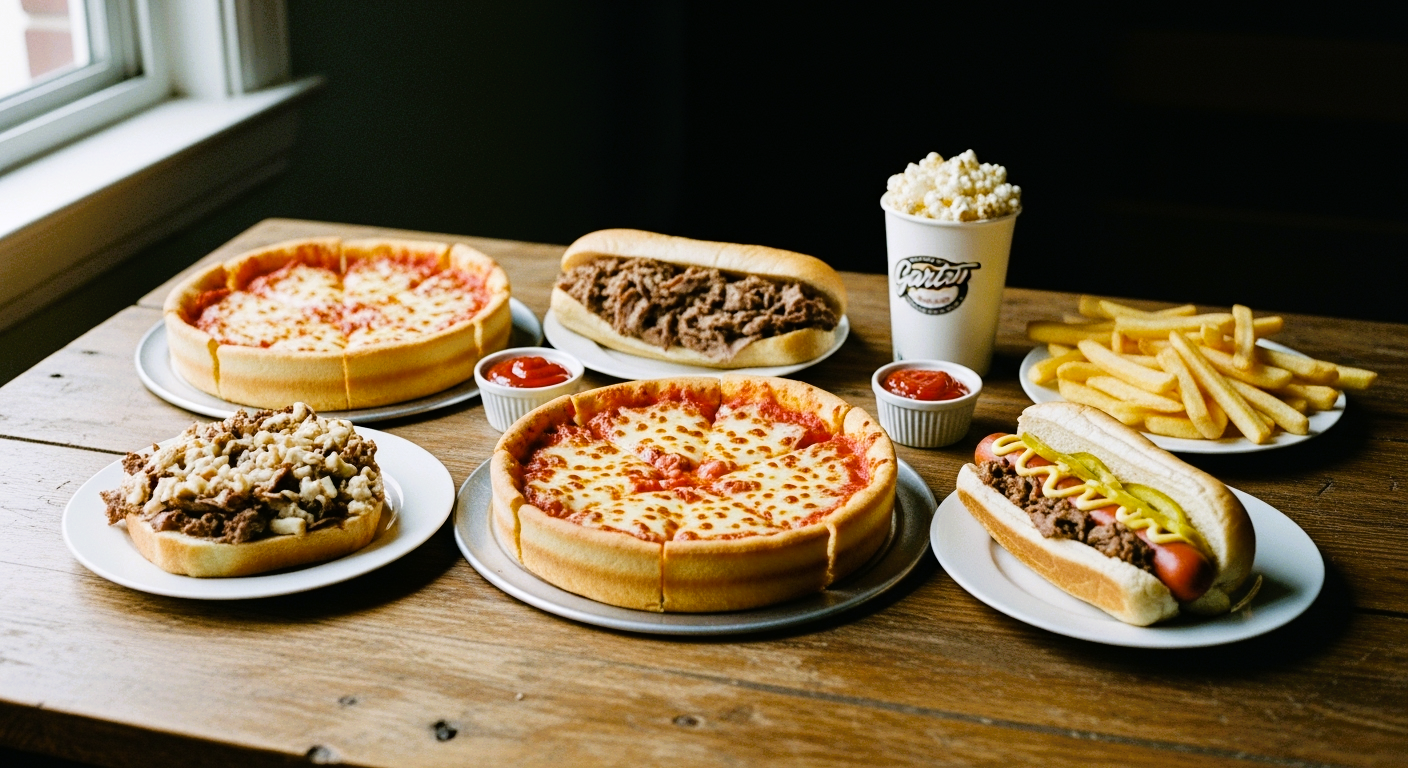
The first cut reveals structure before flavor. A high, buttered crust holds layers of mozzarella, sausage, and crushed tomatoes that sit on top instead of sinking in. The texture moves from crisp edge to dense center, with a steady, almost pie like weight. Inside the restaurant, the pace is deliberate. Orders take time because the pizza is assembled and baked fresh, not reheated. This dish reflects Chicago’s preference for substance over speed, where a single pan can define a meal. The taste leans rich but balanced, with acidity from the tomatoes cutting through the cheese. A practical tip: place your order as soon as you sit down or call ahead, otherwise you wait nearly half an hour before the first bite lands.
Al’s Beef Italian Beef Sandwich – The working class classic in motion
The sandwich arrives already soaked. Thin slices of seasoned beef are stacked inside a long roll, then dipped into hot jus until the bread absorbs the liquid without collapsing. Each bite carries salt, spice, and a wet, dripping texture that demands focus. You eat it standing or leaning forward, because it will spill. This is not accidental; it reflects a fast, practical food culture built for workers who needed something filling and immediate. The flavor is direct, driven by beef and broth rather than complexity. Hot giardiniera adds heat and crunch, cutting through the softness. A practical tip: order it “dipped” if you want the full experience, but be ready to eat it immediately before the bread loses structure.
Portillo’s Chicago Style Hot Dog – Precision without excess
Nothing on this hot dog is random. The snap of the sausage, the soft poppy seed bun, the sharp bite of mustard, neon relish, onions, tomato slices, pickles, sport peppers, and a dusting of celery salt all sit in strict balance. There is no ketchup, and that absence defines the style as much as the ingredients themselves. The flavor moves quickly from tangy to salty to fresh, never settling into one note. Portillo’s serves it fast, but the composition is exact every time. This reflects a city approach to food where speed does not cancel structure. A practical tip: eat it as served without modifications first, otherwise you miss the intended balance that makes it distinct.
Garrett Mix Popcorn – Sweet and salt in equal pull
The mix looks simple but works on contrast. Cheese coated kernels bring a dry, sharp saltiness, while caramel pieces add a sticky, burnt sugar depth. When combined, the textures shift between crisp and slightly tacky, creating a rhythm that keeps you reaching back into the bag. This is a snack designed for movement, carried through streets or packed for travel, not tied to a table. The flavor pairing reflects Chicago’s habit of combining opposites without overcomplicating them. It is direct and repeatable. A practical tip: ask for a fresh batch or check turnover times, because the balance depends on texture, and stale popcorn loses that edge immediately.
From Street Level Salt to Oven Deep Weight
Start with the Chicago style hot dog at Portillo’s. It is quick, structured, and light enough to open the palate without slowing you down. Move next to Al’s Beef while you are still in motion. The sandwich is messy and immediate, best handled before fatigue sets in. Shift into Garrett Mix popcorn as a reset. The sweet salt contrast clears the mouth and gives you a break without stopping the flow. End with Lou Malnati’s deep dish pizza, placed last because it anchors the day. Its density and baking time demand patience, and by this point you are ready to sit. This sequence follows both geography and weight, building from fast street food to a slower, heavier finish without overwhelming the palate too early.
Eat Standing, Leave Space
Chicago food is built around movement and density. You do not linger over every bite, and you do not rush everything either. There is a rhythm between standing and sitting, between quick stops and longer pauses. Eat your hot dog or Italian beef standing or slightly leaned in, focused on the food, not the setting. Save sitting for the deep dish, where time and weight require it. Locals do not over customize or slow the line. They order clearly, step aside, and eat without hesitation. The space is shared, and efficiency is part of the culture. When you match that pace, the experience feels natural instead of staged.
A City Built on Substance Over Display
Chicago’s food identity is grounded in function. Every dish serves a clear purpose, built to fill, to move, or to hold attention through weight and texture. There is no need for excess detail or presentation tricks. The strength comes from consistency and structure, whether it is the snap of a hot dog or the layered depth of a deep dish. The city does not ask you to interpret its food. It presents it directly, expecting you to meet it with the same clarity. When you follow its rhythm, you understand that Chicago is not about variety for its own sake. It is about doing a few things with precision and letting them stand.
Leave a Reply