The first thing I notice is the air warm, spiced with cardamom drifting from cafés, and touched by the faint salt of the Gulf. The city hums with a rhythm that is not hurried, if I choose to listen: the call to prayer echoing between towers, the shuffle of sandals in shaded alleys, the soft hiss of sand carried by evening winds.
I move slowly here. My steps linger in the souks where brass lamps catch the light like fragments of fire, and fabrics ripple with colors too rich to rush past. I pause at the creek, watching wooden abras glide across the water, their pace reminding me that crossing is not only about arrival, but about the drift itself.
Dubai deserves more than a checklist. It asks me to feel its contrasts the silence of desert dunes against the gleam of glass towers, the scent of oud in hidden courtyards against the cool marble of modern galleries. To travel slowly here is to let the city unfold, layer by layer, until its textures stay with me long after I leave.
Burj Khalifa
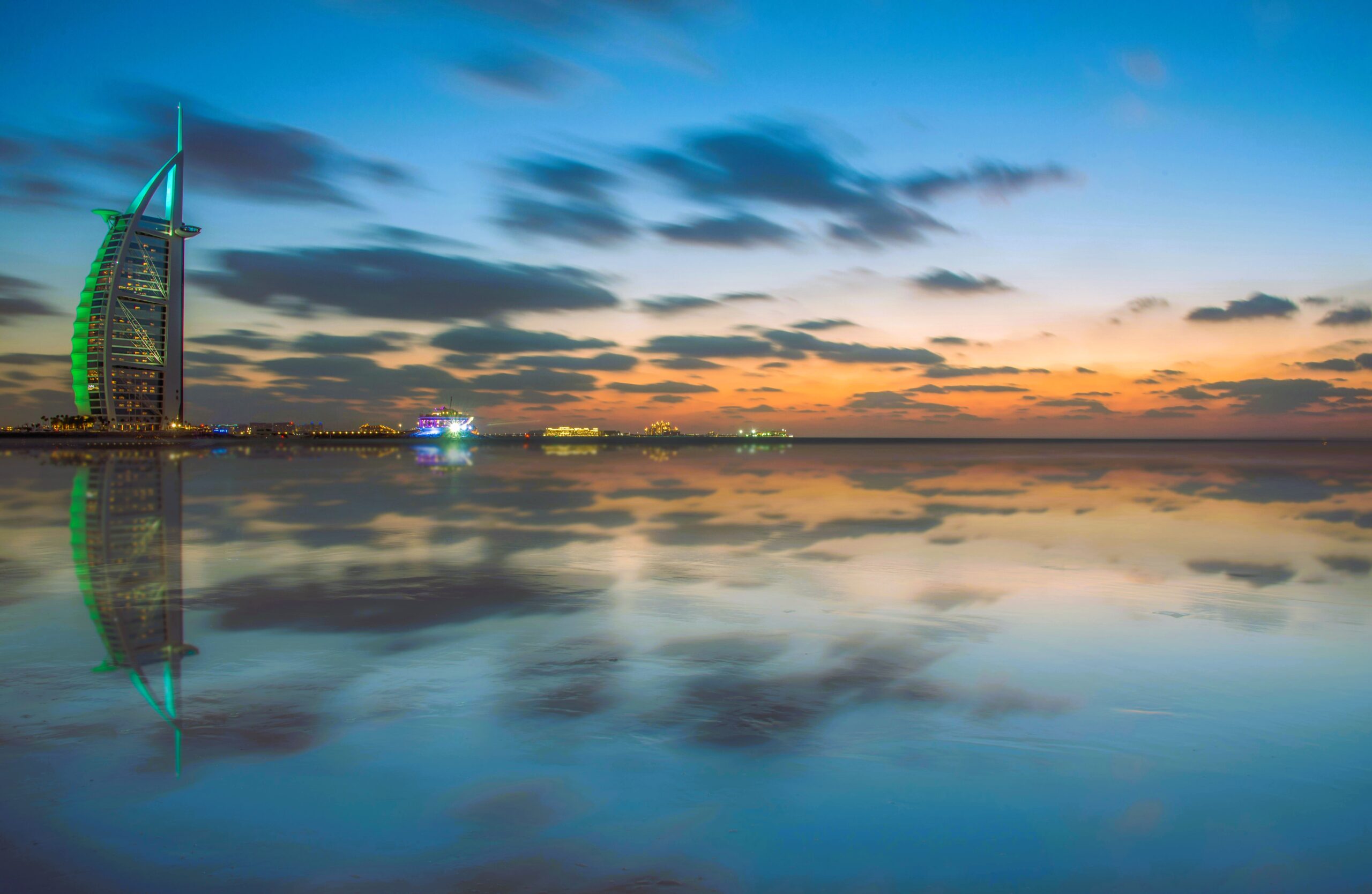
Standing at the foot of the Burj Khalifa, I feel the city’s pulse rising vertically. The tower does not simply dominate the skyline it refracts it. Its panels shimmer with shifting tones: silver at dawn, molten gold at sunset, and a cool, crystalline blue under moonlight. The air carries a faint hum of traffic below, but up here, the sound seems softened, as though the building itself absorbs the rush. I catch the scent of jasmine drifting from nearby gardens, mingling with the faint metallic tang of steel and glass warmed by the sun. The structure’s history is recent yet monumental, conceived as a symbol of ambition, but in the quiet moments, it feels less about grandeur and more about perspective. Looking upward, I sense time stretching, each floor a reminder of human persistence.
Unhurried Tip: Visit just before dusk, when the tower transitions from day’s glow to night’s illumination.
Dubai Creek
Dubai Creek is not just water it is memory flowing. The scent of salt and diesel mixes with spices drifting from nearby stalls. Wooden abras creak gently as they move, their engines humming like a lullaby. The water reflects both the old wind towers of Deira and the glass facades of Bur Dubai, a mirror of contrasts. I hear merchants calling out, their voices layered with laughter and negotiation, while gulls wheel overhead, their cries sharp against the mellow rhythm of the creek. The history here is centuries deep: pearl divers once set out from these waters, traders arrived with fabrics and incense, and the city grew from this artery. Yet the atmosphere remains timeless. The creek is not hurried; it invites me to sit, to watch, to drift.
Unhurried Tip: Take the abra after sunset, when lanterns glow and the water reflects the city’s softened lights.
Al Fahidi Historical District
Al Fahidi is a labyrinth of silence and texture. The walls, built of coral stone and gypsum, breathe warmth during the day and coolness at night. I run my hand along their rough surfaces, feeling centuries embedded in the grain. The air smells of cardamom coffee and faint wood smoke, drifting from hidden courtyards. Wind towers rise above, their open mouths channeling breezes that whisper through the alleys. Footsteps echo softly, and conversations are hushed, as though the district itself insists on reverence. This place carries the weight of Dubai’s past before towers of steel, there were homes of sand and wind. Museums and art spaces now inhabit these structures, but the atmosphere remains contemplative. Light filters gently through latticed windows, painting patterns on the ground that shift with the sun’s slow arc.
Unhurried Tip: Arrive in late afternoon, when shadows lengthen and the district glows with amber light.
Jumeirah Mosque
The Jumeirah Mosque rises with quiet dignity, its pale stone glowing warmly under the shifting desert sun. Built in the traditional Fatimid style, its symmetry feels both precise and gentle, with domes that seem to float above the earth. As I approach, the scent of freshly watered gardens mingles with the faint salt carried inland from the Gulf. The call to prayer drifts across the air, resonant yet soothing, and I hear the soft shuffle of sandals on marble steps. Inside, the atmosphere is hushed, the coolness of stone underfoot contrasting with the warmth outside. Light filters through stained glass, painting delicate colors across the walls. The mosque’s history is not ancient, yet it embodies timelessness, offering a glimpse into the spiritual rhythm of Dubai.
Unhurried Tip: Arrive just after dawn, when the mosque is bathed in soft light and the grounds are still quiet.
Palm Jumeirah
Palm Jumeirah is both an engineering marvel and a sensory landscape. From above, its fronds spread like a living sculpture, but walking along its edges, I feel the sea’s presence more intimately. The air carries salt and the faint sweetness of tropical blooms planted along promenades. Waves lap gently against the breakwater, their rhythm steady and grounding. The sound of bicycles passing, laughter carried by the breeze, and the occasional call of seabirds create a layered soundtrack. The island’s history is recent, born of ambition, yet its atmosphere is surprisingly serene when I slow down. The light here is extraordinary sunsets spill across the horizon, turning the water into molten copper, while night brings a hush broken only by the sea’s whisper.
Unhurried Tip: Visit during late evening, when the promenade quiets and the sea reflects the fading light.
Dubai Museum
Housed in Al Fahidi Fort, the Dubai Museum feels like a portal into memory. The fort’s walls, built of coral stone and lime, carry the scent of age earthy, mineral, and faintly salty from the sea air. As I step inside, the coolness contrasts with the desert heat outside. Exhibits whisper of pearl diving, desert caravans, and the rhythms of daily life before skyscrapers. I hear the faint echo of recorded chants, the creak of wooden dhows, and the shuffle of visitors moving slowly through dimly lit halls. The atmosphere is contemplative, with lanterns casting warm pools of light that soften the edges of history. The museum does not overwhelm; it invites me to pause, to let each artifact speak in its own time.
Unhurried Tip: Visit in the late afternoon, when the fort’s courtyard glows with amber light and crowds thin.
How to Let Dubai Unfold Slowly
I believe journeys begin not with tickets but with intention. Dubai, when approached slowly, reveals itself in layers stone, water, light, silence. If you choose to walk at this pace, you will carry more than photographs home; you will carry the city’s rhythm within you. Start your thoughtful journey, and let time be your most generous companion.