
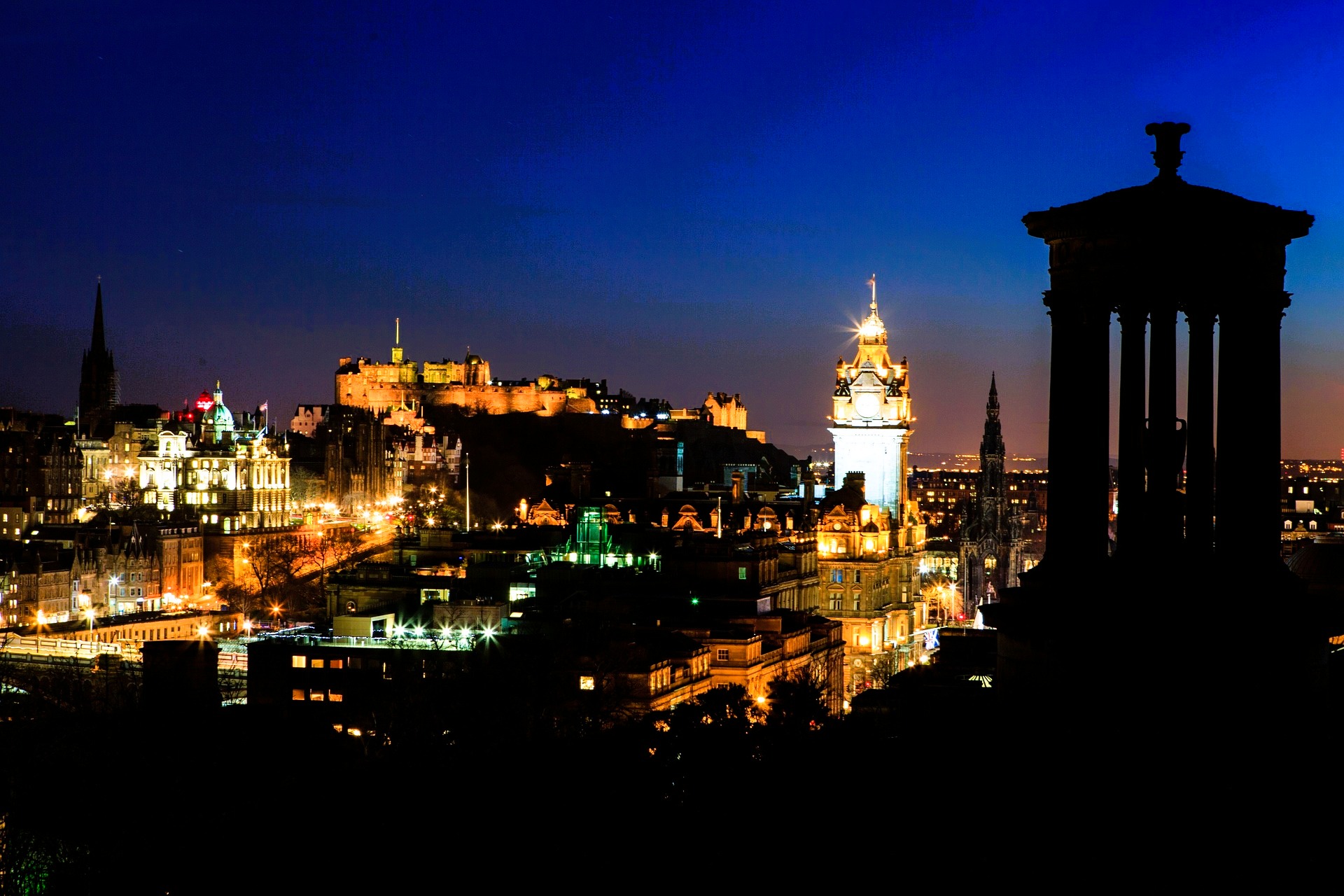
Edinburgh often suffers from its own success, where the sheer volume of visitors can turn its medieval streets into a crowded obstacle course. Most travelers make the mistake of treating the Royal Mile as a sprint, ticking off landmarks while missing the subtle architectural layers and quiet closes that define the city’s character. This guide prioritizes a deliberate, unhurried approach to the best things to do in Edinburgh, shifting focus from frantic sight hopping to high utility experiences. By timing your visits to bypass peak bottlenecks and selecting sites that offer deep historical immersion over surface level novelty, you can navigate the Scottish capital with more clarity and less friction. Here is how to see Edinburgh without the exhaustion.
Edinburgh Castle – The Strategic Historical Apex
Edinburgh Castle serves as the definitive anchor of the city’s skyline, a fortress built upon the plug of an extinct volcano that has witnessed centuries of royal transitions and military sieges. For the thoughtful traveler, the value lies not just in the panoramic views of the Firth of Forth but in the layered architectural evolution from the 12th century St. Margaret’s Chapel to the Renaissance era Great Hall. Navigating this site requires a tactical approach to avoid the mid morning surges that often congest the Crown Square and the Honours of Scotland exhibit. A more rewarding experience is found by arriving exactly at the gates for the opening slot, allowing you to appreciate the stark silence of the Scottish National War Memorial before the one o’clock gun draws the inevitable crowds. This early entry ensures a coherent understanding of the castle’s role as both a defensive stronghold and a seat of power.
The Real Mary King’s Close – A Masterclass in Subterranean Social History
The Real Mary King’s Close offers a rare, vertical slice of 17th century urban life, preserved beneath the modern foundations of the Royal Mile. This network of buried streets and tenement houses provides a visceral connection to a period when the city’s density forced inhabitants into increasingly cramped, subterranean conditions. Rather than a mere ghost tour, the experience functions as a rigorous social history lesson, illustrating the stark class divides and the devastating impact of the plague on the local population. To maximize the utility of your visit, consider booking the final tour of the evening, which often benefits from a more somber, reflective atmosphere and smaller group sizes than the frantic afternoon sessions. This timing allows for a deeper engagement with the guide’s historical narrative, ensuring that the architectural remnants of the Old Town are understood as lived environments rather than static museum displays.
National Museum of Scotland – The Curated Synthesis of Scottish Identity
The National Museum of Scotland is an essential stop for those seeking to synthesize the disparate threads of the nation’s scientific, industrial, and artistic heritage within a single structure. The juxtaposition of the soaring, light filled Victorian Grand Gallery with the modern, sandstone clad Scotland galleries creates a spatial narrative that reflects the country’s own transition into modernity. For the strategic traveler, the museum offers a comprehensive overview of everything from the Lewis Chessmen to the technological innovations of the Scottish Enlightenment. While most visitors congregate around the popular biological displays on the lower levels, a more tranquil and observant path leads to the Level 7 roof terrace. This often overlooked vantage point provides a clear, 360 degree perspective of the city’s topography, offering a moment of quiet synthesis away from the bustling main halls and school groups. It remains the most efficient way to contextualize Scotland’s global impact.
Calton Hill – The Neoclassical Panorama of the Scottish Enlightenment
Calton Hill serves as the architectural manifestation of Edinburgh’s claim as the Athens of the North, offering an intellectual and visual survey of the city’s neoclassical ambitions. The site is home to the stark, unfinished National Monument and the Dugald Stewart Monument, both of which provide a framed perspective of the skyline that is unmatched for its clarity. For the thoughtful traveler, the value lies in the intersection of civic pride and urban planning, where the rigid geometry of the New Town meets the jagged silhouette of the Old Town. To avoid the standard tourist congestion that gathers at the foot of the hill near the main stairs, a more efficient and tranquil approach is to take the winding path from the back of the hill near the Royal Terrace. This alternative route offers a gradual reveal of the Firth of Forth and the Leith docks, allowing for a more observant and unhurried ascent.
Palace of Holyroodhouse – The Royal Narrative of Sovereign Continuity
Situated at the eastern terminus of the Royal Mile, the Palace of Holyroodhouse functions as the official residence of the British monarch in Scotland and a repository of the nation’s royal lineage. The experience transitions from the somber, wood paneled chambers of Mary, Queen of Scots, to the grand Baroque State Apartments, reflecting a shift from medieval intrigue to modern diplomatic utility. This site is essential for those who wish to understand the physical setting of centuries of political power without the frantic energy of the nearby castle. A rewarding way to deepen this visit is to spend time in the ruins of the 12th century Holyrood Abbey, located directly adjacent to the palace, where the roofless arches provide a quiet space for reflection on the passage of time. Most visitors rush through the garden, but looking for the small, discreet Queen Elizabeth II Rose Garden offers a serene moment away from the main tour path.
Dean Village – The Post Industrial Tranquility of the Water of Leith
Dean Village offers a stark, refreshing contrast to the stone heavy density of the city center, functioning as a quiet enclave that preserves its heritage as a 19th century grain milling hub. The timber framed buildings and the gentle flow of the Water of Leith provide a sensory reset for the thoughtful traveler, emphasizing the city’s ability to hide its most picturesque corners in plain sight. This area is less about specific landmarks and more about the atmospheric quality of the yellow sandstone architecture and the lush greenery that lines the riverbanks. For a logical and efficient exit back toward the West End, follow the riverside walkway toward the Stockbridge neighborhood instead of retracing your steps up the steep cobbles of Bell’s Brae. This path allows you to encounter the St. Bernard’s Well, a beautiful classical rotunda that remains one of the city’s most overlooked architectural gems, perfectly capping an unhurried morning.
A 3 Day Strategic Itinerary
A logical exploration of Edinburgh requires a transition from the dense history of the Old Town to the airy elevations of the New Town. Day one focuses on the Royal Mile, beginning with an early entry at Edinburgh Castle before descending through the historic closes to The Real Mary King’s Close. This avoids the peak midday foot traffic in the city’s oldest corridor. Day two shifts toward the eastern edge of the city center, pairing the Palace of Holyroodhouse with the nearby ascent of Calton Hill. This geographical pairing allows for a study of royal history followed by a neoclassical sunset. Day three prioritizes the museum district and the Water of Leith, starting with the National Museum of Scotland in the Southside before a scenic walk toward the post industrial quiet of Dean Village. This rhythm minimizes backtracking and utilizes the city’s natural topography for a low friction experience.
Exploring the Scottish Frontier
The strategic depth found in the capital serves as a foundational layer for understanding the broader Scottish landscape. As you move beyond the city limits, the architectural precision of the Enlightenment gives way to the raw, untamed geography of the Highlands and the coastal heritage of the East Neuk. Each region offers a distinct narrative of resilience and beauty that complements the urban history of the capital.
Leave a Reply