
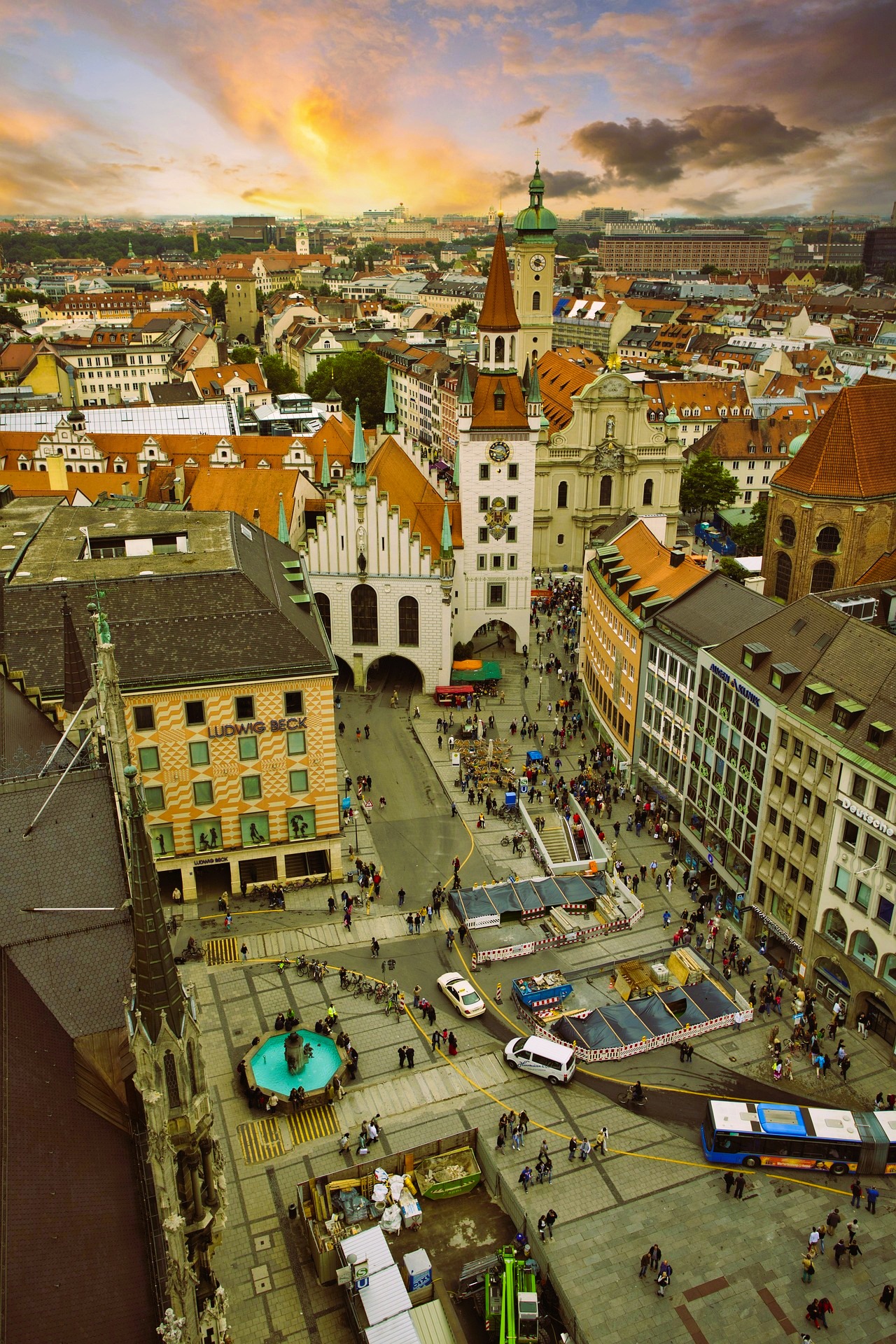
Travelers often treat Munich as a checklist, sprinting between the Glockenspiel and the Hofbräuhaus only to find themselves trapped in bottlenecks of tour groups. This high-speed approach misses the city’s actual rhythm the Gemütlichkeit found in the spaces between the landmarks. To truly see the city, you must reverse the standard itinerary. By prioritizing off-peak entry to the Royal Residenz and utilizing the city’s green spaces during the mid-day rush, you bypass the friction. This guide identifies the best things to do in Munich using a curated, unhurried strategy that favors depth over a frantic pursuit of photo ops. You will trade the stress of the crowds for the quiet observation of Bavarian craftsmanship and open-air culture.
Marienplatz – The historic ground-zero of Bavarian civic life
Marienplatz has functioned as the primary pivot point of Munich since the city’s founding in 1158, serving as a silent witness to the evolution from a medieval market to a modern metropolitan center. The square is anchored by the Neo-Gothic New Town Hall, whose facade dominates the space with an intricate display of stone carvings that reflect the civic pride of the late nineteenth century. For the thoughtful traveler, the square offers more than just a photo of the Glockenspiel; it represents the historical layer-cake of Bavaria, where the golden Mariensäule column commemorates survival through the Thirty Years’ War. To observe the square without the overwhelming pressure of the mid-day tour groups, aim to arrive before nine in the morning when the local commuters are the only ones crossing the cobbles and the light hits the Old Town Hall at a low, dramatic angle that highlights its Gothic simplicity.
Munich Residenz – A dense masterclass in European royal aesthetics
The Munich Residenz stands as the largest city palace in Germany, acting as an expansive architectural record of the Wittelsbach dynasty’s influence from the fourteenth century until 1918. Walking through its 130 rooms provides a physical timeline of European design, transitioning from the vaulted Renaissance Antiquarium to the explosive gold leaf of the Rococo Rich Rooms. This site matters to the modern traveler because it showcases how power was curated and projected through domestic space, evolving from a defensive fortress into a sprawling cultural monument. The scale can be disorienting, so a strategic visitor should prioritize the Treasury early in the day to view the Bavarian crown jewels before the interior humidity and noise levels rise. To ensure you do not miss the hidden jewel-box of the Cuvilliés Theatre, remember that it often requires a separate ticket and has its own distinct entrance tucked away near the Fountain Courtyard.
Englischer Garten – The intersection of landscape art and urban recreation
Spanning more than nine hundred acres, the Englischer Garten is a masterclass in eighteenth-century landscape architecture that rejects the rigid symmetry of French gardens in favor of a naturalistic, rolling aesthetic. It provides a crucial social lung for the city, where the rigorous discipline of German industry softens into a relaxed outdoor culture of beer gardens and sunbathing. The park’s most striking modern feature is the Eisbachwelle, a standing wave where wetsuit-clad surfers navigate an urban current regardless of the season, illustrating Munich’s unexpected subcultures. While most visitors gravitate toward the crowded Chinese Tower for a liter of beer, the thoughtful traveler should continue walking north toward the Kleinhesseloher See where the Seehaus beer garden offers a far more peaceful experience overlooking the water. This northward movement allows for a deeper appreciation of the park’s transition from manicured urban paths into the wilder, wooded stretches of the Isar floodplains.
Viktualienmarkt – An sensory anchor for Bavarian culinary tradition
Viktualienmarkt serves as the gastronomic soul of the city, transitioning from a humble farmers’ market into a sprawling open-air theater of regional flavors and artisanal crafts. For the strategic traveler, this is where the city’s rigorous order yields to the tactile pleasures of seasonal white asparagus, alpine cheeses, and freshly pressed juices. It offers a rare opportunity to witness the daily intersection of high-end gastronomy and local routine, all beneath the shade of the central maypole. To truly grasp the local lifestyle, bypass the crowded main aisles and look for the Caspar Plautz potato stall, where you can sample elevated takes on the humble tuber away from the heaviest tourist flow. Early morning visits allow you to watch the vendors assemble their displays with surgical precision before the lunch rush consumes the communal seating areas of the central beer garden.
Alte Pinakothek – A curated survey of the European Old Masters
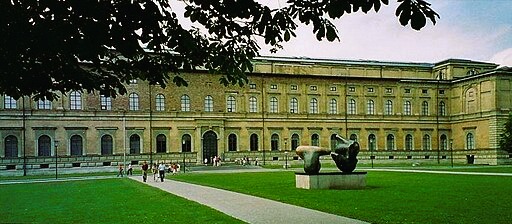
The Alte Pinakothek offers one of the most significant collections of European paintings in existence, housed within a Neoclassical structure that was revolutionary for its time. For the thoughtful observer, the experience is less about checking off famous names and more about tracing the intellectual evolution of the Renaissance and Baroque periods through the works of Rubens, Dürer, and Da Vinci. The massive proportions of the galleries are designed to allow the art to breathe, creating a contemplative atmosphere that stands in stark contrast to the kinetic energy of the surrounding Maxvorstadt district. If you find the vastness of the Flemish galleries overwhelming, focus your attention on the intricate details of Altdorfer’s Battle of Alexander, which contains thousands of miniature figures. A specific financial strategy for the art-focused traveler is to plan your visit for a Sunday, when the admission fee drops to a single Euro, making it the most cost-effective cultural experience in the city.
Nymphenburg Palace – The expansive grandeur of a summer retreat
Nymphenburg Palace represents the Wittelsbachs’ desire to escape the urban constraints of the Residenz, offering a sprawling Baroque complex that harmonizes architecture with water and woodland. This site is essential for understanding the sheer scale of Bavarian royal ambition, particularly as you walk through the Great Hall with its ceiling frescoes that seem to dissolve into the sky. The surrounding park serves as a quieter alternative to the city center, featuring hidden pavilions like the Amalienburg, which contains some of the world’s finest Rococo interiors. To maximize your time, avoid the lengthy walk from the main canal and instead use the tram line 17 which drops you almost directly at the palace gates, allowing you more energy to explore the further reaches of the gardens. Keep a sharp eye out for the resident swans near the iron pumps, which have been part of the palace’s living aesthetic for generations.
A 3-Day Strategic Itinerary
To maximize your time in Munich, organize your visit by geographical clusters to minimize transit friction. Devote your first day to the Altstadt district, beginning at Marienplatz for the morning light before moving to the nearby Munich Residenz and concluding with a late lunch at the Viktualienmarkt. This keeps your movements within a tight, walkable radius. On the second day, shift your focus north to the Maxvorstadt neighborhood, known as the museum quarter. Spend your morning at the Alte Pinakothek and transition into the adjacent Englischer Garten for a mid-afternoon decompression by the water. Reserve your third day for the western edge of the city to explore the expansive grounds of Nymphenburg Palace. This sequence balances the dense historical architecture of the center with the airy, expansive landscapes of the outer districts, ensuring a rhythm that feels purposeful rather than exhausted.
The Unhurried Mindset
The unspoken rule of Munich is that productivity must eventually yield to presence. While the city functions with high-precision engineering, its social fabric is held together by the concept of Stehenbleiben the act of simply stopping. To enjoy the city properly, you must accept that the best moments occur when you are not technically doing anything at all. A soulful approach to slow travel here involves finding a quiet bench in the Hofgarten or a corner of a traditional Wirtshaus and observing the local choreography of conversation and flinty Bavarian humor. True luxury in this city is found in the unscripted hour spent watching the shadows lengthen against the brickwork of the Frauenkirche.
Beyond the City Gates
Once you have calibrated your pace to the Bavarian capital, the surrounding Alpine regions and the storied cities of the German south offer a natural progression for the thoughtful traveler. The rail lines from Hauptbahnhof provide direct access to the rugged landscapes of Garmisch-Partenkirchen and the medieval preservation of Nuremberg.
For those ready to extend their journey across the border or deeper into the federal states, our comprehensive regional guides provide the same strategic clarity found here.
Step away from the map and let the city reveal itself through the quiet details.
Leave a Reply