
Most travelers treat Florence like a high-speed scavenger hunt, sprinting between the Uffizi and the Accademia before the midday heat, only to end the day with “museum fatigue” and a blurred memory of marble. This checklist-driven chaos is the city’s greatest trap. To truly see the Cradle of the Renaissance, you must adopt an unhurried approach that prioritizes timing and atmospheric depth over sheer volume.
This guide streamlines the best things to do in Florence by focusing on six high-impact locations where the density of history justifies the effort. By shifting your schedule to early mornings or late golden hours and utilizing strategic entry points, you can reclaim the city from the masses and experience its brilliance as it was intended: with space to breathe.
The Duomo Complex – Navigating the heart of Florence with a Brunelleschi Pass
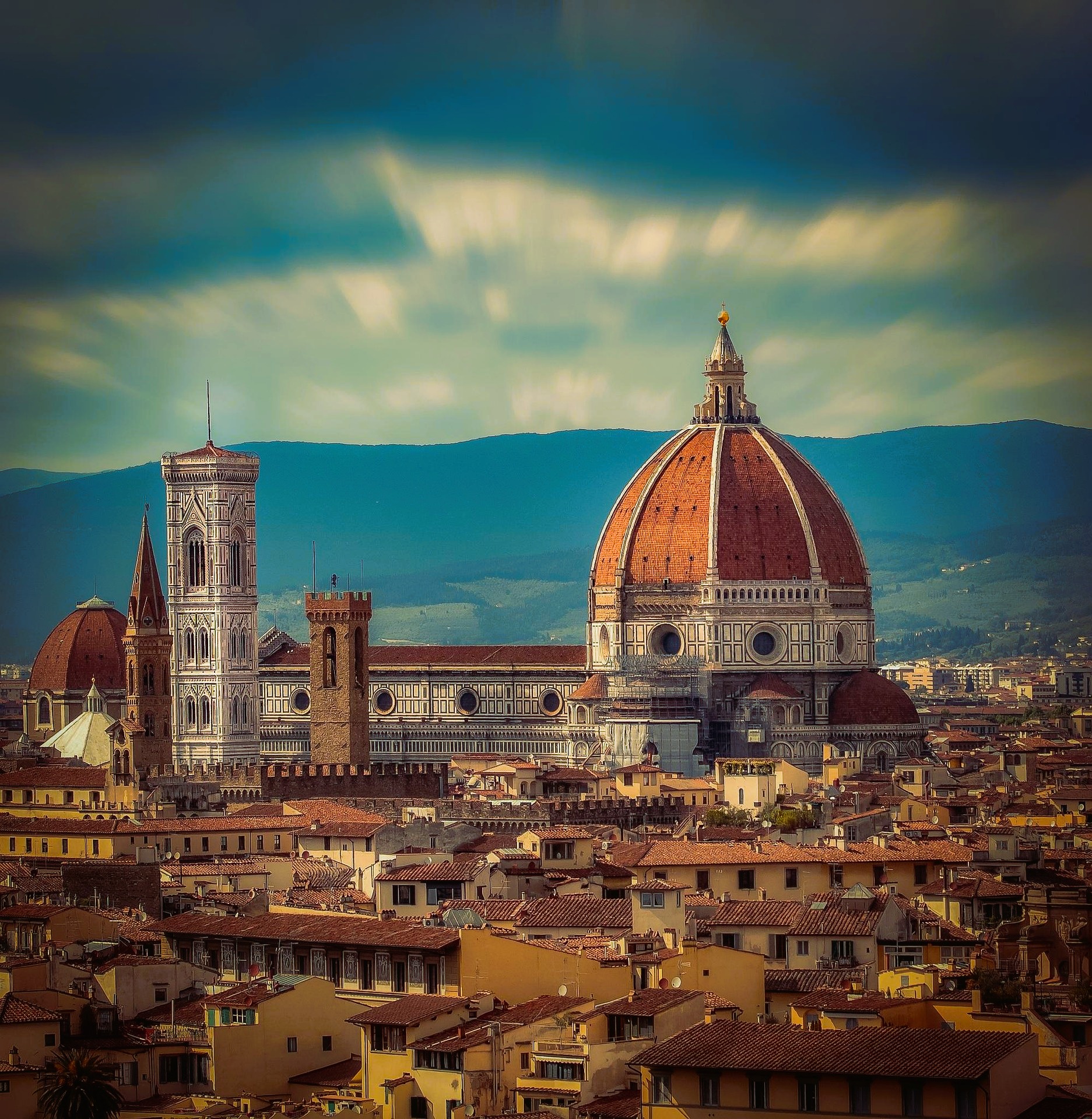
The Duomo is the tectonic plate upon which Florence’s identity rests, a feat of 15th-century engineering that remains the largest brick dome ever constructed. For the thoughtful traveler, the cathedral is less about the free interior which is surprisingly sparse and more about the verticality and subterranean layers that reveal the city’s evolution from the Roman era to the High Renaissance. Climbing Brunelleschi’s Dome offers a visceral connection to the architectural daring of the past, but the real depth lies in the Santa Reparata crypt, where the remains of the original Paleo-Christian church sit beneath the current floor. To avoid the primary bottleneck, skip the massive central queue for the cathedral and enter instead through the North side at Porta della Mandorla if you have a pre-booked Dome time-slot, or start at the often-overlooked Opera del Duomo Museum to see the original Ghiberti doors in a climate-controlled, crowd-free sanctuary.
The Uffizi Gallery – Curating a world-class Renaissance art experience
Housing the definitive collection of Italian Renaissance art, the Uffizi Gallery is a dense archive of Western thought where every corridor leads to a cultural pivot point. A strategic visitor views these halls not just as a gallery, but as a map of the Medici family’s influence and their role in fueling the creative explosion that defined an era. While Botticelli’s Primavera and Da Vinci’s Annunciation are the magnetizing draws, the gallery’s long corridors offer panoramic views of the Arno that provide a necessary visual palate cleanser between masterworks. Because the museum is notoriously congested during the midday rush, the most effective strategy is to secure the very first 8:15 AM entry or visit after 5:00 PM when the group tours dissipate. If you arrive early, head straight to the top floor and work backward from the later rooms to ensure you have the Botticelli halls almost entirely to yourself before the main current of visitors arrives.
Galleria dell’Accademia – Strategic viewing of Michelangelo’s David and the Prisoners
Most visitors rush through the Accademia solely to photograph Michelangelo’s David, yet the thoughtful traveler finds more resonance in the unfinished Slaves (or Prisoners) that line the Hall of the Prisoners. These rough-hewn figures, seemingly struggling to escape their marble blocks, offer a rare, intimate glimpse into Michelangelo’s “liberation” theory of sculpture that a finished masterpiece cannot provide. The museum is compact, which often leads to intense shoulder-to-shoulder crowding around the central Tribune. To bypass the worst of the friction, aim for the extended evening openings on Tuesdays during the summer months when the gallery stays open until 10:00 PM; the dramatic lighting at dusk transforms the marble’s texture and the atmosphere becomes notably more contemplative. If visiting during regular hours, booking your entrance for the final hour of operation allows you to stand before the 17-foot giant in relative silence as the security staff begins to clear the smaller peripheral rooms.
Basilica of Santa Croce – Discovering the final resting place of Renaissance giants
The Basilica of Santa Croce serves as the pantheon of Italian glories, housing the tombs of Michelangelo, Galileo, and Machiavelli within its soaring Gothic nave. For the strategic traveler, this site offers a more intimate and intellectual experience than the crowded Duomo, providing a direct connection to the minds that shaped modern science and philosophy. The interior is a massive repository of Florentine history, featuring Giotto’s vivid frescoes in the Bardi and Peruzzi Chapels which illustrate the transition from medieval to Renaissance art styles. As you navigate the chapels, look for the 19th-century monument to Dante Alighieri; while it is an empty cenotaph because the poet died in exile in Ravenna, it remains a poignant symbol of Florence’s enduring cultural pride. To avoid the midday glare and heat, enter through the leather school at the back of the complex where the smell of cured hides offers a sensory bridge to the city’s traditional artisan trade.
Palazzo Vecchio – Navigating the seat of power and secret Medici passages
The Palazzo Vecchio is the fortress-like heart of Florentine politics, where the transition from a medieval republic to a Medici dukedom is etched into the stone and timber of its grand halls. The Hall of the Five Hundred remains a masterclass in propaganda, with its massive frescoes and gilded ceilings designed to overwhelm visitors with the scale of the city’s military triumphs. A thoughtful traveler appreciates the layers of history here, from the Roman ruins of a theater visible in the basement to the private apartments of Eleanor of Toledo that showcase the domestic life of the ruling elite. For a unique perspective on the city’s layout, seek out the hidden staircase near the Map Room that leads to the battlements, as this provides a clearer view of the Arno and the surrounding hills than the more famous towers. Arriving during the final two hours of the evening opening allows you to explore the atmospheric courtyards in near-total silence.
Piazzale Michelangelo – Capturing the quintessential Florence panoramic view
Piazzale Michelangelo offers the most comprehensive visual summary of the city, where the skyline’s geometry defined by the Duomo, Giotto’s Campanile, and the Palazzo Vecchio becomes a single, coherent composition. While many consider this a standard tourist stop, the observant traveler uses the vantage point to understand the strategic geography that allowed Florence to flourish within the Arno Valley. The walk up through the Rose Garden provides a much more serene ascent than the crowded bus route, offering several shaded benches where you can pause to admire the sculptural installations against the backdrop of the red-tiled roofs. To experience the site without the overwhelming noise of the souvenir stalls, continue walking five minutes further uphill to the Romanesque church of San Miniato al Monte, where the monks often perform Gregorian chants at dusk. This elevated sanctuary provides a more spiritual and unhurried conclusion to the day while the same golden light illuminates the valley below.
A 3-Day Strategic Itinerary
To maximize your time in Florence without the exhaustion of a high-speed itinerary, group your visits by the natural divisions of the city’s historic center. Devote your first day to the religious and political core within the San Giovanni and San Marco neighborhoods, starting early at the Duomo Complex and concluding with the Accademia. This allows you to witness the city’s monumental scale before the narrow stone streets become congested. On the second day, shift your focus to the art-dense corridors of the Uffizi and the imposing history of Palazzo Vecchio near the Piazza della Signoria, where the proximity of these power centers minimizes walking time and maximizes your absorption of the Medici legacy. Reserve your final day for the Santa Croce district and a scenic cross-Arno trek to the Oltrarno. The ascent to Piazzale Michelangelo serves as a reflective finale, providing a rhythmic transition from the dense urban stone to the airy, olive-dotted hillsides that frame the Florentine horizon.
The Unhurried Mindset
The unspoken rule of enjoying Florence is to acknowledge that you cannot see everything in a single visit, nor should you try. The city’s true character reveals itself not in the queue for a museum, but in the deliberate pauses between them. A soulful experience here requires you to trade the digital map for a slow, observant walk through the Oltrarno’s artisan workshops, where the sound of a chisel hitting stone remains the city’s most authentic soundtrack. Proper travel in this Renaissance capital is measured by the depth of your attention, not the number of monuments you check off a list.
Leave a Reply