
Prague’s medieval charm is no secret, but navigating the “City of a Hundred Spires” without a strategy often leads to overpriced tourist traps and crowded bottlenecks. Whether you are dodging the midday rush on the Vltava or hunting for a quiet cellar bar in Vinohrady, finding the best things to do in Prague requires a balance of iconic history and local cadence.
This Prague travel guide cuts through the noise, offering a utility-first approach to the Czech capital. We prioritize the gravity of Gothic spires and the crisp pour of a fresh Pilsner over generic sightseeing. From the shadow of the Castle to the hidden gardens of Malá Strana, here is how to navigate the city’s architectural weight and culinary depth without feeling like just another face in the crowd.
Prague Castle – The World’s Largest Ancient Fortress Complex
Prague Castle isn’t just a single building; it’s a sprawling 70,000-square-meter complex that holds the Guinness World Record for the largest ancient castle. Dominating the Hradčany district, it serves as the official seat of the Czech President and a repository for the Bohemian Crown Jewels. Search data confirms its status as the most visited site in the country because it provides a vertical history of Europe, from Romanesque basements to Gothic spires. When considering visiting Prague tips, the utility here lies in the “Circuit Ticket,” which grants access to the stunning St. Vitus Cathedral and the colorful Golden Lane. You’ll witness the weight of centuries in the stone walls and the intricate, modern stained glass within the cathedral. It’s a physical manifestation of Czech resilience that requires at least half a day to explore.
Practical Expert Tip: Skip the main Hradčany Square entrance to avoid the longest security lines; instead, take Tram 22 to the ‘Pražský hrad’ stop and enter through the 2nd Courtyard side gate near the bridge.
Charles Bridge – A 14th-Century Gothic Masterpiece
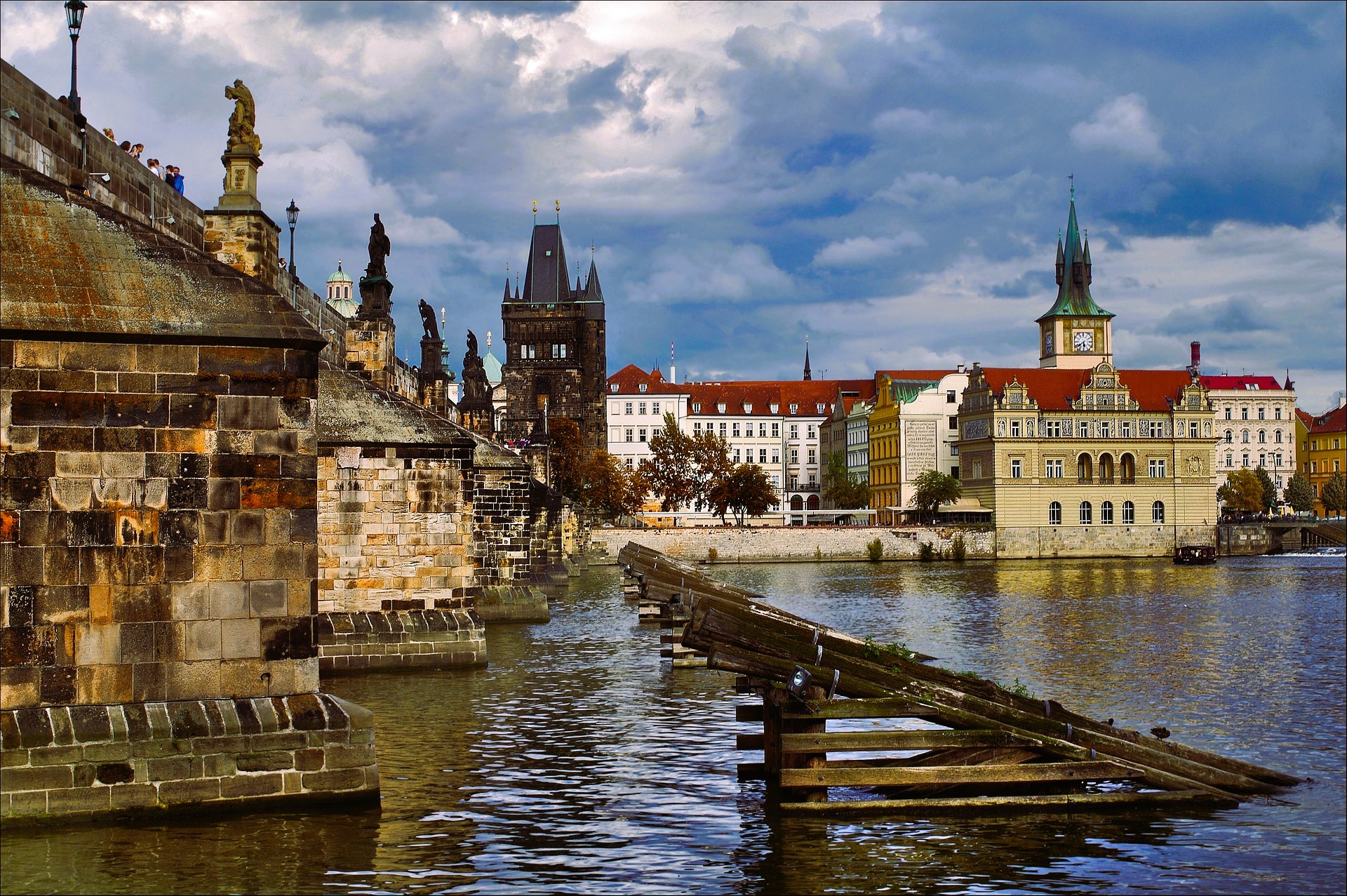
Completed in the early 15th century, the Charles Bridge is the quintessential Gothic link between the Old Town and the Lesser Town. Commissioned by Charles IV, this stone bridge replaced the flood-damaged Judith Bridge and is famously protected by 30 Baroque statues of saints. As one of the top attractions in Prague, it sees millions of visitors annually, yet it maintains an ethereal, cinematic quality especially when the gas lamps flicker on at dusk. Beyond its visual appeal, the bridge serves as a functional pedestrian artery, bustling with local painters and jazz musicians during the day. Travelers will experience the tactile history of the worn sandstone and the panoramic views of the river. It’s a masterpiece of civil engineering that has survived centuries of floods and wars, standing today as a symbol of the city’s endurance.
Practical Expert Tip: To experience the bridge without the crush of tour groups, arrive before 7:00 AM; the “Golden Hour” light hitting the Vltava provides the city’s best photography conditions without any crowds.
Old Town Square – The Historic Epicenter and Astronomical Wonder
Serving as the city’s main marketplace since the 12th century, Old Town Square is a dense concentration of architectural styles ranging from the Gothic spires of Týn Church to the Baroque facade of St. Nicholas. This area is a staple of any Prague travel guide because it houses the world’s oldest functioning Astronomical Clock (Orloj). Every hour, crowds gather to watch the “Procession of the Apostles,” a mechanical marvel that has captivated visitors since 1410. Beyond the clock, the square is the site of historic executions and celebrations, making it the emotional heart of the Czech people. Travelers will see a vibrant mix of history and modern life, where horse-drawn carriages share space with street performers. The utility here is in its central location, making it the perfect orientation point for exploring the surrounding medieval alleyways.
Practical Expert Tip: Avoid the midday crowd crush at the clock’s base; instead, book a ticket for the Old Town Hall Tower to watch the mechanical procession from the inside for a unique, close-up perspective.
St. Vitus Cathedral – The Gothic Crown of the Czech Capital
While located within the Castle grounds, St. Vitus is an experience unto itself, representing the pinnacle of European Gothic design. For those following a Prague travel guide, this cathedral is the ultimate “value” stop because the first third of the nave is free to enter, offering a glimpse of Art Nouveau master Alfons Mucha’s stained glass. It is worth the ticket price for the “experience economy” seeker who wants to stand in the coronation site of Bohemian kings. You’ll witness a literal timeline of architecture, from the 14th-century Golden Gate to the 20th-century finishing touches. It offers a spiritual weight and artistic depth that few cathedrals globally can match. As a cornerstone of top attractions in Prague, its scale and the vibrant light play inside make it a sensory-heavy highlight of any itinerary.
Practical Expert Tip: To avoid the massive morning tour groups, visit exactly 90 minutes before closing when the light hits the stained glass at its most dramatic angle and the echoes of the nave are undisturbed.
Petřín Lookout Tower – The Eiffel Tower of Bohemia
Rising 63 meters above the city’s highest hill, this 1891 steel-framework tower offers the best 360-degree views in the region. It’s an essential stop for travelers who value the “experience” of perspective; on clear days, you can see across the Bohemian landscape to the Giant Mountains. Following visiting Prague tips, this spot is best reached by the historic funicular, which turns a steep climb into a scenic journey. The vibe is decidedly “slow travel,” surrounded by rose gardens and orchards that provide a quiet respite from the stone-heavy city center. It’s a low-cost, high-reward activity that provides the physical context of Prague’s layout. Whether you’re a photographer or a family seeking open space, Petřín bridges the gap between urban density and hilltop tranquility, making it a functional and aesthetic must-see.
Practical Expert Tip: Skip the elevator line and the fee by walking the 299 stairs; not only is it cheaper, but the staggered platforms offer unique, uncrowded photo ops at different heights.
Vyšehrad – The Ancient Fortress Above the River
Often overlooked by those rushing through a standard Prague travel guide, Vyšehrad is the city’s “hidden in plain sight” masterpiece. This 10th-century fortress is where the legend of Prague began, offering a more atmospheric, local experience than the crowded Castle District. The utility here is the combination of free public park space, the stunning neo-Gothic Basilica, and the Vyšehrad Cemetery the final resting place of national icons like Dvořák. It caters to the traveler looking for depth over checklists, providing a hauntingly beautiful vibe that feels intimate and authentic. You’ll walk along 17th-century ramparts that offer the most dramatic views of the river’s bend without the shoulder-to-shoulder crowds. It’s an essential site for understanding the mythic roots of the Czech nation while enjoying a peaceful, sunset stroll.
Practical Expert Tip: After exploring the ramparts, head to the nearby ‘Hospoda Na Hradbách’ a local beer garden tucked within the fortress walls that serves excellent Balkan grilled meats and craft beer with a view.
How to Spend 3 Perfect Days in Prague: A Strategic Itinerary
Maximize your time by grouping the city’s top attractions in Prague by district to minimize transit and maximize the “slow travel” experience.
Day 1: The Medieval Core. Start at Old Town Square to witness the Astronomical Clock’s morning chime. From here, it is a short, scenic walking distance through the winding Karlova street to the Charles Bridge. Spend your afternoon getting lost in the narrow alleys of the Old Town.
Day 2: The Royal Heights. Cross the river to the Malá Strana neighborhood. Dedicate your morning to the Prague Castle complex and the towering St. Vitus Cathedral. In the afternoon, take the historic funicular up to Petřín Lookout Tower for sunset views.
Day 3: Legends & Local Life. Head south via public transport to the peaceful fortress of Vyšehrad. This area is perfect for a quieter morning stroll before heading back toward the New Town riverfront for a local beer.
Quick Travel Facts
You’ll enjoy mild weather and fewer crowds than the peak summer heat or the freezing (but festive) December market rush.
Top Local Dish: You cannot leave without trying Svíčková na smetaně tender beef sirloin in a creamy root vegetable sauce, served with bread dumplings and a dollop of cranberry jam.
How to Get Around: Prague has one of Europe’s best public transport networks. Use the PID Lítačka app to buy a 72-hour pass, which covers all red trams, the metro, and even the Petřín funicular.
Discover Beyond the Spires
While these landmarks define the capital, the rest of the Czech Republic offers a wealth of Bohemian glassworks, Moravian wine cellars, and UNESCO-listed towns like Český Krumlov just a short train ride away.
The Bottom Line: Prague is a city where every stone tells a thousand-year-old story; stop planning and start your journey into the heart of Europe by securing your Castle tickets and flight today.
Leave a Reply